Tuesday, September 11, 2007

Life: the wonderful, the schmaltzy


"Three Dog Life" - Abigail Thomas

"The Good Life" - Jay McInerney

Sometimes (most of the time, for me) it’s more difficult to write about a good book than about a bad one. I’m more articulate in loath than in awe. So, here it goes:

Abigail Thomas’s book is a series of mini chronicles documenting the accident which left her husband without any short-term memory and unable to function autonomously.
One night, walking Harry (the dog the author had insisted on getting), Richard ran after him through oncoming traffic when the leash broke, and was run over.

Instead of widowhood, Thomas was left to confront a different, less discussed purgatory: she had to arrange the daily life and care of a loved one who, though present in body was, if not completely gone, utterly transformed.

That Thomas never blamed Harry the beagle, and adopted two other dogs in the following years, will probably not seem very far-fetched to other dog owners. That she is able to write without a hint of cheap sentiment and yet so vividly portray her ordeal is what truly brought me to tears – once when I read the ending, and a second time, when I told it to my mother.

McInerney’s book is the complete opposite: it reeks of cheap sentiment, schmaltz and soap-operism and the 9/11 back-drop made it even more unbearable. I was surprised at how much I hated it, since I read “Bright Lights, Big City” when I was 11 years old and thoroughly enjoyed it. I guess I grew up in the subsequent 19 years, whereas McInerney is confined to being for ever an increasingly juvenile writer. However, I also enjoyed his anthology of wine chronicles: sure, you could tell he was a pompous, indulgent (and indulged, by his circle of fawning fans), name-dropping idiot, but he was also funny. “The Good Life” started off by giving me a warm feeling inside, as it described the lives of wealthy and wealthier manhatanites – the continuous craving for more goods of superior quality, be they in the shape of real-estate, textiles or celebrity friends and events. I felt smug and superior until the story started going nowhere fast, while the characters failed to develop (until the end of the book I could never memorize their names, so indistinct where they from the supporting characters). These characters can’t take life’s no for an answer – as illustrated by Corrinne’s adamant pursuit of conception (finally achieved via younger sister’s eggs), and Luke’s acquisition of his socialite wife, Sasha. McInerney then tries to convince the reader that these two are transfixed by their chance encounter amid the rubble of a day-old 9/11. Fat chance of anyone believing these self-serving two are capable of a mature love affair – so the author gives a hand by providing them both(!) with philandering partners. One wouldn’t want to face New Yorkers with too much of a moral dilemma, after all. It’s all so damn convenient that Luke’s 14 year old harlot daughter – caught in the oral act by her father one day and overdosing on prescription drugs the next – is really just a sensitive girl who wants to live in rural Tennessee with her paternal grandmother and practice the family business of equine therapy. Turns out she was only engaging in casual sex and recreational drugs because she didn’t want to become a rich bitch like her doped-up mother. Sure, it makes sense…
Spoiler
In the end they decide - as their families brush each other at a Christmas rendition of “The Nut-Cracker” by the NY Ballet (pass the bucket)-, that their love is too pure to be spoiled by the ugliness of divorce and subsequent pain for the involved children. I couldn’t figure out why McInerney chickened out at this final bit of sentimentality – making his leading characters walk off into the sunset – after all, he had already commited the worst of novelistic faults – boring the reader to tears.

Thursday, September 06, 2007

"The Lost - a search for six of six million" Daniel Mendelsohn


There are many reasons to investigate your family’s past: for some it’s about status, proving the wealth and importance of your name; for some grasping in a foggy history a sense of who you are, who you might become; some of us are suckers for a good story, be it a drama or a comedy.

When you’ve grown up amidst whispered rumours regarding part of your family, your curiosity will almost surely be piqued, and the same goes for relatives inhabiting far away lands. However, few of us will have spent our formative years hearing, always in hushed tones, about members of our family who were “killed by the nazis”. The sheer vagueness of the affirmation, makes it even more compelling, more horrid in all the details it leaves to the imagination.

At a time in our adult lives where most of us are starting to face the emotional ghosts in our genealogical trees, Daniel Mendelsohn had already reconstructed his, as far back and wide as possible – a hobby he approached with the extreme seriousness of an academically inclined child. Still, the fate of his maternal great-uncle Shmiel, his wife Ester and their four daughters from 10 to 19 years old approximately, was still a puzzle in his early forties.

In “The Lost” Mendelsohn invites the reader to follow in his footsteps as he unravels the last and most difficult knot of his family’s past.

It is not a straightforward journey, for Mendelsohn has spent his life immersed in Classic Literature, and learned at his grandfather Abraham knee, the value of a good yarn. But the reader will never, in its 500 pages, feel like “The Lost” is taking him for a ride. All the detours that the author apparently leads us on, are nothing other than precious stitches of an amazingly complex embroidery- in the end the pattern doesn’t just make sense –it is truly beautiful.

The Holocaust involved such ungraspable numbers –that it is humanly impossible to think of those six million as individuals – real individuals. We know, of course, that these were real people covering the whole spectrum of economic occupations and emotional temperaments, but still. They can never be truly rendered, rescued from oblivion by official registers or even photographs. As Mendelsohn discovers himself, the only people who can bring these dead (maybe all dead) back to life are those who knew them.

With this in mind, the author spent the last five years travelling the globe, accompanied by his brother Matt, desperately trying to record the last memories of the last jewish survivors of the polish village of Bolechow (now in the Ukraine). And in the “In Memoriam” page at the end of the book we realize how close he came – several of his subjects died months after his interviews. Some had known his cousins personally – one had been a boyfriend of one of the girls, another a girlfriend.
It is speaking with these holocaust survivors (who have each their own startling story of horror and near escape to share) that Mendelsohn comes across what I find the most important and emotional discovery of the whole book: he might share a last name or genes with this family, he might own some photographs of them, but all the DNA or genealogical software in the world will never bring them closer. Their stories, their true inheritance lie in the minds of those who knew them and loved them, and as those last friends slip off the face of the Earth, so will them, finally.

In the end we are left feeling victorious: the author has saved six people from the oblivion of the mass killings of the nazi regime, and we held steadfast through descriptions of incredible cruelty and sadness, and Mendelsohn’s resolve to educate his readers on several parashot (chapters of the Hebrew Bible). And yet.

And yet one can’t help thinking of the meaninglessness of it all – how those millions of deaths never gave pause, didn’t stop a single genocide or mass killing since then –not even in Europe. Memory is obviously something complex and somewhat malfunctioning in the human mind – and as the last Holocaust survivors vanish from our planet it’s impossible to believe we are not inching closer to an unknown abyss.

Friday, August 31, 2007

Lazy doesn't even begin to cover it...


...but only when it comes to updating this blog...
Here's what I've read since the latest entry (chronologically):

A Hedonist In The Cellar - Jay McInerney

The Island Of Lost Maps - Miles Harvey

Birth: A History - Tina Cassidy

Hotel California - Barney Hoskyns

Haight-Ashbury: A History - Charles Perry

Borges e os Orangutangos - Erico Veríssimo

Bartleby & Co - Enrique Vila-Matas

The Paper House - Carlos Maria Domínguez

The Romanovs And Mr Gibbs - Frances Welch

The Dead Beat and the perverse pleasures of obituaries - Marilyn Johnson

A Gente Se Acostuma A Tudo - João Ubaldo Ribeiro

With Borges - Alberto Manguel

Pilgrim - Timothy Findley

Old School - Tobias Wolf

A Mother's World: Journeys of the heart - Ed. M. Bond & P. Michael

Great Dream of Heaven - Sam Shepard

New Yorkers - Cathleen Schine

It's A Dog's World: True stories of travel with man's best driend - Ed. C. Hunsicker & M.Goodavage

The Blue Jay's Dance - Louise Erdrich

Magic Bus: On the hippie trail from Istambul to India - Rory MacLean

Tales From The Cash Register

Eating The Cheshire Cat - Helen Ellis

Biodegradable Soap - Amy Ephrom

Bee Season - Myla Golberg

Life Studies - Susan Vreeland

Love Is A Mix Tape - Rob Sheffield

The Summer He Dindn't Die - Jim Harrison

One Sunday Morning - Amy Ephrom

To See Every Bird On Earth - Dan Koepppel

The Cat Who Came In From The Cold

Out Of Your Townie Mind - Richard Craze

The Last Kabbalist Of Lisbon - Richard Zimmerman

Child Free And Loving It! - Nicki Defago

Families Of Two: Interviews with happily married couples without children by choice - Laura Carroll

My favorite reads are highlighted
For southern humour choose "Eating The Cheshire Cat"
For New York sophistication and romance, "New Yorkers"
"Old School" is the perfect, boarding school themed, fall book
I'm still reeling from "Pilgrim" - amazingly complex, learned, imaginative, surreal, athmospheric, hypnotic, detailed. This one is the gem of the list...
"Birth" and "Families" are pretty specific but I think most people can enjoy them: the first is a keeper for the honest (and therefore, sometimes gory) history of what women have endured (there's just no other way to put it) over milenia in both pregnancy and labor."Families" should be required reading for anyone thinking of starting a family - in fact, they both should.
"Life Studies" is a collection of short stories that are art-themed, but where the protagonists are always on the fringe of the production itself: a painter's mistress, widow or daughter, a woman who chooses to model naked for an art class, etc. Divided into eras starting with mostly impressionistic artists I was partial to last stories in the book, set in contemporary times.
I have been wanting to read Harrison for a while and "The Summer..." was lot better than I imagined.


Friday, March 16, 2007

What I've been reading

Yes, even a bookworm must work occasionaly - which makes her grouchy and a slow reader - in order to buy more books.
In what little time I've had, this is what I managed to read, since February:


Jpod - Douglas Coupland

I really don't like re-reading books. I haven't re-read a book in years (although I've re-read many of Coupland's books), but since I was feeling to tired I figured Jpod was a great antidote to a day's work. And so it was.
Some years ago I used to imagine I was in a Coupland novel - it's a great daydream, try it sometime. But Jpod is even better.
However I never got to end because...


Girlfriend in a Coma - Douglas Coupland

One morning I woke up at 6 a.m. (which is obscenely early for me) and in the midst of insomnia (yes, it's still insomnia at 6 a.m.) started thinking about Jpod and about how I had never realized before so much of Coupland is verging on sci-fi.
Suddenly I had an epiphany: I realized my two least favorite Coupland's (Girlfriend in a Coma and Hey! Nostradamus) were actually his best books.
Feeling post-apocalyptical I picked up Girlfriend first and having re-read it I am now completely convinced it's one of his best.


Hey! Nostradamus

The jury's still out on this one. I re-read two thirds, and I don't think it's as good as Girlfriend. However I do like it when Coupland goes all religious (meaning when he writes straightforwardly about religion)

If I were to re-read another of his (and I just might) it would be
Eleanor Rigby
I think he's best with mom characters and teenager / young adult characters - his adult characters seem a little dry, but going over Rigby again might change my mind

anyway he's wonderfully canadian - and one day, when I'm not so tired I'll try to explain (to myself first) what I mean by that


The Genius Factory - David Plotz

To quote a much loved sentence here at home about wine, from the movie "Sideways" - this little book is "tighter than a nun's ass". There is not one lost sentence in this non-fiction account of a sperm bank dedicated to storing the seed of Nobel laureates and the ensuing offspring. The rhythm is also great: Plotz always leaves you hanging at the end of the chapters, just when you're dying to know more about a kid or his donor dad.
The story is fascinating - and in 262 pages it packs an amazing amount of information that is never short of mesmerizing. The best thing about it, is the individual kids' stories. And it's not even a guilty pleasure, because Plotz is very ethical in the treatment of his sources.
Even cross eyed from staring at a laptop screen all day long I always felt like reading more at the end of the day. If that's not a compliment I don't know what is.


One In Three - Adam Wishart

I'm not done with this one yet, but I can safely say it's pretty good too. It's also non-fiction about the author's dad cancer, but simultaneously about the history of treatments and public reactions to the disease. Not as comfortable to read in bed, being a hardback, and a slow starter for me (all those descriptions of the cancer treatments administered in the XVI, XVII and XVIII centuries left me a little queasy) but ultimately a relief to read - cancer is such a scary thing in our otherwise, mostly confortable lives, most people don't even want to talk about it, that to get facts feels liberating. There is so much to know. One of the reasons I got this book was that I read in a review that the author never falls into the sentimental trap - I wanted a clear account, not a teary eyed one, and that's exactly what Wishart delivers.
I learned a lot and crushed a mostly full pack of cigarettes into the dustbin (but to be truthful I've done that a couple of times before).

Friday, January 26, 2007

"Special topics in calamity physics" - Marisha Pessl


Marisha Pessl’s “Special topics in calamity physics” has been hailed as one of this year’s most promising debuts and is one of the New York Times five fiction books of 2006. Due to the critical acclaim I was expecting to be swept of my feet by this novel, a murder mystery set in a private school, whose narrator is eighteen-year old Blue Van Meer.
Unfortunately, Pessl’s book turns out to be the literary poster child for too-smart-for-its-own-goodness.
We catch up with Blue in her first year at Harvard (and what is it with the Ivy league obsession in the latest years of American pop culture?) where she was admitted without doing much studying visible to the naked eye and where she sees fit to start reminiscing about the events that took place in her high school. The girl’s father is a college professor with a penchant towards radical politics and social theories and who also takes upon himself the role of Oracle in Blue’s life – her mother died in a car accident when she was five – a sort of sociological Oscar Wilde who has little turns of phrase for just about any situation under the sun, “Dad said” being one of the most repeated expressions in the book. Since father and daughter relocate about three to four times every school year so Gareth Van Meer can illuminate the students of the most obscure colleges of middle America, it is a welcome surprise for Blue to discover that she will spent the whole of her senior year in Stockton, North Carolina. By now it’s page fifty (of a total 513), and while I’m already annoyed I can’t say I’m dispirited – Pessl’s style seems original alright, just like the reviewers promised. So, why the attitude, I hear you clamor? Well, Pessl’s book is also a prime example for too-much-of-a-good-thing. She sees it fit to illustrate almost every other paragraph with a literary reference real or made-up, with publisher and year between comas in bibliographic style: some are hilarious like “Christ it’s been done before: celluloid jesuses from 1912-1988, Why Hollywood should cease committing the son of God to screen”, but it’s just gets old real fast, and Pessl’s doesn’t relent until the end; the other thing is the similes, she’s good with them but once again doesn’t know when to stop, and it gets a little nauseating – people look like animals (with bibliographical references), buildings look like people or like animals, everything looks like something else and it gets even more confusing because everything also reminds the narrator of something else, leading the reader along some winding path to nowhere in the middle of the action. Throughout the first third of the book there are also blanks in some of the sentences - which reminded me of Laura Palmer’s missing diary pages - that meant apparently… nothing. It’s just like every little thing, witty, funny remarkable or poignant Marisha Pessl thought during her 29 years on this earth had to be included in the book.
But I swear I never meant to hate this book – only after page 113 it got really, really hard. Blue hooks up with a clique of five rich, handsome, personality deprived kids (which is hard to believe for a girl of such erudition and who worships a father who stands for the opposite of privilege) Charles, Milton, Nigel, Jade and Leulah through a film teacher, Hannah Schneider, who is the object of my favorite passage in the whole book: “Most extraordinary was the air of Chateau Marmont bungalow about her, a sense of RKO, which I’d never before witnessed in person, only while Dad and I watched Jezebel into the early hours of the morning”. As I say I never meant to hate “Special topics”, even though it kept reminding me of some annoying episode of “Gilmore girls”, then, in page 113, Pessl whips out the “transformation”. You know what I mean: that scene replayed ad nauseam in teen (and not so teen) movies in which the average character gets the beauty treatment and comes out a knockout (you know, musical sequence, salon, shops, the works). In Pessl’s world, only the attractive can be confident and intelligent or at least blasé (which I suspect might mean the same to her), and Blue of course is no fugly, I believe the expression goes, only in dire need of highlights, contacts and some lace lingerie.
Fast-forward – if you read the back-cover you will already know that Hannah Schneider turns up dead, hanged, but don’t hold your breath because that will only happen on page 336 – until then you will probably share my hopeful feeling at various moments that the book is really going to “start”, just to be sadly disappointed. None of the characters gain much texture – until the very end I kept confusing Milton and Nigel and Jade and Leulah (guess that’s what the “visual aids”, the author’s illustrations, are there for). Only Hannah and Gareth seem to evolve and Blue remained to me a thin character – most of the time she seemed a silent witness – you knew she had been there because she is the narrator, but where the hell was she? And if we are inside her head, throughout the story, why does it feel so empty?
Even though “Special topics” appears in Amazon.com category for “young women”, I’m not sure I would recommend it to a young adult: the underlying message in the book towards sex seems to be that it’s something sleazy best conducted in motels, or in the handicapped bathroom stalls of road-side bars. Of the adults that serve as guides to the teens not one is in a serious relationship, and the one’s that are, are portrayed as lame and unexciting. Although Blue’s dad is forever besieged by impassioned women, not one of which has apparently, ever stayed the night in any of the Van Meer residences, leaving the reader to guess that the amorous encounters took place elsewhere in the women’s homes or motels. Gareth Van Meer is forever running away from some woman who didn’t get the I’m-not-looking-for-a-commited-relationship memo, and the women always make fools of themselves trying at all cost to get him back (curiously Blue doesn’t see anything wrong with her father’s behavior, at least not for much of the book). Hannah Schneider is spotted by the youngsters in apparently random one-night stands that end up in nearby motels. Jade and Leulah engage in intercourse with forty something truckers in the bathrooms of local dives. Blue rejects her one suitor in the book because he is too much of a nice guy (in the end he becomes more attractive in her eyes, mostly because he has shaved off his head, thereby giving him a more rugged look).
Maybe I’m being too literal? Maybe this whole portrait is actually supposed to criticize modern society’s mixed messages about sex? When I read passages such as the following, regarding Blue’s discovery of Hannah’s sexual proclivities, after she already knew about Jade and Leulah’s, I’m not so sure:
“Of course when I considered Jade, Lu, and the handicapped stall, I also felt queasy; but with Hannah it was worse. As Dad said, the difference between a dynamic and a wasted uprising depends upon the point at which it occurs within a country’s historic timeline (see Van Merr, “The Fantasy of Industrialization”, Federal Forum, Vol. 23, Issue 9). Jade and Lu were still developing nations. And thus, while it wasn’t fantastic, it also wasn’t terrible for them to have a backward infrastructure and poor human development index.” In Pessl’s world sexual promiscuity is only sad if you’re old. Blue herself never has sex, but you get the sense that it’s less because of ethical qualms than from the fear it would, somehow, upset the balance of her relationship with Dad. Gareth never brings his girls to stay over and Blue believes (rightly or not) that he will see any boyfriend of hers as an opponent. Yes, it’s a really healthy father-daughter relationship.
As to the end, it leaves off a series of untied laces which to me felt more lazy than deliberate. The author, kindly provides a pop-quiz to her own work in the end (yet another less than charming quirk), and I hear you can also look for more clues to the mystery in her website – I’ll pass.
As I said, I felt Gareth Van Meer, obnoxious though he is, was a well sketched character, and it didn’t seem feasible that he would do what he’s supposed to do in the end. He thought the world of himself and hated superficiality just as much as he loved his daughter. In fact, I’m pretty sure Professor Van Meer would hate Marisha Pessl’s book.

A quick aside – “Nunca dormindo” is not an even remotely correct translation of Nightwatchmen to Portuguese, contrary to what can be read in page 512, which makes me doubt a whole lot else.

Friday, January 19, 2007

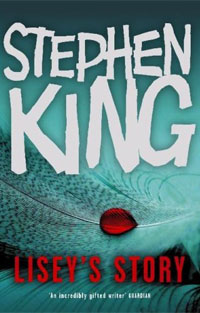
"Lisey's story" - Stephen King


We live so close to the people most important in our lives that, after some time, it’s almost as if a temporary blindness sets in. To really see them involves remembering things we would rather forget, face facts better left in the dark, embark on journeys that expand through whole decades, interpret signs we mostly shrug off as coincidences. Yet, at certain turning points, if we want to save them and ourselves, we have to look into old journals and memories. We have to look.

If I were to sum up “Lisey’s story” that’s how I’d start, but Stephen King’s latest is also about a whole lot else. The book starts as Lisey Debusher and her sister Amanda (there are three other Debusher sisters) set off to clean out the old barn, which Lisey’s husband, Scott Landon, deceased two years before, used as an writer’s studio. Landon was somewhat of an oddity in the literary world, since he managed to be a popular best selling author and yet courted by the academia - whose representatives of various institutions keep hounding Lisey to donate Scott’s papers, in the midst of which, they can smell unpublished works. Lisey has been the woman “behind the great man” most of her life and contentedly so; his “gal pal” as one particularly ignorant photo caption names her.

Life with Scott wasn’t all roses. There were episodes of writer’s block mixed with depression and alcoholism, many lonely nights as Scott encloses himself in his sound proofed studio, writing feverishly and listening to country music at levels probably detrimental to the health of the human ear. Their marriage has been childless (and pet less) and maybe that’s why the universe they both created has proved so enduring, even two years after one of them has disappeared from the face of the earth.

Since Lisey will remember many episodes from her twenty something marriage to Scott,
“Lisey’s story” has been described as a book about marriage, widowhood and the pain of letting go (and some describe it as his first foray into the “everyday” – to those I recommend 1999’s “The girl who loved Tom Gordon” about a little girl lost in the woods for two days – King has been at ease with both the everyday and the fantastic). But to me it is just as much about sisterhood. Some of the passages that take place with Lisey and Amanda felt so true to what my experience of life with a sister I felt sure King must have watched them himself (and indeed in the end he acknowledges his wife’s five sisters); the way that sisters can be so rude and even funny at the most horrible of times, when you wouldn’t accept such talk from anyone else; how you hate them sometimes but would help them commit unspeakable acts without so much as a moment’s notice. That all rang true, and is one of King’s major achievements in this book.

Scott and Amanda are the two driving forces in Lisey’s adventure. Scott is a writer, and as with other King characters that share his profession, he looks at the world a little more closely than the rest of us: not only does he not easily forget, he strives to remember at all cost and still is sensible enough to understand that some of us, particularly his wife, need to enclose certain truths behind a “purple curtain” in order to function in this world. Lisey will learn nothing new but she will have to do something much braver, in order to save herself – go back to memories she has long ago erased.
Amanda is a psychologically fragile woman, who has once before slipped into a state of semi catatonia, and who even in her middle age falls prey to “cutting behavior” most often seen in adolescent girls. She is the sister who the other four have to “keep an eye on”, and if the phone rings during the night it’ll be her name that immediately pops into the other women’s minds.

Now, as anyone married to a sensitive and caring person will know, your partner will often have surprising insights to share about your own family, words that shed light on people you thought you knew better than anyone. This is the case with Scott: long after his death, Lisey will realize that although she and her sisters are the one who cared after Amanda in her troubled times, it was Scott who really saw her for what she was.

The story takes place during a couple of days, during which Lisey will find her life threatened, and will need to remember a whole lot she would rather not, in order to elude her would-be torturer, and also save her sister Amanda. To do so she will have to play a game her husband learnt from his brother as a child a “bool hunt” which will turn out to be the emotional opposite of a trip down memory lane.

As with other King books, the childhood universe, the real and the imagined (and who knows which one we see when we “remember”) are of great importance. Sisters and brothers are intrinsically part of these worlds we create, but what this author understands and conveys so masterfully is that in a marriage, if each of the partners dares to open the door of his own inner world, then you can move through the joys and horrors of memories that somehow become your own.

It’s like this: sisters have the same set of keys to a secret world they shared. Sometimes, they meet someone great enough to give a spare one, and receive one in return. Of course some caution is in order because, as my favorite sentence in “Lisey’s story” goes: “(…) husbands were all too often the back door by which secrets escaped in to the outside world”.

King has got the marriage thing, and the sister thing down, he moves through this world through the next with the classiness of automatic, transparent glass doors; he’ll make you laugh when he’s trying to be funny; he’ll make you hungry when he talks about food and feel pain when someone is hurt. Also, when he’s good and ready, he’ll scare the shit out of you.

Friday, January 12, 2007

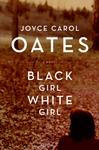
"Black girl white girl" - Joyce Carol Oates


Well, this was by far my least favorite book of the last few months. Joyce Carol Oates is a very important American author, or so I hear, but after “Black girl white girl” I’m saddened to say I won’t be enlarging her fan base.
I had great expectations for this one: because of the author, the period (seventies), the scenario (college campus) and theme (the relationship between two female students, one black one white), but I was deeply disappointed. By page fifty I was already feeling slightly annoyed, and even though I got through the 272 pages I felt cheated in the end.
Genna Meade is the daughter of an infamous radical lawyer, the white girl of the title, who throughout the novel seeks the friendship of an aloof Minette Swift the daughter of a black minister. The lives of these two girls collide when they are assigned to be roommates in an all-girl dorm at Schuyler College, an institution founded by Quaker ancestors of Genna, a fact that she tries, and mostly succeeds, to keep from her colleagues. Now I hear you say, “what’s wrong? It sounds interesting enough” and it does. The problem is it doesn’t go much further. Already near the beginning the characters felt one-dimensional, and they never got any better; what’s worse they started to seem unbelievable (you just start going “Oh no she didn’t” every few pages). The fact that the girls’ fathers are featured so prominently tends to get a little thin, too. Okay we get it: Genna was brought up to believe in “white guilt” and equality as important social and personal guidelines for behavior; Minette steers her life by the course of her daddy’s religion. But really, are we supposed to believe that two nineteen year-olds hold their fathers opinions of the world so dogmatically in their hearts and minds that they can’t even begin to fathom that the world might be a little more complex, a little more grey, than their black and white views? So much for liberal education. In Genna’s case, the narrator, it’s even more hard to swallow: the girl obviously suffered of neglect (and even some hinted abuse), and from the near complete absence of her father, and spent the final years of high school in a boarding school, yet we are expected to believe that she is the quintessential “good girl” always eager to protect her roommate, even though, right from the beginning it is obvious Minette does not wish to be protected or even befriended.
There is a particular event, that seems to me so completely incredible as to be ridiculous: Genna’s mother, also neglected by her husband and emotionally unstable, visits her at college and presents her with an expensive Italian leather bag Genna didn’t particularly want; as the last day of school before Christmas unfolds, Genna decides to leave the bag behind as a gift for Minette, a girl which never encouraged any friendship, and often avoided her completely.
But, you’ll say, some girls elicit that kind of devotion, they can be bitches and still others pine for their friendship. But that’s just it, Minette is not a bitch, nor is she beautiful, nor intelligent, nor funny or even interesting. In fact, what we know for sure about Minette is that she is deeply religious, academically way behind her colleagues, incapable of humor even though she is sometimes unintentionally funny, quick to take offense, and most astonishing of all, seems to repudiate every single girl, white or black, who tries to befriend her.
These two girls seem to live only to embody their fathers’ ideals, for they have none of their own. They don’t question, don’t doubt, don’t resent, they just…don’t. What’s more there are no other characters of note, because these two, at least in Genna’s memory, seem to have spent the entire first year of college consigned to their bedroom and their stifling and barren imaginations.
Spoiler
And the mystery of the alleged “racial assaults”? Why, Oates seems to have had enough of that in last pages of the book and just pins the whole thing on Minette, which again feels unbelievable: why would a girl who so insistently shunned everyone, go to such lengths to draw attention to herself? So her bad grades would have an excuse? I might have bought that Minette did it, or may be even Genna, except that when I got to the end there was no way I believed these characters were that spunky. Or that interesting.

Thursday, January 11, 2007

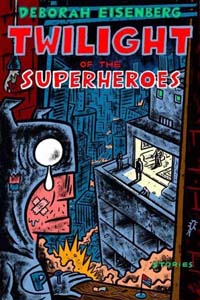
"Twilight of superheroes" - Deborah Eisenberg


Deborah Eisenberg’s new book of short stories “Twilight of superheroes” is just…how can I put it? A goddam joy to read. If like me, you usually shun collections of shorts – because you get to the end and a couple of days later remember only one story, if that – rest assured that the six you’ll find here are all memorable. Eisenberg is a believable narrator whether she embodies a gay forty something, a slacker youth, a housewife or a battered teen bride. And boy does she love words! You can just feel that Eisenberg loves the English language like… like some tailors must love cloth, or some hairdresser’s hair. You feel that she takes you for a dip in frothy, warm bubble bath made of words. Now normally I don’t like it when authors use stylistic devices that call attention to them, and take it away from the story, but when someone uses “obstructed” and “obdurate” in the length of two lines, and it doesn’t even feel weird, or slips you expressions like “beringed claw” (it took me a while to figure out it meant icy as in Bering, Alaska) while referring to an old-woman’s hand stretched out to receive the obligatory kiss, or “spongy platitude”, you just have to smile in amazement and wonder “how does she do it? Eisenberg uses alliterations as “Irritably raking back the streaky hair, the rectangular glasses…” or “Sunlight and silence shimmered” and it sounds poetic, instead of silly as most often is the case. Even her wittiness his expressed by carefully chosen words “Jeff and I were having sort of vaguely severe money problems”.
Maybe Eisenberg’s short stories are powerful because they actually have little in the way of plot, when you get down to it. Yet they feel luxurious, thick and mysterious like a cup of something warm and wonderful, brimming with aromas and little hints of flavors you can’t quite place (see? It’s contagious). They delve into the character’s words and thoughts, and in their surroundings – Eisenberg uses imaginative metaphors and so, instead of feeling slapped by them, you feel like you’ve just read something utterly new: “The older one even had a wife, whom Corinne treated with a stricken, fluttery deference as if she were a suitcase full of weapons-grade plutonium.”
Reading “Twilight of superheroes” reminded me I don’t just like books because of the stories but also because of language and words. And when an author revels in them as Eisenberg does, the shortest of stories becomes a roller coaster, a piece of cake and a warm blanket all wrapped into one.

Wednesday, January 03, 2007

Good, clean fun

Sometimes you have so much in your head you just can't bear to dive headfirst into what, in other circumstances, would be a great book. You just don’t have that sort of space in your imagination. Well, I've just had a month exactly like that, and I must have started and abandoned some five books, my mind kept wandering off from the thickly woven characters and plots. But despair not! There are books that by demanding less of you, end up being a solace in times of trouble. These three opened up a ray of sunshine in an otherwise difficult month:

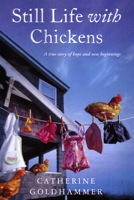
"Still life with chickens" - Catherine Goldhammer

Poking fun at "year in Provence/somewhere Mediterranean" might become a genre of its own. The first sentences made me smile and I just kept on going. Goldhammer is a friendly narrator, and you might want to hold the roast chicken for a while afterwards.


"Friends lovers chocolate" and "The right attitude to rain" - Alexander McCall Smith

I had been meaning to read the second installment of the Sunday Philosophy Club for quite some time, but it turns out it was a good thing to wait, because this way I had the third ready in line! Isabel Dalhousie is such a great character, that I can't help believing (or hoping) that she is an actual person. Her sometimes annoying habit of over-analyzing everything makes her even more life-like. In fact, she is such a compelling character, that McCall Smith seems to be gradually dispensing with the artifice of a mystery to be solved. And he is right; spending time with Isabel wandering through Edinburgh is a treat in itself. However prepare yourself for a wonderful surprise in the end of the third book. I never saw it coming and it had me laughing in delight. I can't wait for the next one.

December Books


Here's what I read last month:


Radical Simplicity - Dan Price


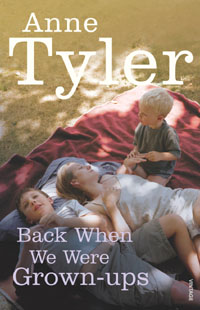
Back when we were grownups - Anne Tyler


Still Life with Chickens - Catherine Goldhammer


Love works like this - Lauren Slater


The Wild Braid - Stanley Kunitz, Genine Lentine Photos Marnie Crawford Samuelson


Friends, Lovers, Chocolate - Alexander McCall Smith

Monday, December 11, 2006

"The Inheritance of Loss" Kiran Desai


On an episode of the TV series Extras, actress Kate Winslet explains to the two main characters of the show that a sure-fire way to get an Oscar is to star in a movie about the Holocaust. Another good bet is to play a mentally retarded character.

Judging by the attribution of this years Booker Prize and subsequent reviews, it would seem that in the post 9/11 literary world a good way to get your book noticed is to make it about “globalization, multiculturalism, inequality”, as one BBC reviewer listed the themes on Kiran Desai’s latest book.

I’ve finished “The Inheritance of Loss” more than a month ago, and for a while was not exactly sure what to make of it. More to the point I didn’t know if I had liked it.

On the surface I had. Just like reviewers a bit everywhere I found it moving, thought provoking and honest.

Kiran Desai’s book is really about two stories (you read one chapter about one, and then the next about the other until the end); one set in a village in India, near the border with Nepal, the other in New York. I’ve grown to dislike this narrative technique because usually what happens is that I grow to like one of the stories better, and therefore rush through the chapters about the other one. In “Inheritance of Loss” I felt the same. I wanted to read about Biju and his ordeal as an illegal immigrant in New York, and leave the other characters behind. His ordeal is made poignant, because you know this happens, and Desai paints so many details so expertly, that you can’t help but feel you are watching a documentary. In fact, if a documentary was shot following the life of an Indian immigrant in an American city, I almost doubt it would feel as real.

But Desai’s ability to render the actual so life-like, to infuse the everyday with the political, is probably what keeps “The Inheritance of Loss” from being a truly great story. A message, be it a political or a moral one, is a good thing to have in a novel, but you have to make the reader believe he traveled the path on his own, even though he has been of course, gently led along by the author. The heart of the great novel must rest with its characters and plot, not merely with its manifesto.

In Kiran Desai’s book you are slapped right and left with politics. The author lays bare in front of you immigration in the forties to the British metropolis, in the character of the retired judge (he brings to mind V. S. Naipaul on several occasions), and today’s correspondent, immigration to the United States. You have only one conclusion to reach, led by Desai: the process of leaving infuses the family with joy and hope in a better future for their offspring, while their souls are broken beyond repair through their travels west. Immigration, in some way, takes away faith in humanity, and replaces it with a coldness and indifference to others (the judge after all, seems to feel only real affection towards the dog).

This pull of immigration is not of course, limited to India (Biju, meets workers from many countries in the kitchens of NY’s restaurants) and not even to third world countries. In the Italian series, “La Meglio Gioventu” one of the first scenes, set, I believe in the beginning of the eighties, shows a college professor, advising his pupil, one of the main characters, that if he wishes success in his academic field, therefore in his life, he must immigrate as soon as possible, preferably to the United States, or to England. Outside the USA, Britain, and maybe France or Germany, every other middle-class, teens to thirties young person has been brought up to believe that a better life can be achieved simply by relocating deeper into the Empire. This is why Biju’s story strikes such a deep chord, and has the capacity to do so almost universally.

Desai’s other story, follows a retired judge, his teenage granddaughter, Sai, their cook (who is Biju’s father), and other assorted villagers, through the months of a political upbringing led by ethnic Nepalese. These characters feel a bit one dimensional, especially Sai. Actually a characteristic of Desai’s book is that all the characters seem quietly out of focus, blurred, as if you could never get to their minds and hearts. They are, all of them elusive, and not in a good way.

Although the judge’s reminiscences about his youthful immigration to Britain, are closer in nature to the quality of the chapters on Biju, the ploy of making Sai, fall in love with her tutor, who then joins the insurgents feels very contrived, as if the only point were to give the author a character in every possible side of the political spectrum.

I guess the worse criticism I can offer on “The Inheritance of loss” is that it doesn’t feel genuine. I felt I was being rather obviously manipulated, and at the same time felt that it wasn’t necessary, since I was going to get to the same conclusions without being dragged along. The characters feel cold, but mostly it’s as if the author herself didn’t like her own creations, or didn’t want to get too involved with them. Some reviews stress the beauty of the language, but to me, the more poetic, descriptive passages, felt labored, in such a way that calls attention to the writer and away from the story.

This is not a book that will live on in your mind, at least not in the way favorites usually do: through an expertly sketched character, vivid descriptions, or an absorbing plot.

However it is still a good read. It does make you want to think about where you stand on a series of issues.
In an interview cited in the NY times, Desai described her first novel “Hullabaloo in the Guava Orchard” as “frivolous”. When I first read this I thought she was being self-deprecating in a funny sort of way. Now I’m not so sure. There’s definitely some lack of substance in “The Inheritance of Loss” as well, even though it deals with important trends in society.

Maybe that’s why it reads like a term paper written by a good student: all the facts are there but not the heart. But, she knew she’d get a good grade. This is, after all, the teacher’s favorite subject.

Friday, December 01, 2006

"Hons and Rebels" - Jessica Mitford


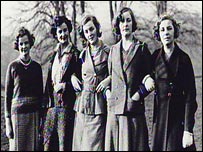
The Mitford Sisters
( Jessica is missing. The others are l-r Deborah, Nancy, Diana, Unity, Pamela)


The Mitford family has the dubious honor of having spawn one of the most eccentric groups of siblings ever. Between them, a famous novelist, two nazi sympathizers, a communist, a duchess and, less spectacularly, a homosexual and a horse-lover (not some sort of perversion, by the way).
I wasn’t aware that the Mitford sisters enjoyed such a cult until I read Atlantic magazine’s review of “Decca: The letters of Jessica Mitford”. But really, how can anyone not find them fascinating? Like the Beatles, everyone can have a favorite, only here you have seven to choose from.
I decided to start my forays in Mitford country trough “Hons and Rebels”, Jessica’s account of her childhood and teen years until her first marriage ended in untimely widowhood (she was 23).
First published in 1960 it is a very honest memoir. You might believe Jessica’s communism (and Diana and Unity’s Nazism, or even Nancy’s socialism) is first and foremost a rebellion against her parents and education, and she concedes as much in the end of “Hons and Rebels” when she attributes much of her (and her husband’s, Esmond Romilly, a nephew of Winston Churchill) teen to early twenties personality to it:
“Both Esmond and I would have scouted the idea that anything in our conduct was remotely attributable either to heredity or to upbringing, for, like most people, we regarded ourselves as “self-made”, free agents in every respect, the products of our own actions and decisions. Yet our style of behavior during much of our life together, the strong streak of delinquency which I found so attractive in Esmond and which struck such a responsive chord in me, his care-free intransigence, even his supreme self-confidence – a feeling of being able to walk unscathed through any flame – are not hard to trace to an English upper-class ancestry and upbringing”. Sure, some of the time you guess more than witness a certain obnoxiousness of character, but true-blue Jessica and Esmond were first and foremost completely clueless about the world. This provides funny episodes such as the author’s disbelief at meeting real working class brit girls, and finding them not only politically ignorant, but also disinterested, humorless and bitter, and the couples joyous sense of adventure in getting jobs such as sales-girl or stocking salesman, as if they were incredible explorations into some unknown world (which of course, it was). It could have swung either way, but in the end I joined their team. They wanted so much to experience life unencumbered by their familial values and prejudices, to make up their own minds about the world, their optimism is contagious, and yet Mitford never falls into a rosy discourse, which could have been so easy to achieve.
Just as riveting as the atmosphere of Swinbrook where the seven children grew up in near isolation, is Jessica Mitford’s account of the events leading up to Britain’s declaration of war on Germany. I was shocked to learn that it was, at one point, unclear whether Britain would join the war with or against the nazi regime, as well as the degree of cooperation Hitler enjoyed with prime-minister Neville Chamberlain’s government. And I was just as amazed to learn that as early as 1933 a book entitled “The Brown Book of the Hitler Terror” was published featuring photographs of the mistreatment of jewish prisoners.
You can’t help but empathize with Jessica Mitford’s puzzlement at her favorite, and once closest, sister, Unity (nicknamed Boud) endorsement of nazi doctrine. Part of adult life is, to my mind, often about little moments of alarm, when you realize you have a less than clear idea of who exactly your siblings, your parents and childhood friends are.
You’d have to be a cold fish indeed, to conclude “Hons and Rebels” and not wish to follow deeper and further into the history of these very unusual sisters and brother. Yes, it’s voyeuristic, but ultimately they only have themselves to blame – they’re just so damned interesting. In the parlance of those times – terrific.


Jessica Mitford

Wednesday, November 29, 2006

Latest books read


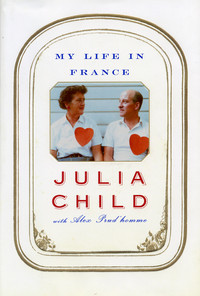
Over the last week and a half I’ve gone through Anne Tyler’s “Digging to America”, “My life in France” by Julia Child and Alex Proud’homme and Abby Goodnough’s “Ms. Moffett’s First Year”. They were all heartwarming, each in their own way (respectively, a work of fiction, a memoir and a journalistic narration), and yet they are not so far apart. The three books have as their main characters women who, past the youthful years that are supposed to be our best, find a new passion, in motherhood, love, food and teaching.

Friday, November 17, 2006

"History Lesson for Girls" - Aurelie Sheehan


If there is a cozier feeling than seeing a book you think you’ll love and then reading it and loving it just like you knew all along you would, I don’t know what it is. A book like “History Lesson for Girls” restores my faith in the world and in people.
I read Aurelie Sheehan’s book in two afternoons, and now I wish I had stretched it out a while longer – even though it would be impossible to hold on for more than another couple of days – but I couldn’t wait to follow Alison Glass and her best friend Kate Hamilton in their “perambulations” on horse back, as well as the ones they made up for their lost heroine of olden days, Sarah Beckingworth.
Now, if you’re not into first person narratives of young teenagers, maybe you won’t be as awed as me by “History Lesson for Girls”. Then again if you’re not, you probably won’t appreciate many of the books I’ve written about here (which means, by the way, that you suck).
Set in 1975, in the waspy small-town of Weston, Connecticut, Sheehan’s book covers almost a whole school year of thirteen-year-old Alison’s life, whose painter mom and poet/university English teacher dad, have just moved to this picture perfect New England hideout for wealthy men and their bored wives. Getting adjusted to Weston seems, at first glance, like it will be harder for the girl’s parents: even though Alison suffers from scoliosis and has to wear a Frankenstein-like contraption called a Milwaukee Brace to force her S shaped spine into a more conventional orientation, she gets “saved” by Kate Hamilton even before she sets foot in her new junior high – or maybe its Peaches and Jazz, the ponies, who do the saving. Riding in nearby trails, crossing icy streams and racing their hearts out is what turns Alison and Kate into best friends (that, and sneaking to smoke Winstons together). They even create a girl named Sarah Beckinworth for a school project about Independence War era Weston: just like them she is brave, fierce, self-sufficient and a heck of a rider.
Alison’s mom, on the other hand, ends up being sucked into a grand scheme for the town’s jubilee organized by a very color coordinated group who call themselves the Women of History, despite being a bona fide bohemian, while dad mopes around believing that hypocritical expressions such as “helping the community” are only the first step down a very frightening road that will end up, surely, in Republican Party membership.


But let’s not forget this is the seventies we’re talking about, the decade that most sordidly popularized an unhealthy mix of politics, religion and sex. Even while the young girls escape the constraints of time – theirs is a timeless friendship – the parents prove too weak to resist society’s pull. A case in point is Kate’s father, Tut (not his real name), a self-appointed Egyptian shaman, turned millionaire thanks to his book “Pyramid Love” whose message is that buying is holy or as he puts it a “ spiritual basis to acquisition”– or Alison’s mother who drags her daughter through yoga, faith healing and other new-age pursuits hoping to set her spine straight.
I’ll leave the plot twists and bittersweet ending alone for those willing to give the book a try. I liked especially how the leitmotif of history is not obviously (or at all) tied with the girl’s story, how there are some loose ends and things left unexplained. Even if our narrator is now grown-up, she doesn’t feel a need to spell it all out – in this, and also in its tone and rhythm “History Lesson for Girls” closely resembles Life.

"Miss American Pie" - Margaret Sartor


Turning into a young woman is a process both filthy and holy. Margaret Sartor gives us a look into those that are, in a lot of ways, the least feminine years of our lives, the absolute worst and sometimes incredibly amazing, teenage years.
Almost since the beginning, “Miss American Pie” made images appear in my mind, images I had seen before. It didn’t take long to realize they were Sally Mann’s photographs of her kids in “Immediate Family”, and now, I can hardly think about the book without getting these “mannesque” stills wafting in.
From 1972, when she was thirteen years old, until 1977, when she turned eighteen, Margaret Sartor kept a diary, which she has now published. Two older sisters (mostly absent from day to day life since they were both about to leave for college when the diary starts), a younger brother, a next door neighbor, a beloved pony and horse, a cast of girlfriends and boyfriends, an old-fashioned dad and an “artistic” mom, make up the characters of this coming-of-age story set in small-town Louisiana.
There are themes in “Miss American Pie” which resound in every adolescent girl. Maybe we didn’t all have a pony but we sure as hell which we had, and we all hated our parents, our girlfriends and ourselves from thirteen on. Our hair was something to be loathed and which caused almost unbearable pain, as did other, assorted parts of our body. Boys were run after, and away, from on alternate weeks. Everything was awful and cool in equal measures.
But we didn’t all grow up in the almost rural South where nature is still there for kids to walk in at night or dawn in near absolute safety (from anyone but themselves); where you experience the good and bad of living surrounded by animals, (where deer hunting is still a ritual for young boys) where race and religion are still defining issues; where girls start drinking, smoking, driving and lying at such a young age, while almost simultaneously they decide to give your life to the glory of the Lord. This intoxicating mixture of sacred and profane, that is frequently, unintentionally funny, is well illustrated in the 1974 diary entry “I wonder if Jesus was sexy”. Remember what it was like to be both shallow and deep?

“September 21
God loves a cheerful giver. I’ve decided to be cheerful.

September 22
Cheerfulness is not in my nature. I’ve decided I’m going to improve my mind instead. I’m also considering giving away all my favorite clothes.”


Images like Mann’s “Jessie and the Deer, 1985”, where the little girl is dressed in a ballet tutu with ballerina shoes, next to the back of an open pick-up truck, from which a dead deer’s head with a gash in the neck hangs; or “Candy Cigarette, 1989” where a more grown up Jessie looks straight at the camera – at her mother – with the eyes of a thirty-eight year old divorcé in a nine year-old’s body seem to came directly from this narrative universe. Just like Mann’s images are always raw, so are Sartor’s entries not usually more than a couple of lines long. They seem to say that growing up does not sit well with posing or writing for hours.
Going through adolescence is such a strange process, that even when you see it through every scientific viewpoint, biology, psychology, there always seems to be something very important missing. If you want to look at it from a magical perspective, one who is closer to the real feel of it, a good place to start is “Miss American Pie” or “Immediate Family”. You will not be able to look away for a second – if you do, you end up missing the whole thing.


Thursday, November 09, 2006

My 10 Favorite Travel Books


Simon Winchester – Krakatoa - The Day the World Exploded

Tony Horwitz – Into the Blue – Boldly going where Captain Cook has gone Before

Tony Horwitz – Confederates in the Attic – Dispatches from the Unfinished Civil War

Bill Bryson – The Lost Continent – Travels in Small-Town America

Bill Bryson – A Walk in the Woods

Thurston Clarke - Islomania

Elaine Sciolino – Persian Mirrors - The elusive face of Iran


Christiane Bird – Neither East Nor West – One Woman’s Journey through the Islamic Republic of Iran

Will Ferguson – Hokkaido Highway Blues – Hitchhiking Japan


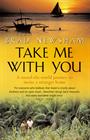
– Take Me With You – A round-the-world journey to invite a stranger home

Wednesday, November 08, 2006

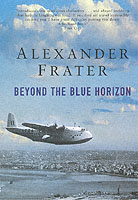
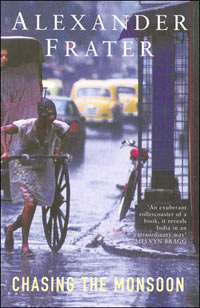
"Beyond the Blue Horizon", "Chasing the Monsoon" and "Tales from the Torrid Zone" by Alexander Frater


Travel writing: when it’s good, it’s great; when it’s bad, it’s usually written by a Brit. At least that was my conclusion after a quick survey of the two shelves I’ve allotted to the genre.

My introduction to travel writing came in the form of Bruce Chatwin’s books – first translated into Portuguese in the mid-nineties. His “In Patagonia” was partly responsible for my choice of Anthropology as a degree, and therefore becoming utterly useless for the national job market – something for which I should either sue his estate or thank him eternally. Whatever.
Since then, I’ve read a number of travel books and though I’m no connoisseur, at the very least, as they say, I know what I like. This is it:

  • I like an author who does his/hers historical research, but doesn’t feel compelled to dump it all on the readers, just to prove it. If it’s really boring or incomprehensible, either make it simple and entertaining or just leave it out, for god sake. It’s not my fault you have been stuck at the library for the past eight months.


  • People. If you’re not good at talking to people and getting then to open up, and at thinking about them as human beings just like yourself (like V. S. Naipaul, whose every conversation makes for uncomfortable reading in “The Middle Passage” or “A Turn in the South”), it is better to refrain from travel writing. The British writers suffer particularly from this last affliction, especially when around their old stomping grounds in the East – they just can’t shake the old Empire shadow, I guess.


  • Diversity. Don’t make it all about one subject – history, politics, nature, one person, I like a little of everything. Books with a theme are wonderful, but there is no need to become monomaniacal. In this respect, I think Simon Winchester’s “Krakatoa”, although maybe not a travel book per se, is nearly perfect: it’s got history, geography, geology, botany, biology, anecdotes, personal recollections and a couple of more things (on the other hand his “Map that changed the world” is the exact opposite). Themed travel writing offers its own pitfalls, the most dangerous being when the subject overrides the travels – such as in “Colour – Travels through the paintbox”, by Victoria Finlay, a very accomplished book about the history of pigments, but where the fact that the writer is in India or Spain is largely secondary to the narration, which is focused solely on the processes and people who obtain the pigments, and even so is 438 pages long; one of those cases where you feel the author is telling you absolutely everything she learned during the research stage.


  • Last but definitely not least, humor. Dour and gloomy whiners should be banned from perhaps all writing, but especially travel writing. There’s nothing worse than traveling with someone who is constantly getting aggravated over train schedules, bad food or inconvenient people, and nothing better than being guided by someone who can have a laugh at being cheated, fooled or insulted (Bill Bryson is the man, of course).


  • And so, rather belatedly, we reach the matter at hand, Alexander Frater’s “Beyond the Blue Horizon”. This was my third Frater, after “Chasing the Monsoon” and “Tales from the Torrid Zone”. Frater is the opposite of monomaniacal. If anything, his books go through so many places and times all at once that the pace is dizzying. It’s not that he explores that many subjects: his favorites throughout remain meteorology, aviation, tropical medicine, with pretty girls and alcohol the two recurring leitmotifs while in transit. Born in the pacific island nation of Tuvalu, his grandfather and father were local celebrities - as much as severe Scot missionaries can be, anyway – who provided the first organized care in the way of medicine, and religion, of course, to the natives. Obliged to leave because of World War Two, the Frater family spent some time in the Fiji, and after studying in Australia the author made his way to the metropolis where he became a journalist, and eventually the Observer’s chief travel correspondent.

    That Frater is well traveled there can hardly remain any doubt – he managed to write “Tales from the Torrid Zone”, 378 pages long, and tell stories on forty-one countries he has personally visited, and still mention thirty others. What did I learn about Guyana, Laos or Gambia I can´t recall exactly, but I now know there is a foundry in London where you can order bells, the smallest of which cost around two thousand pounds. The reason I know this is because the most important story in the book is about the author’s generosity in offering his old church in Tuvalu a new bell – not very modest, but for all intents the best episode in the book.

    From 1990, “Chasing the Monsoon” is, to my mind, the best Frater. Having a set goal – following the monsoon in India to the final destination of Cherranpunji, “the world’s wettest place”, a pilgrimage his father planned but never made – does wonders for his writing: it reigns him into a specific place and phenomena and still allows him to recount once again his childhood, which was extraordinary.

    Goaded by “Chasing the Monsoon” and since there was only one other book by Frater I hadn’t read, I embarked on “Beyond the Blue Horizon”. The Time Out blurb on the cover reads, “You’ll have great difficulty putting this down”. Well I put it down about three months ago, and had to force myself to finish the remaining two-thirds in two days, or I knew I would never get through it. I should say this was Frater’s first book, first published in 1986, and having the others it is undeniable he got a lot better at it.

    In “Beyond the Blue Horizon” the writer undertakes to follow, by commercial flights whenever possible, the Imperial Airways Eastbound service of the thirties, London to Darwin. Now, I like airplanes just as much as the next person – which means, I guess, that I might like to read about the experience of flying or about people who are passionate about it, but not necessarily about the technical parts of the process – but this book, 430 pages long, was just too much for me. Part of it, is caused by Frater’s own virtuousness, since he sticks as closely as possibly to the old schedule, and therefore never spends more than, on average, one night in each stop, and doesn’t even leave the airport in about half of the fifty-two stops. It’s all very well if you want to know the name of a lot of airports, their history, and the models of the airplanes on the tarmac on the hours Frater goes trough, and read with him extracts of journals of old Imperial passengers, but for the rest of us, quite tedious. All the interviews are with airport or airline managers or people otherwise connected with modern flying (or a “pretty” or “striking” air stewardess when he gets the chance).


    You do get a feeling of how exciting it must have been in the first days of commercial aviation when Frater interviews Mr. Tata, the founder of India Airlines, or the great aunt of the Jodhpur maharajah, or in Australia, where everyone seems to know something about their legendary pilots, but otherwise his questions mostly draw blank stares. Some of what passes for ignorance might be related to the subject itself: Imperial Airways was not, despite what might be inferred, a pioneer of commercial flights. When it was created in 1924, both KLM and France’s Aéropostale had been active for five years, and the regular airmail service was only established in 1937. Many of those who speak to Frater refer Dutch pilots by name, for in those days, they were the heroes of aviation.

    The thing that really surprised me about this tour, taking place in the early eighties, is how much of the old colonial flavor could still be tasted, especially from India on. Maybe it’s because Frater was able to sojourn in some pretty amazing places such as the Jodhpur Palace, or the Eastern and Oriental in Malaysia and Raffles in Singapore where Conrad, Maugham, Kipling and others also stayed, but it was painful to read about adult Indians, Bangladeshi, Malayans, and Singaporeans working at the hotels as private valets still referred to by the author as “boys” (albeit between inverted comas). Colonial? I hear you ask – surely not? Well take a look at this passage from when the author arrives at Australia: “ I had grown unaccustomed to the sight of Europeans doing menial work” – sure, it’s worse because I took it out of context, but still, it’s pretty bad.

    The historical recollections throughout always feel contrived, as the author forces them into every stop. Maybe he should have stuck with one historical character, a pilot preferably, instead of jumping between passengers and crew. It also doesn’t help that in the journal he most quotes from the journey is being done backwards. The ending feels forced just like in Torrid Zone (there he delivers the bell to the old church accompanied by a lovely young radio reporter who shock! wins a prize with the piece); here, on his last flight, he manages to find a woman who had her maiden voyage on the exact same plane Frater flew as a child, and who his also obsessed with flying boats. Maybe I’m a cynic but it just sounds like too much of a convenient ending.
    From "The Happy Isles of Oceania" - Paul Theroux (quoted in Brad Newsham's "Take Me With You"):


    The woman known on board as The Countess...said she was a travel writer. "I am writing a story for the best and most brilliant newspaper in the world" - and she named a German daily paper. "They respect me so much that in seventeen years they have changed only one sentence of mine."

    "What was the sentence?"
    "It was very reactionary you will think," The Countess said.
    "I'll be the judge of that."
    "All right then. "Three hundred years of colonialism have done less harm to the world than thirty years of tourism."
    I smiled at her and said, "That's brilliant."

    Sunday, November 05, 2006

    A New England Autumn Wish List


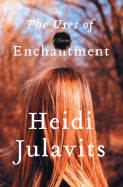
    The Uses of Enchantment - Heidi Julavits

    A "black-humored tale of psychoanalysis, Yankee repression and prep school angst" according to the NY Times review. And the great cover doesn't hurt either.
    Although the Village Voice is ambiguous about the storytelling quality, i'd still like to make up my own mind.


    Lisey's Story - Stephen King

    My favourite King book, Black House, is co-authored with Peter Straub, whose work i probably prefer to King's (at least the books I've read, since they are both so prolific it's impossible to have an acurate opinion on the whole), but this one has potential...

    Thursday, November 02, 2006

    Books in hiatus

    Some of the books that I haven’t been able to finish, for one reason or other…


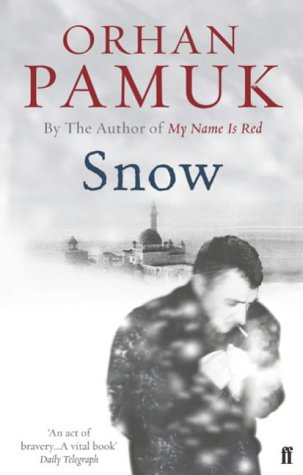
    Snow – Orhan Pamuk – I’m two thirds through this one, and although it’s been sitting on the shelve for more than five months I still hope to finish it


    Garbage Land – The secret trail of trash - Elizabeth Royte – about half way through, but interrupted for more than a year now so its prospects are not good, I’m afraid


    The Fortress of Solitude – Jonathan Lethem – It sounded like a good idea: NY in the 70’s cartoons, music, but something just didn’t click between me and this story


    A Sense of the World – How a blind man became history’s greatest traveler – Jason Roberts – I’ve only read forty pages and I intend to finish it. The thing is I’d been reading non-fiction almost exclusively for months and felt like a change

    Wednesday, November 01, 2006

    Saturday - Ian McEwan


    The rich are people too

    Some books seem to obligate critics to concentrate on a lot of issues other than the story at hand, and Saturday is one of them. Most reviews of Ian McEwan’s latest book seem to include an overview of his body of work, and to compare how high or low Saturday fares in comparison. Many have found it lacking. Also, because of the particular narration – the whole book is but one day seen through the eyes of one character – there have been comparisons with works of the same ilk. This is where my lack of canonical reading might serve us all. I’ve only ever read another book by McEwan: Black Dogs. That was more than ten years ago, and while I can’t remember what exactly it was about, I do remember being utterly repulsed by it. In fact, I’ve only undertaken to borrow Saturday from my sister, because she assured me I would hate it. But I didn’t. Ah!

    On the other hand I’ve finished it a week ago and I still don’t know quite what to make of it. Because of the setting – the Saturday is the 15th of February of 2003 - throughout the day, the largest anti-war demonstration in London is never far from sight (or when it is, it is followed by TV or radio) or the narrator’s mind – the reader is lead to believe that there is some underlying message about 9/11, the subsequent invasions of Afghanistan and Iraq, and Britain’s role as U.S.A’s ally.

    But if there’s one theme in Saturday, it is the misplacement of modern fear – how we collectively can’t shake the terror of going up in flames in some kind of terrorist attack – and yet, we are most vulnerable to everyday dangers, the kind that might blindside you on a casual weekend, as it happens here. Henry Perowne, the narrator, is a character whom I found it difficult to empathize with and I suspect this is a feeling that might be shared with many readers: he is wealthy, lives in a privileged part of London, is a very successful neurosurgeon, happily married to a likewise successful and beautiful woman with whom he engages in apparently copious amounts of sex, and both his children are well in the way to conquering what passes for achievement today: celebrity (the girl is having a poetry book published by a renowned house, the boy about to tour NY bars with his blues band). He drives a Mercedes S500, is bored by non-medical books, and believes more good than bad will come out of invading Iraq. Henry lacks even the charm of being average, for what we have here ladies and gentlemen, is an utterly upper-class man, one whose positivism and unfailing faith in science and progress, are the obvious overripe fruits of being born in a country that was, not so long ago, the metropolis of a worldwide empire. We can be sure that Perowne is firmly anchored in that part of the western world that in Orhan Pamuk’s words is “scarcely aware of this overwhelming feeling of humiliation that is experienced by most of the world’s population”.

    Henry Perowne and his family are a bunch of privileged parasites who go to Oxford University or travel the world instead, and who spend their holidays in a chateau in France with their poet grandfather. I, for one, have wished the likes of them dead, many times. But here is the thing: after spending a whole day in Henry’s head I couldn’t wish him ill anymore, because I found out he was a caring and kind person. And it wasn’t just that the big house came through his wife’s side of the family, that he hates his father-in-law, or that he’s a bit of a coward when it comes to physical confrontation.

    I now knew he had been brought up by a single mother in a typical middle class home, that seeing his mother consumed by Alzheimer’s made him feel that strangely human mixture of feelings where you want to avoid the person who doesn’t remember you, and yet feel guilty for not making a visit they don’t even know you promised to make; that he doesn’t believe his faithfulness to his wife is remarkable, since he had never been attracted to other women; that he genuinely admires his children’s talents even though they manifest in areas far from his own profession; that he respects his co-workers and thinks of his patients as individuals. He is probably one of the few neurosurgeons who admit, even to themselves, that what they do is glorified plumbing. Even the dinner he cooks for the family reunion is humble and hearty – a fish stew.

    While we all have our weaknesses, sharing them might go a long way when it comes to not disliking someone. With Henry Perowne I can pinpoint the exact moment when I started feeling a rapprochement. It was accompanying him to the fish market, where, looking at the fish, he can’t help but recall a new research which confirms that they also feel pain, and wonder what this knowledge means to our “circle of moral sympathy”: “though he’d never drop a live lobster into boiling water, he’s prepared to order one in a restaurant. The trick as always, the key to human success and domination is to be selective in your mercies”. Though he’s a forty something male, a rich neurosurgeon, and I’m an unemployed twenty-something female, when you get right down to it we’re both hypocrites. In the end isn’t that what makes us human? Now that’s a message, McEwan.