Showing posts with label Memoir. Show all posts

Sunday, February 23, 2014

Tracks - Robyn Davidson


"There are some moments in life that are like pivots around which your existence turns - small intuitive flashes, when you know you have done something correct for a change, when you think you are on the right track. I watched a pale dawn streak the cliffs with Day-glo and realized this was one of them. It was a moment of pure, uncomplicated confidence - and lasted about ten seconds."


From the Postscript (2012):
"The question I'm most commonly asked is 'Why?'. A more pertinent question might be, why is it that more people don't attempt to escape the limitations imposed upon them?"

Wednesday, April 04, 2012

"Paradise Under Glass" - Ruth Kassinger


Paradise Under Glass: The Education of a Indoor Gardener

Ruth Kassinger's book centers around the project of building a conservatory in her home. The author wasn't really a gardener to begin with: in fact she starts the book off by explaining her difficulty in taking care potted plants over the years. 

What really drew her to the idea was an impromptu visit to the United States Botanic Gardens' Conservatory. Why not create a tropical Eden in her own backyard? The book chronicles the building of the structure as well as her experiences in finding plants that fit the requirements of being visually stunning and not too sensitive to the vagaries of her somewhat forgetful gardening skills. 

 Interspersed throughout are chapters on history: the first conservatories, the evolution of their design, plant explorers in tropical regions, the Victorian fern mania and the history of pesticides and biological pest control. I actually found these parts the most interesting in the book. There is also an ongoing narrative about the loss of her sister to cancer and her own battle with the disease. Without wanting to sound cold-hearted I felt this took some of the pleasure of reading the book away. Not only because it is, of course, always painful to read about tragic personal histories, but it is doubly so in a book that presents itself as a memoir of a leisure project. Furthermore, I didn't think it enriched the narrative of building and planting the conservatory - it simply made me sad. 

The actual choosing and placing of greenery in a modern hot-house seems to be a flimsy subject and as such is supplemented by visits of the author to several places in the U.S.: some legendary nurseries of tropical plants, a butterfly farm, a commercial operation in Florida. Interesting, but felt slightly like filler material.

 I wanted very much to love "Paradise Under Glass". After all, I've always had a thing for conservatories myself. I was expecting something akin to Amy Stewart's From the Ground Up, but in the end felt Kassinger's book didn't deliver that feeling of absolute enthusiasm and roll-up-your-sleeves giddiness.


Once upon a time a conservatory was only for the royalty and then the incredibly wealthy, the author informs us. But as we witness the construction of a pricey structure, designed by an architect, put together by skilled workers, complete with swimmimg-pool and filled with hundreds of expensive plants we have to wonder if it really is that different today. Maybe it's my own poor fault but I really couldn't relate to this memoir.

Thursday, October 20, 2011

"Somewhere Towards the End" Diana Athill


What’s it like being an old woman? Well, in the benefit of full disclosure the answer to that question is not the primary reason why I got “Somewhere Towards the End”. I was actually won over by the first paragraph where Diana Athill professes a love of black pugs but sadly realizes that at 89 years old it wouldn’t be fair to get a new puppy. I decided to read the book on the strength of that musing, such is my faith in the discerning world-views of pug connoisseurs. And am glad I did, because this memoir-essay is fascinating for anyone interested on the exceptionally lucid ramblings of an almost nonagenarian on love, sex, illness, death and friendship.

As soon as I realized Athill was a non god-fearing, childless woman I became more interested in her views on old age: don’t we end our days clutching rosaries and cursing our decision not to procreate? What is a woman’s life without faith and babies (and faith in babies)? Well, it turns out that a life without either (nor money – for it turns out the other thing I share with Athill is the absence of a savings account) can be, in the immortal words of Maude Lebowski “a natural, zesting enterprise” (Maude, was of course referring to sex, something Athill also found zesty until she didn’t and had no problem saying so to her partner - nor with his continued activity with others).

Working into her seventies, gardening, painting, friends and family – and the odd lover – kept Athill very much alive and kicking at an age where women are supposed to be, at most, doting grandmothers. Even taking into account that her occupation as a literary editor is probably a lot more intellectually demanding and fulfilling than most, one has to applaud her spirit.

She is, however, very candid in stating that she can’t help her personality any more than a pessimist can and that her mainly positive outlook might simply be innate, but I believe that most people fall somewhere between the extremes, and especially for women, role models who enjoy old age might go a long way into putting any fears to rest (fears that might loom over us long before actual age sets in).

While not all of us can boast a spectacular record of longevity (Athill’s female relatives have often lived into their nineties, including her mother) we can still take a lot from “Somewhere Towars the End”. Indeed the skills of not taking things too seriously, of enjoying deeply that which we can still do, of seeing our flaws more clearly and yet, being kinder and more understanding with ourselves, would be precious at any stage of life.

I also appreciated that Athill isn’t one of those (hypocrites? zealots?) who claim that you should just stop whining and keep your head down. She does understand that some people get a rotten deal in their life circumstances:

“I can speak only for, and to, the lucky. But there are more of them than one at first supposes, because the kind of fortune one enjoys or suffers, does not come only from outside oneself. Of course much of it can be inflicted or bestowed on one by others, or by things such as a virus, or climate, or war, or economic recession; but much of it is built into one genetically, and the greatest good luck of all is built-in resilience.”

In short the best thing one can wish for is not money, health or even luck – being a born optimist is a better deal than any of that. What about the rest of us? Well, I guess we’ll have to fake it, ‘till we make it.

If there is a woman in your life beset by the age blues, whether she is 25 or 75, “Somewhere Towards the End” might just prove a welcome antidote. It manages to be both unflinching and positive and an absolute treat of a book.

Thursday, October 13, 2011

"The Fox in the Cupboard" - Jane Shilling


I own a small, modern imitation of an antique clock which in I bought in my early teens because I loved the illustration it features: a rider in a red jacket, jumping a fence and three running hounds in the foreground all set in a bucolic landscape. Later, when I realized there was such a thing as fox-hunting and that this was unmistakably a representation of it (despite there being no fox in the picture) I was quite embarrassed by it. After reading “The Fox in the Cupboard” I went and got the broken, little plastic thing back from where it was hiding – fact is I quite still like that image for all it suggests to me: a welcoming, unthreatening countryside, horses and dogs and, why not? red jackets. As with Jane Shilling’s book it features no cruelty or violence and evokes a world that, as an adult, I still dream of being granted entrance to.

Jane Shilling’s “The Fox in the Cupboard” is certainly a book that left a deep impression, a memoir that enveloped me in an almost dream-like stupor while I wandered its pages and followed the author into the world of horses and hounds. There is an almost poetic rhythm to this book, the chapters on the first horse-riding lessons as an adult, interspersed with childhood memories, adult musings and first-hand accounts of hunts, horse-riding excursions and an episode on buying fox-hunting apparel which is straight out of a fairy tale, if in fairy tales girls ever chose clothes based on function as well as beauty.

There are some mildly frustrating passages mostly courtesy of Shilling’s (female) riding instructor who is not shall we say a very tactful or comforting person (and which coupled with the even worse description of female instructor’s in Lynn Reardon’s “Beyond the Homestretch” has me scared stiff of women riding teachers). I sometimes wondered how much more abuse Shilling was going to take from the woman (quite a bit). There is also a rambling chapter on the history of the hunt – who did what for the first time and whatnot, that has its interesting bits but felt a bit too long.

On more than one occasion Shilling states that she will never belong in the fox-hunting or even horse-riding crowd: to her everything feels artificial and must be thought out and carried out with enormous effort, while everyone else who has learned how to ride at an early age is at ease with the body language of horses, the labyrinth of tack and the lay of the land where fox hunting takes place. However there is something to be said of being an outsider (at least I hope there is) and certainly this sensitive account could never have come from someone brought up among the horses and hounds. Here we see everything through the eyes of the newly anointed – we feel with the author the challenge of being admitted into a closed off, highly ritualized endeavor: it is daunting, nerve-wrecking and sometimes downright embarrassing being the new adult in the gang, but on the other hand it keeps you from taking it all too seriously and allows you to recognize some pretty funny stuff going on while everyone is busy being proper (or properly drunk if you are witnessing a Hunt Ball).

My mother once asked me why on earth I would want to learn how to ride since I couldn’t possibly keep a horse (it was a good question and I still haven’t learned how to ride). Once you are learning it seems inevitable that you must do something with that knowledge – a horse after all, is not a bicycle, it needs to be exercised, challenged even humored – jumping and whatever that other thing when people dress up is called, or fox hunting seem perfectly adequate ways to keep a horse happy.

However, writing about “The Fox in the Cupboard” is a lot more difficult than enjoying it as a reader which is comparatively easy: try as I might to avoid it (and I did) I keep stumbling on the ethics of the whole thing. It must be said that there are no scenes of the actual killing of the fox by the hounds in the book and if I remember correctly the author describes seeing a fox once. Most of the memoir is concerned with the process of learning how to ride as an adult and the social aspects and rituals of fox-hunting. I never felt that Shilling was using her memoir as some sort of apologia of hunting but she did convince me that as far as animal cruelty goes there are far worse things going on in the world. To make matters more complicated for non-British readers there is also the fact that vocal pro and con opinions on fox hunting are deeply immersed in economic and social history and are sometimes as little concerned with the fate of that single fox as she is invisible to the majority of riders from start to finish.

To go down that endless road though, would really detract from the enjoyment of this singular memoir. To the reticent reader I would compare “The Fox in the Cupboard” with a painting featuring a hunting scene that would capture your imagination: it won’t convince you to go out shooting hares with bow and arrow (I hope) but the appreciation of it will enrich your mind.

Wednesday, June 23, 2010

Robert Rodi "Dogged Pursuit"


One of the funniest books I’ve ever read. Robert Rodi’s “Dogged Pursuit: My Year of Competing Dusty, the World’s Least Likely Agility Dog” is a must for any dog lover, or anyone looking for a hilarious read.

It gives a fascinating insider’s view of the sport of canine agility, but the real gem is Rodi’s self-deprecating, urbanite tone. Somewhere between feeling a little superior and more sophisticated than the average dog-handler and suffering from a social inadequacy that leaves him both craving his peers friendship while being generally incapable of blending in with the guys, Rodi is the perfect guide for the close-knit, somewhat intense world of competitive agility.

“Dogged Pursuit” is also about taking a great big bite of humble pie. You see, the author had already been around the agility block with a Shetland Sheepdog who took little training to fly through the hoops (and other obstacles). But Dusty, a Sheltie rescue, comes with a lot of baggage and a host of anxieties – turning him into a champion, it turns out, is not the breezy walk Rodi was anticipating. There is a lot frustration, a lot of doubt (does Dusty even enjoy agility? – segway into a touching consultation with an animal psychic), which leads the author into discovering the joys of competition that extend beyond taking a ribbon home.

A lot of great characters, a touching story of bonding with a difficult pet, a rhythm that makes for compelling reading and some seriously laugh-out-loud episodes. I can’t imagine anyone not getting a kick out of this book.

Friday, June 11, 2010

Nina Malkin "An Unlikely Cat Lady"


As Megan McMorris noted on the introduction to “Cat Women”, girls tend to be apologetic about cat ownership these days. Decades of “cat lady” syndrome has given kitties a bad name, and if you happen to have more than two, well…be afraid, be very afraid…

But just as knitting is now cool (it is, right?) so can cats make a fearless comeback. If they become the symbol of independent ladies everywhere instead of the icon of sad spinsterhood, it will probably have something to do with books such as an “Unlikely Cat Lady”. Malkin, drops contemporary cultural references like she just doesn’t care, is way funny, a hard-core urbanite and she watches out for hardcore cats: feral cats.

Already the proud owner of two indoor, spoiled kitties, Malkin started noticing the strays around her neighbourhood. From noticing to caring, to doing something about it, it wasn’t but a few small steps. Next thing you know, TNR (trap, neuter, release) became a mantra to this Brooklyn native after a litter of stray kittens entered her backyard and her heart.

Caring for ferals is, of course, heartbreaking stuff. Cats suck at being grateful - and they are not smart about safety either. They vanish, get sick, get themselves into dangerous places, obviously not doubting for a single moment that you will risk life and limbs to save them (did I mention all the money you spend neutering the ingrates?). “An Unlikely Cat Lady” chronicles a year of joy and sadness, and also of the author’s discovery of a growing community devoted to the care of feral cats. It’s exactly the sort of book I read compulsively and enjoy immensely.

Stanley Coren theorized in his “Why We Love The Dogs We Do” that cat people (meaning people that prefer cats and would not live with a dog even if they could) have a very different psychological makeup compared to dog people (which to him are people living with dogs, preferring dogs, but who wouldn’t mind a cat if they could). I’ve always been a little skeptic about that, but I have to say I’m more ambiguous about cats than any other animal. I still haven’t quite figured out whether I like them. As pets I mean.

I feel sad for cats that live decades cooped up in apartments. But I hate that cats, even well fed, kill birds if they get a chance.

Ferals are a loaded issue as far as animal rights go. Some people would have them all euthanized. Even if fed and neutered they might still cause an impact in wild-life. Worse, most well-meaning old ladies tend to feed them (or pigeons) and not think much about any future issues.

But cats, I think, have stumbled into the most perfect evolutionary gimmick: kittens. Oh, I love puppies…and bunnies and birds, and hamsters, and chinchillas…but there is nothing in this world as adorable as a kitten. I know it. You know it. Cats know it. Their future is secure.

Wednesday, June 02, 2010

Sue Hubbell "A Country Year" & Olivia Gentile "Life-List"


“A Country Year” is a small book, but I took my time reading it. It’s a memoir, but also something of a manifesto, about being a woman, going back to the land, paying attention to things most of us deem too small to pay attention to.

Like bees. In her place in the Ozarks Hubbell carved a meager wage out of honeybees – fascinating and sensitive creatures that they are, they sure make a human sweat in order to harvest their honey. Luckily, it’s not a 9 to 5 job. It leaves whole months open to contemplation and meditation: listening to classical music on public radio, reading poetry, taking your time to really observe a small bug or bird.

Through Hubbell’s eyes insects become truly fascinating – and it certainly helps that she comes from a family of entomologists who can answer most of her interrogations. She makes bugs and their habits seem so exotic yet eerily intelligent, that the chapters on her dogs and cat almost make them sound a little dull (ah! Who could have thought it!), compared with the minutely orchestrated hierarchy of honeybee society, or the fascinating abilities of moths.

“A Country Year” is not (only) about insects, of course. At its core, it’s about building a new life and a whole new set of abilities at a time in life when people (and most certainly women) are supposed to be settled down. It’s about being open and sensitive enough to pay attention to the rhythms that surround you: in the Ozarks not only nature, but also people have their own special rhythm. Hubbell respects it, allowing a conversation to run its slow course, or a request to be, eventually, answered.

It struck me as one of those coincidences that the book I read next was “Life-List” by Olivia Gentile. Chronicling the escalating obsession of bird-watcher Phoebe Snetsinger with sighting 8.000 of the world’s recognized bird species; it is somewhat of an almost diametrical opposite of Hubbell’s meditative, soothing book.

Yet there are parallels (the most curious of which, the fact that Snetsinger also owned, for a time, a farm in the Ozarks, of which she quickly grew bored): “Life-List” is also about a middle-aged woman carving a new life for herself, even though the path Phoebe Snetsinger followed could not have been more different.

Diagnosed with cancer in her late forties and given one year to live, Snetsinger decided to live that year to the fullest, engaging in the activity which gave her most pleasure – international bird-watching. When at the end of that year she wasn’t dead (and would soon be in remission) bird-watching travels seem to have taken the form of a talisman, or an antidote, in her mind: it was as if she believed that, while she was on the road adding species to her list, death couldn’t touch her. And for many years, facts seemed to bear her out. Fallen by the wayside were relationships with some of her four children and especially with her estranged husband.

“Life-List” is the sort of biography that begs an opinion: was Snetsinger a selfish woman, obsessed with counting birds to the point shutting her children out? Or was she a woman who, deprived of the intellectual career her mind craved and instead home-bound with four children for most of her adult life, took her death sentence and built a stimulating and exciting life out of it?


An obsessive she certainly was, and probably the worst companion in the world for Hubbell’s down-home country ramblings, which is where I feel drawn to wander myself – however, who could deny that the years following Snetsinger’s cancer diagnose were her happiest? If it’s about building a life, hammer in hand, smashing through other’s preconceived notions of what is “proper” and “normal”, both women deserve recognition.

As far as books go “A Country Year” will certainly be re-read again, while “Life-List” left me with many doubts about the true nature of its subject.

Friday, April 23, 2010

"From the Ground Up" - Amy Stewart


These past couple of days I re-read “From the Ground-Up: The Story of a First Garden” and just had to tell the world how great it is, since I was too lazy to do it the first time around.

It’s a wonderful story and one that I think appeals to a new generation of gardeners who dream of planting a wild, rambling back yard and having a yummy salad at the end; people who think vegetables and herbs are just as beautiful as blooming flowers and who long to get their hands dirty. But also, people who have grown up with little to no tradition of gardening and who are, let’s face it, mostly clueless as to the actual nuts and bolts of keeping a garden.

We are the ones who dream of colour, scent and shade (and flavorful vegetables) and think it can be accomplished in a couple of runs to a garden center and afternoons spent outside. But we want the real thing, Sir! None of that feeble-minded, urban wooden decking, no outside lounge for us, where a few ornamental palms and olive trees in square terracotta pots form the perfect scenario for a late-night session of DJing and cocktails. Yuck!

Hell no! We want to be on first name basis with several insects, tomato varieties and types of manure. Like Amy Stewart we do not shiver at the thought of keeping worms so our plants may benefit from their rich casings. We’ll plant anything once. Except roses.

Just like the author as she began planning out her garden, we are a heady mixture of naïveté and hard-core ideals. Long-time gardeners might scoff but it takes persistence and passion to be wrong so often and still keep on chasing a vision.

Stewart has a narrative voice that feels real and down-to-earth. She is friendly and funny and when she is self-deprecatory it never once feels like a gimmick. This is a ready-made classic for the first-time gardener.

Reading “From the Ground Up” will probably avoid any mistakes, but this is no mere “how-to” book: it’s a memoir, a philosophical essay and a heroic tale all wrapped into one.

Wednesday, March 31, 2010

David M. Carroll "Self-Portrait with Turtles" & Esther Woolfson "Corvus"


Odd as it may seem, I found much common ground between “Self-Portrait with Turtles” and “Corvus: A Life With Birds”. They are, of course, both memoirs and as such their narrative spans several decades. They both revolve around animals, even if crows and turtles share little common ground in our minds.


But what connected them in my mind was, first that both Esther Woolfson and David M. Carroll love animals as representatives of a wider, wilder natural world and secondly that they were both slightly difficult books for me.

I liked both, but they are the kind of stories that demand that readers pace themselves, read a few pages and then take a break to reflect on what was told, maybe even lay the book aside for a few days. It makes sense, for not only do they encompass a lifetime (though not all memoirs share this rhythm), they are also both written by authors that clearly like to take their time and make their way into the world in a calm, quiet and reflective manner.

Well, I have difficulty pacing myself in anything, reading included, and both these volumes presented a real challenge – I had to fight tooth and nail against finishing them in a day or two for I felt that they weren’t supposed to be read in a couple of sittings. But throughout, there lingered a sense of dissatisfaction, of restlessness.

With both books finished and some days elapsed, a cloud was lifted – then I could really enjoy them, as strange as it might sound. They really are amazing stories.

David M. Carroll fell in love with turtles in grammar school, but instead of evolving, as is more usual, into a pet hobbyist - keeping them in complex terrariums and aquariums - he allowed them to show the way on his life path and to inspire his nature: humble and persistent, observant and reliant, in a word, chthonic.

The childhood hours spent waiting, looking for turtles in the marshes and ponds near his home, inspired in Carroll a deep connection with nature – a bond that led him to shape his life according to surroundings, searching for art teaching positions in more rural, untouched locations of New England, where he could escape into the undisturbed outdoors every day. Even his craft was inspired by the marshes – his first drawings and first poems revolving around the ponds and brooks of his youth.

The notion of “real” nature or undisturbed nature – as opposed to nature parks where nature is “prepared” for human consumption - is a very important and interesting concept in Carroll’s narrative. Referring to a wildlife sanctuary where the majority of land has been set aside, “reserved for nature” and humans denied entrance, the author muses:

“Why, I wondered, was such a true setting-aside for nature so rare in the global landscape? This was no human theme park or playground in disguise – no trails, no ecotourism – just a place for wood turtles and accompanying ecology. It was not a natural resource but a natural landscape. As I looked at the little wood turtle I spoke aloud another of my favorite quotes from Frost: “For once then, something.”

Frost is often referenced, as well as Thoreau and this leads to a third similarity with “Corvus”: a strong sense of place and a deep bond with that locale, its history, its nature and its writers and artists.

Esther Woolfson’s stomping ground is that of Scotland where I presume, winters are as unforgiving as in New England, and summers must seem equally magical. Maybe it takes enduring punishing cold to really appreciate the rebirth of spring, but this author, like Carroll is also able to find nature and beauty in deep snow.

Woolfson’s long line of exotic house guests began, more traditionally, as pets for her two daughters. The feathered variety began with a cockatiel, the wilder variety with doves and their outside house. Then, one day the girl’s brought home a fledgling rook and Woolfson’s tale of corvid love began.

Though parrots, canaries, bunnies and rodents also made their way through the Woolfson residence it was with these native, long-lived birds that the author formed a deep connection. As with Carroll, they led her outside into her natural surroundings searching for clues of their behavior, their life-cycle, their language (the actual birds were all confined to the house, though, having been raised by the author and probably unable to fend for themselves). Chicken the rook, Spike the magpie and Ziki the crow seem to find their way, serendipitously, into the Woolfson’s hands, luckily able to endure a certain degree of mayhem inevitable when sharing quarters with powerful, extremely intelligent birds.

Woolfson also leads us through a history of human (not very friendly) relationship with corvids, both historical and artistic, as well as presenting some famous crow owners. It is however in the daily observation of her house-guests (pets really does not seem an appropriate term considering both the havoc they wreak and their level of independence), her obvious fascination with their habits as well as the continuous looking outside at wild birds during the seasons in order to gain a deeper understanding of her own birds that makes “Corvus” so interesting.

Both “Corvus” and “Turtles” impart on the reader richness, a depth that comes from patience, observation:

“I endeavored to shift into turtle time, the time within time that is neither past nor present but the ongoing now.”

For those of us still too anxious to stop for long, both authors prove that much more can be gained by standing still, and waiting.

Friday, March 19, 2010

Suzie Gilbert "Flyaway"


“Flyaway: How a Wild Bird Rehabber Sought Adventure and Found Her Wings” makes for compulsive reading. It’s one of those books where you are torn – you can’t stop reading yet each page brings you closer to the end, something you would rather not see coming.

Suzie Gilbert is one of the most likeable memoir voices I’ve ever encountered: she’ll be the first to point out her flaws, but is never over-dramatic, she’s one of those caring souls who, all over the world, get suckered into doing more to help animals than they possibly can – and yes, she knows that’s not necessarily a quality, especially when it starts interfering with your family and sanity; she has a sense of humor and a larger sense of duty. Her countless episodes of rehabilitating wild animals are truly entrancing and her narrative spellbinding. I loved this book.

It’s also a cautionary tale. At some point “Flyaway” turns into a slow motion car-crash taking place before your eyes. I couldn’t look away. I suffer with the plight of abandoned animals and often see people who have gone over-board, trying to rescue every stray they see. This book was like being in the eye of the hurricane. This is how perfectly normal, kind-hearted people nearly go crazy.

Gilbert was always in love with animals but birds, especially raptors, won her heart. For many years she volunteered at wild-life rehabilitation centers, until one day, the mother of two, decided to start operating a small, home-based, rehabilitation facility. It being the U.S.A. there are actually all sorts of pre-planned routes you must take to become a certified wild-life rehabber. You have to cram insane amounts of information about wild-life and their needs, even species you won’t be working with. Then your setup has to meet certain standards depending on the kind of animal you will receive. Did I mention this is all coming out of your pocket?


Luckily, Gilbert lives in a small-town where many individuals care about wildlife and welcomed a bird rehabber. They helped with construction and materials, vets offered their services and fellow rehabbers advice. The initial plan was to turn away all fledglings since baby birds are so time consuming (some must be fed every half hour!) as well as injured birds for they would require specific accommodation and care.

No, the author would take in only songbirds that were on the mend and needed only shelter, food and water while they got ready to go back into the world again. Cut to Gilbert’s house filled with birds in every possible space, frantic from round the clock baby feeding, dealing not only with songbirds but also with waterfowl and raptors and still finding the time to pick up injured birds.

How could it have gone so wrong? Well, the author will tell you it was her own failure to enforce her rules. And in part it might have been so. But I think the biggest problem were humans, plain and simple. Because injured birds and babies who fell from their nests didn’t call Gilbert. People did. People who wouldn’t take no for an answer. People who consider themselves good Samaritans because they pick up a wounded bird (or cat or dog) and foist them on someone else, thinking they have done their part and aren’t they great. Never do they look back, call to find out whether the critter made it, leave a donation or offer to help out.

Humans are also schizophrenics as one episode proves, for they will let their cats hunt outside and then will drive miles with birds that are clearly in pain and dying to the nearest rehabber. They couldn’t possible kill the little bird! And so, many times it was Gilbert who had to put these small lives out of their misery.

Rehabbing (and rescuing) is emotionally exhausting work. For every happy ending is also a big question mark – the birds are released, healthy animals – but will a cat get them next month? A hunter, next season? Power-lines? Poison? Hunger, cold, disease? And they never stop coming in, a testament to human disrespect for the natural world.

Not many years after first opening her doors (and phone line) Gilbert was burning out. Going out with her husband and kids for dinner involved planning the magnitude of a month-long vacation; friends and hobbies were pretty much out of the picture. And the birds kept coming in larger numbers.

From "Flyaway" Illustration by Laura Westlake

Although by the end of the book it was unclear to me whether Gilbert would open Flyaway, Inc. once again (after a temporary close for much needed reflection) you can read on this interview how, these days, she takes in only crows and raptors. They were, after all, her first bird passion.

A word of advice from the author?

“Now that I’m older, wiser, and more haggard, I look back on my decision to rehabilitate wild birds at home with incredulity. There is only one sane way to get your wild animal fix: by volunteering at a bird or wildlife center. You show up, you work hard, you go home, you resume your life.”

Thursday, March 18, 2010

Shreve Stockton "The Daily Coyote"


“The Daily Coyote” is über-famous so no need to dwell on the background too much: city, new agey, arty, girl falls in love with Wyoming wilds, gets orphaned coyote from local coyote control officer slash love interest and decides to raise the pup.

First off, let me start by saying I think the book is worth it for the photos alone, which are, after all, how the blog phenomena got started. Second, let me say I didn’t much like the new agey tone of the book as it got started. But as Stockton decided to go ahead and do her thing despite everyone yelling at her she could not raise Charlie as a pet, she started to grow on me. And as Charlie became an adolescent and started biting her and she still decided to keep going and find some sort of common ground with the coyote, even changing her living arrangements so she could provide a safer environment, she definitely won me over.

A lot of people who criticize this book seem to do so, on “ethical” grounds. You shouldn’t keep a wild animal as a pet, you shouldn’t give dead animal parts to chew on and even you shouldn’t date a man who kills animals (!). Yup, this book got a lot of people on a judging fest, which seems more and more common with everything that pertains to animals and our relationship with them nowadays.

Seriously though, has anyone else noticed how people are getting increasingly hysterical about everything that concerns animals? I believe it will be the hot subject in the next decades. However, I would like everyone to take a deep breath and go get hysterical at people who abuse animals instead of people who make life-choices they don’t agree with.

I, for one, couldn’t put down the book and would definitely get a sequel to Charlie and Stockton’s adventures in Wyoming. And part of me suspect the haters are really just jealous the city girl got herself a real life cowboy.

Ella Maillart "Ti-Puss" & Sandor Marai "Un Chien de Charactère"


Neither Ella Maillart’s “Ti-Puss” nor Sandor Marai’s “Un Chien de Charactère” are currently in print in English. This, I think, is more than a coincidence – the English-speaking world being as ravenous for pet tales as it is nowadays.

Ah, you ask: But are these uplifting tales, stories of overcoming adversity, disabilities, abandonment and bad behavior? Well, not really and that might have something to do with it.

For in her delightful tale of life in India with a cat, Maillart lets Ti-Puss Minou run free, hunt and breed as she will (drowning or wringing the necks of at least half the littermates), takes her for walks in which the cat following her is always an uncertainty, travels in packed trains with her and generally allows her to be a semi-feral animal.

World traveler Ella Maillart lived in India for five years (1940-45) in order to study Hindu philosophy – however, following the Indian guru’s teachings on detachment became doubly difficult for the author when she began sharing her life with an animal that absolutely fascinated her. She couldn’t help but want to possess her and yet it was Minou’s wild nature that enchanted her.

Now, taking in consideration some hateful comments I’ve seen on sites directed at cat-owners who so much as allow a whisker outside the house, I can’t imagine “Ti-Puss” going down too well with Americans, not to mention the kitten-killing (but remember, this was the forties and Maillart actually tried to get someone to spay Ti-Puss, which proved impossible).

I enjoyed this book that brought to mind Konrad Lorenz’s description of the happiness he felt with the two cats that allowed him to accompany their forest strolls in “Man Meets Dog”. Cats are closer to wild animals than dogs, of course, and therefore seem to elicit in their chosen humans a surprised thankfulness: “Me, really?! You’ll allow me to feed you, gaze upon you and only occasionally scratch me? Why, I can’t thank you enough!”

Dogs can be wild too, though, as the protagonists of “Un Chien de Charactère” discover. Sandor Marai tells of a young, childless couple living in Budapest in the years after World War I. The husband decides to surprise the wife with a puppy for Christmas. The puppy, supposedly a Puli (a woolly Hungarian sheep guarding breed), is actually a much larger, mix breed of extremely bad character. Spoiled rotten, he soon starts biting everyone in the household. In those darker times, before the Dog Whisperer’s wisdom was available, the couple ends up deciding to send the dog away.

There is actually a common theme in both “Ti-Puss” and “Un Chien…”: both Maillart and Marai’s protagonist experience life with a more docile, pliable pet (Maillart with a daughter of Ti-Puss she gives away and the hero of “Un Chien…” with a polite lap-dog the couple gets after Tchoutoura). Yet both pine for the wild, independent cat or dog which brought so much trouble. This would please Lorenz immensely, he who always preferred his dogs “wolf-like” instead of docile.

Harsh as the destinies of Ti-Puss the cat and Tchoutoura the dog might seem, these stories feel real and are illustrative of sharing life with animals: there is often deep frustration, sadness and anger involved in keeping pets and that fact usually tends to get overlooked in feel-good books that portray animals as fragile beings who beg for our protection and spend the rest of their lives repaying our good intentions with unconditional love and good behavior.

In a culture that discards pets so easily for being animals (chewing, scratching, biting, barking, marking, etc) yet hails them as polite, cute, fashion accessories, these books are highly refreshing.

Monday, September 28, 2009

Horsey Reads


It would appear good horse literature is harder to find than good dog (and cat) literature.

Case in point – “Riding Lessons” by media darling Sara Gruen (she of “Water for Elephants” fame).

Annemarie Zimmer is an Olympic bound equestrienne who suffers a near fatal riding accident. Fade to black. We next meet her on the day she is fired, her husband leaves her for the secretary, her mother announces father is dying from Lou Gehrig's disease and her daughter continues to be a very adolescent teen (or the other way around). So mum and daughter take off to the legendary horse farm where she grew – is this sounding like a bad movie, yet? – oh wait, can it be that Annemarie, who has never ridden again since her accident will reacquaint herself with the equine and boyfriend of yore (who is a horse vet, a real man, not like her effeminate lawyer or whatever, husband)? Yes, it can. But since she is also one of most egotistical, unsympathetic, irresponsible and hysterical characters ever, she also finds time to two-time the poor guy with the French horse trainer (this character is soo stereotypical it’s offensive), ignore the fact her father is dying and run the farm to the ground.
Scared? You should be.

Obviously Sara Gruen learnt A Lot (although seemingly intelligent readers disagree) from this first novel (and sequel “Flying Changes”) in order to write the bestseller “Water For Elephants”. However, I’ll just have to take everybody’s word for it – since her very name causes me feelings of literary indigestion.

“Chosen By a Horse” – is actually a very nice book – a memoir of Susan Richards’ life with horses put into motion by her a adoption of a very neglected mare. I actually felt I learned a little about horses with this one (not knowing anything, that is) even though the focus is on the emotional. I liked her childhood memories and the whole moving story of the year she lived with Lay Me Down. I didn’t so much like the part where she starts dating again and encountering the mother of all douche bags, keeps on dating the guy for no understandable reason.

Needless to say my equine-lit hunger was not satisfied. Suggestions welcome.

Tuesday, June 23, 2009

believe me when I tell you these are great...


...but I'm not in a reviewing mood - it's too hot

Golden Boy - A Hong Kong Childhood
Martin Booth
I honestly did not want this book to end

From The Ground Up - The story of a first garden
Amy Stewart
I think I'll re-read pieces of this one - and not necessarily wait until I have a garden of my very own

Wednesday, June 03, 2009

Bob Tarte - Fowl Weather


Fowl Weather - how thirty-nine animals and one sock monkey took over my life

The title does not lie. This one’s a bit of downer. In fact, unless you read the author’s first book “Enslaved by Ducks” and liked it, I’d say skip this one. If you have no prior reading relationship with Bob Tarte and his mad menagerie there is no reason you’d want to endure hearing about the worst years of his life.

Sometimes life sucks. After Tarte’s father unexpectedly passes away, his mother starts fast descending into senile dementia. And at the same time he’s trying to cope with that, many of favorite pets seem to start kicking the bucket too. I told you it was depressing. The only good thing is that new pets keep showing up – although some of them don’t fare too well either.

It’s not that I didn’t like the book exactly – I guess in a way I kinda did. I like reading about all the parrots, bunnies, cats, geese and ducks. Sometimes life sucks and there is no good reason not to write about it. But it did get me down.

Monday, April 27, 2009

Zen Hog


Sy Montgomery - "The Good Good Pig"

Pigs are adorable. They just are. They are as smart as dogs (some smarter) and the way we treat them is nothing short of immoral. However, certain traits such as appetite and girth will impede most of us from keeping one at home.

Fortunately Sy Montgomery had at her disposal a barn, a little bit of land and a heart sad enough after the ordeal of watching her father die of cancer, that she took the littlest runt of several litters home, uncertain of whether he would make it through the night.

Christopher Hogwood (named after the composer) would go on to live fifteen years. Children and adults of the small town would visit him, set aside slops for him, even keep photos of him at home. His mere presence seemed to have a soothing effect on people, and several people came by Montgomery’s barn to talk, sing to him or even have a good cry next to him.

Is “The Good Good Pig” really about a pig? Well, it’s certainly not just about pigs. It’s about those special – one would almost say “enlightened” animals -, that some are lucky enough to have appear in their lives and recognize for what they are. These creatures rebuild our ties with nature and each other (Christopher even helped the author to finally feel comfortable around children) – they just are and make everyone who comes across their path be ok with just being.

“People ask, “Will you get another pig?” This I don’t know. But one thing I know for sure: a great soul can appear among us at any time, in the form of any creature. I’m keeping my eyes open.”
Sy Montgomery

If we could all do the same, the world would be a kinder place.

Tuesday, April 21, 2009

Brushing up on French and Italian


Andrea Camilleri
La vampa d'agosto (10 in the series)
Le alli della sfinge (11)

Montalbano - may I call you papà?

Of Comissario Montalbano, what can I say? This is comfort reading at its very best. It's murder mystery at its best and it stacks up my Italian vocab with loads of Sicilian expressions I hope I will someday have cause to use.
That chicks dig Montalbano is a given. The why is harder to ascertain - is it a boyfriend thing or a father figure thing? It might be that he's so darn smart and broody, and loyal (in a cheating kind of way). By the way, in my mind he looks NOTHING like Luca Zingaretti, the actor that portrays him in the RAI tv series.

Isabelle Eberhardt
Amours Nomades

Sometimes a female icon is just a boring broad in drag

Since she is such an icon (I didn't know of her before I got the book, though) I best tread lightly here. But this was sort of, a big disappointment.
Since Eberhardt, born in 1877 of an illegitimate relation between her Russian mother and Armenian tutor, lived a short and tragic life, converted to Islam and travelled extensively in Algeria and Tunisia, she seemed to me a sort of proto-Schwarzenbach.
Well, on page she's not. "Amours Nomades" is a series of short stories on love-gone-wrong among the natives of North Africa. Most times someone will die of consumption or take their own lives during a heat wave or a magical sunset. It gets repetitive pretty soon. And even though it sounds awful to say this, it was all a bit Harlequin-esque.
There is none of Schwarzenbach's restraint, her steely gaze sadness, her observation skills. Eberhardt's North Africa smacks of theme-park quaintness. There, I said it. I feel awful, but the book was terrible.

Wednesday, March 18, 2009

Annemarie Schwarzenbach - "Orient Exils" "La Mort en Perse"


For some reason Annemarie Schwarzenbach’s books are not available in English. Or maybe it’s not that strange. According to Dominique Miermont’s preface to “La Mort en Perse” it was only ten years ago that her work was rediscovered.

Born in Switzerland, 1908 Annemarie’s life has the makings of a Hollywood production: an overbearing mother, a closet lesbian who stifled her daughter’s homosexual feelings and kept her strictly segregated from children her own age; famous friends (Thomas Mann’s globetrotting artsy kids Klaus and Erika); the economic means to travel the world; a profound uneasiness and depression that spurred her on to some the most remote places available to a young woman in late twenties and early thirties, while keeping her mind chained to her (mother) country; a one- time photographer, reporter and archaeologist; beauty, style and talent.


Beneath the eccentric characters, vivid descriptions of both scenery and roaring twenties expat community in the middle-east, Schwarzenbach’s books “La Mort en Perse” and “Orient Exils”, lies an uncomfortable plunge into the heart of deep depression. Often, Annemarie mentions the power of the vast eastern landscape, that dwarfs the individual and with it, the importance of human life. But she also makes more subtle remarks (sometimes using her characters) on the guilt she felt at escaping political events in Germany. While the Mann siblings kept active fighting fascism, she (and other young Germans, Austrians, Italians) fled as far as they could. To Africa, the Orient, America. And even though they could not, then, imagine the breath of Nazi crimes, still the guilt travelled with them, to Nairobi, Teheran or New York. Undoubtedly Annemarie felt like a coward. The fact that she was also struggling and coming to uneasy terms with her lesbianism (when she was 27 Schwarzenbach married an homosexual French friend, and kept having affairs with women)couldn’t have helped her bleak outlook on life. Pretty soon she started experimenting with morphine to which she would be addicted until her untimely death at 34, following a bicycle fall.

The descriptions of her despair are moving and frightening:

"You raise your hand slowly and clench the fist. It’s impossible to clench your fist. Everything is bland and insipid, and the lack of will, that trying disease, worse than malaria, is already nestling on your spine, your knees, on the back of your head. Your hands are perspired, speech requires too much of an effort. You must get up and walk! The heartbeat quickens, and you hug the river, hurrying so you won’t fall prey to the temptation of throwing yourself on the ground and weeping out sheer weakness and despair. No, you won’t cry. It’s a lot more serious than that. You are alone."

“On lève lentement la main et on serre le poing. Impossible de serrer le poing. Tout est fade et insipid, et le manqué d’envie, maladie affreusement éprouvante, pire que la malaria, niche déjà dans votre dos, dans vos genoux, dans votre nuque. Les mains deviennent moites, parler demande trop d’efforts. Il faut se lever et marcher! Les batements du Coeur s’accélèrent, et on longe le fleuve, en hâtant le pas pour ne pas succomber à la tentation de se jeter par terre et de pleurer à force de lassitude et de désespoir. Non, on ne pleurera pas. C’est beaucoup plus grave que cela. On est seul.”

Schwarzenbach is a tragic figure and few can resist her allure. It was already so in her lifetime – many felt compelled to write about her (Carson McCullers whom she met on her southern states jaunt dedicated “Reflections in a Golden Eye” to her) or to save her (writer and adventurer Ella Maillart would take her along in her car expedition to Afghanistan in hopes of clearing her drug addiction). She represents that unusual mixture of extreme frailty and strength that bred the myths of “life-fast die young” American movie stars of the fifties – that she left her own thoughts behind makes her that more precious and mesmerizing.

That the German and French speaking world might be trying to keep her all to themselves, must be excused. Myths are fragile and prone to over-exposure. But just you wait until the BBC gets hold of her.


Wednesday, February 11, 2009

A slight detour


The Parrot Who Owns Me – Joanna Burger
The Philosopher and the Wolf – Mark Rowlands

I got slightly off track with these too, but I could hardly help myself. When “The Parrot Who Owns Me” arrived I just had to start immediately, and then it seemed natural to read “The Philosopher and the Wolf” right after.

Actually, the two books have a lot more in common than I could have guessed: both tell of strong relationships with wild animals kept as pets; both writers are academicians (Burger an ornithologist, Rowlands a philosopher) and both found their theoretical work very much influenced and changed through the vicissitudes of sharing their days with a parrot and a wolf.

Large parrots and wolves (the latter much more so, of course) are unusual pets and with good reason. Most people are simply not able to accommodate the needs of such animals, nor are they willing to. The result where vanity and stubbornness persist, are bald parrots who pick their own feathers out frustration and boredom, and big, aggressive dogs tied away in backyards.

Rather, as both authors soon discover it is you who must provide the company for your wild pet, sacrificing many things as you go along. Rowlands turns himself into a marathoner in order to keep Brenin, the wolf, satisfied in terms of exercise and stimulation, while Burger has to warn hapless dinner guests not to open the fridge if they want to avoid the attack of Tiko, the parrot. (Only she was allowed to open the fridge).

In fact, the bite of Tiko the amazon parrot, though infrequent is painful and scarring. Everything must be negotiated, and the amazon can never be pushed, only persuaded. And yet what clearly shines through Joanna Burger’s book is the absolute joy, the privilege of being trusted, respected and loved by such a magnificent wild animal.

For the privilege of Tiko’s affection the scientist must cut frequent research trips to a minimum absence of three weeks (the amazon will get aggressive with the sitter after that time), forfeit any other animals in the house (as Hester the chicken found out, Tiko will not stand any rivals around), and curb any demonstrations of affection from her husband (they send Tiko into a jealous rage). On the other hand observing his behavior sends Burger’s research into new and exciting paths, into vigilance, mating rituals and habitat conservation.

The saddest thing about large parrots, to my mind, is how they generally outlive their owners (they can live into their seventies). As the book closes, Tiko is approaching fifty and still fit as a fiddle (Tiko had been previously owned by two elderly sisters). Can parrots understand death?

And can we? That is more the type of question Mark Rowlands poses himself in “The Philosopher and the Wolf”. Professional deformation, and all that, but it’s understandable since after all, it was Brenin who turned Rowlands into a published author. Sort of.

I loved Brenin’s story as will anyone with a love of animals, Rowlands tone however, is another story. I nearly fell off my chair laughing when by page 85, he states “If people don’t think of me as arrogant – perhaps they do – that’s only because I’m good at hiding it.” Weeelll, have I got news for you…!

Brenin was a big teddy bear who quickly grew into a big, nice wolf. However, since he could not be left alone for more than a minute (his powers of house wrecking were truly prodigious), Rowlands soon begun to take him everywhere with him, including university lecture halls and rugby matches. Slowly it was Brenin’s company (although I would argue it was also the author’s move from rowdy, happy-go-lucky Alabama to sullen Ireland, plus the six months mandatory quarantine for Brenin) turned him into something of a misanthrope, ergo, a prolific philosophy writer.

I disagreed with a lot in this book, but hey, philosophy as far as I can understand it (not much taking from my grades in high-school) is nothing but a matter of opinion and of how elegantly or forcefully you can state your theory. There is no scientific method to it, at least not when you’re talking life, love and death. Rowlands has this whole theory about how apes are deceitful, ungraceful and simply mean creatures and that we as their descendants are just about the same, no matter how much we try to hide it. Wolves on the other hand are loyal, graceful and know no fear – they are pure.

Yes, I can just about hear Konrad Lorenz’s applause coming from the hell to which are consigned scientists who jumped on the nazi bandwagon. He too preferred dogs with wolf blood because they were braver (you meant more Aryan didn’t you, you old coot?) while the dogs descending from coyotes were submissive, even false.

As shamanic and spiritual as it is to equate certain qualities or defects with certain animals I don’t think it stands any real chance as serious theory, philosophical or otherwise (A great book on the subject is Boria Sax’s “Animals in the Third Reich”). Anyone who lives closely with animals knows that personality is an important factor.

If animals are not just archetypes who can only live fulfilling lives by living exactly as they have always done; if, on the contrary they can adapt and enjoy new experiences, including sharing their lives with respectful humans, as Rowlands states, and I agree, then it hardly seems possible to ascribe to them an immutable nature or temperament.

I did enjoy his discussion on evil, which ran closely with my own opinions, but I really wish he didn’t take so much pleasure in frightening dog owners with Brenin off leash all the time.

Both are great books on animals. I preferred Burger’s because right now birds and parrots are more fascinating to me than wolves, but also because the steady drip of hemingway-like machismo (now there’s a guy that should have owned a wolf…) was a bit tiresome in Rowland’s (though I did feel like crying in the end which means…that I’m a submissive, morally bankrupt ape, I guess).

If I wanted to get all philosophical I’d say this: while Rowlands takes pride in the way he successfully trained Brenin to walk in our world, Burger takes pride in the way Tiko allowed her to enter his world. And that, friends, to quote one of our great simian poets, made all the difference.

Joanna Burger & Tiko
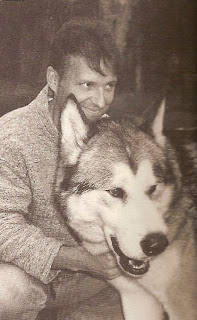
Mark Rowlands & Brenin

Thursday, October 25, 2007

"Foreskin's Lament - A Memoir" - Shalom Auslander


And now for something completely different.

See, maybe Coupland is on to something when he moans about not growing up religious: it most definitely will mess you up, but then you'll get to write an incredibly funny book.

I read the first chapter online and knew immediately I had to read "Foreskin's Lament" as quickly as possible. I've just finished it, and now I want to get as many people as possible on board so we can all start using my favourite sentence in unison: "That would be so God".

There are so many books coming out every month on finding God, or at least some new-agey version of the guy/gal, that the whole prospect of someone trying desperately to loose him is already a winner.

Shalom Auslanderwas raised in an jewish orthodox community in the state of New York and that wasn't his only problem: his father was abusive and his mother withheld affection in exchange for religious compliance. If he was smart, he should have become a rabbi (he did dabble, briefly, with orthodoxy in his late teens)and saved himself a whole lot of trouble.

Instead, since the age of nine he became an avid non-kosher binge-eater, consumer of pornography (here, he didn't stray from family tradition, we soon find out) and not much later, a doobie smoking, yarmulke wearing, serial shoplifter.

How can you possibly go wrong with this kind of material?

Auslander doesn't and his childhood and coming-of-age are rendered even more dramatic from his narrative standpoint: at 35, he has just barely gained some much needed geographical and emotional distance from his family when he's hit by the one great feud voider of adult life, the first-born.

I don't really know if Auslander's book is as hilariously funny the absence of any kind of religious upbringing, but I'm pretty sure it's non-denominational: I had only a mild catholic education, but a lot of it rang true, especially the constant dread of punishment and the little deals you make with God in order to (try and) get something out of the bearded one.

The ironic tragedy of Auslander's position is not that he isn't religious, of course, but that he his. But like many others he sees a wide gap between God and the seemingly random prescriptions that organized religion sets up around him, the way that rabbis and priests want to be the sole brokers of a relationship that should be personal and maybe a lot more private.

That many people in religious communities are not as pious as they would have other believe, is a given. That a mother would cast her own child away for non-compliance is harder to swallow - or maybe not, given that whole Abraham-Isaac episode.

In the end, saying "Fuck this shit" and going out on your own way, is how many of the world's religions got their first break. At least, that's what Auslander is telling himself, and those of us with any sense will be shouting "Amen!" as he goes forth to find his own, private, Promised Land.

"I believe in a personal God; Everything I do, He takes personally."