Showing posts with label Travel. Show all posts
Sunday, February 23, 2014
Tracks - Robyn Davidson
"There are some moments in life that are like pivots around which your existence turns - small intuitive flashes, when you know you have done something correct for a change, when you think you are on the right track. I watched a pale dawn streak the cliffs with Day-glo and realized this was one of them. It was a moment of pure, uncomplicated confidence - and lasted about ten seconds."
From the Postscript (2012):
"The question I'm most commonly asked is 'Why?'. A more pertinent question might be, why is it that more people don't attempt to escape the limitations imposed upon them?"
Friday, February 07, 2014
Tuesday, October 18, 2011
Tuesday, June 23, 2009
...and this one is not worth your time
documentation and bibliography are iffy
the better known episodes deserve books of their own, the others are just boring and how did the authors manage just 5 pages on the Krakatoa eruption when Simon Winchester wrote a whole book on it.
I liked the Naked Baroness (Elisa von Wagner) story, but she must be the least explored character on the whole cyberspace - she doesn't even have a Wikipedia article if you can believe it - and the Italian book on which the authors base their tale is from 1978 and apparently out of print...oh well it wasn't that interesting...
Wednesday, June 03, 2009
A Venetian Bestiary - Jan Morris
This is a tiny, off-beat book by famous travel-writer Jan Morris. It’s the first book of hers I’ve read. I loved all 90 pages including the illustrated ones. It tells of the animals of Venice which might be real birds, cats and dogs, or statues of winged lions and horses.
She knows Venice so well she travels deftly between everyday life, history, art pieces and architectural markers. It’s a joy to be lead by someone so knowledgeable and clearly passionate about this magical city.
Now, I’ve never been to Venice, but I can tell you I will not set foot on that boggy water without first having read Morris’ renowned book of the same title. In fact, I’ll very likely read the book anyway and skip the journey. Great travel writing gives you permission to do that.
She knows Venice so well she travels deftly between everyday life, history, art pieces and architectural markers. It’s a joy to be lead by someone so knowledgeable and clearly passionate about this magical city.
Now, I’ve never been to Venice, but I can tell you I will not set foot on that boggy water without first having read Morris’ renowned book of the same title. In fact, I’ll very likely read the book anyway and skip the journey. Great travel writing gives you permission to do that.
Thursday, May 07, 2009
Daniel Kalder - "Strange Telescopes"
“Lost Cosmonaut”, Kalder’s first book, was already hovering close to genius with its whole “anti-tourism” schtick (travelling to “nowhere”, or more precisely, those unknown bits in the middle of Russia), but “Strange Telescopes” just raised the anti-travel-writing gambit further: this time he visits universes that only exist in his interviewees heads’.
But first, some infidel bashing: back in 2006 travel writer Rory MacLean (am I the only one who’s thinking conflict of interests?) reviewed “Lost Cosmonaut” and wrote the following:
“(…)as a traveller he has a problem. He doesn't 'much like talking to people'.
(…)He refuses to see that beyond the sterile heritage centres, the superficial cultural resemblances and the wastelands of our age, the world still remains diverse and full of wonders. But then to appreciate that diversity and to experience these wonders the traveller must do one thing first. Talk to people.”
Well, I have a couple of things to say about that for myself and everyone else that dislikes “talking to people”: it is obviously an idiotic notion to think that if you chat up a couple of locals you’ll be anywhere near understanding the place in question – more than likely these are the same people who hang around public squares and monuments trying to find an unsuspecting tourist (or travel writer) to feed the same old stories to. Anyone anxious to talk to a foreigner is probably not that interesting anyway (but try explaining that to tourists).
Second, I read MacLean’s book on the hippie trail “Magic Bus” and have to say that not only it managed to completely bore me on a subject that has interested me since adolescence; it is also completely forgettable (proof? I can’t remember anything about it and I read it last year).
So, with that out of the way, it must be stated that Kalder got over his (perfectly reasonable, if you ask me) dislike of engaging others in conversation, in a spectacular manner. In “Strange Telescopes” he talks to people most of us would avoid making eye-contact with. He enters their homes, travels with them, obeys their commandments, steps wholeheartedly into their worlds.
They are Sergei, leader of the “Diggers” who live on the tunnels beneath Moscow, Edward, hell-bent (excuse the pun) on proving to the world the real danger of demonic possession, Vissarion, the Siberian Jesus and Nikolai Sutyagin builder of a fairy-tale/ horror movie construction, a sky-scraper made entirely of wood.
Is Russia an especially fertile breeding ground for alternate realities? It’s hard to say, though there is definitely something intrinsically Russian about these characters, as they each make clear by their stories.
The best thing about “Strange Telescopes” is its tone. Now don’t get me wrong, Kalder can do dark and even risqué humor with the best, but with his subjects he never falls into the easy trap of condescension. Sure, sometimes they are incredibly frustrating, annoying or just plain boring, but there’s never that disgusting faux “understanding”, that wink-wink “aren’t they just the biggest wackos ever?” best epitomized in this ABC story on Vissarion.
Looking at the world through someone else’s eyes is a difficult feat at best – and when it involves going down a sewer drain, attending an exorcism in rural Ukraine, travelling to Siberia in the dead of winter and risk being mauled by Caucasian Shepherd dogs, who wants to try, anyway? Why, someone who doesn’t like talking to people, of course.
A small parenthesis here:
Travel writing is something I used to think I liked. Then I started getting one pompous, tedious book after the other. Most of the time the (British/American/Canadian) writer will talk a lot - but only to English-speaking expats or the feeble-minded who wait around for Anglo-Saxonic writers in order to bait them with “interesting” stories. It just might be the most masturbatorial genre out there (and let’s not even get into the I-moved-to-(Spain/France/Greece/Portugal/Marocco, etc)-with-(a cello/a parrot/my grandmother) gig). I finally figured that what bothers me about it is the same thing that bothered me about my once upon a time major, anthropology: like it or not, they both suffer from a Tarzan complex “Me-study” “You-subject”. There is always the unspoken fact that we are allowed to observe them, because we can make sense of them. And XX century tourism, of course, followed the same path.
And…end small parenthesis.
So, if I wanted to get all structuralist on your ass I’d tell you that what this Kalder fellow has got going on here, with his anti-tourism, anti-everyday thingy is nothing short of an epistemological revolution. Unfortunately I graduated before I could fully understand these (and other concepts).
Coming from a cold and depressing place to Russia is probably a good antidote against trying to romanticize/criticize every step of the way. Still, let’s give credit where it is due: Kalder avoided with all his might the western need to “make-sense-of”, whether looking for stuff he never got to see, seeing stuff he couldn’t quite believe or listening to people who make incomprehensible choices. Most of the time he didn’t even feel the need to ask “why?” – it was enough just being around them. That’s right folks – he didn’t even talk that much.
The ultimate act of surrender – deliver yourself to the natives.
But first, some infidel bashing: back in 2006 travel writer Rory MacLean (am I the only one who’s thinking conflict of interests?) reviewed “Lost Cosmonaut” and wrote the following:
“(…)as a traveller he has a problem. He doesn't 'much like talking to people'.
(…)He refuses to see that beyond the sterile heritage centres, the superficial cultural resemblances and the wastelands of our age, the world still remains diverse and full of wonders. But then to appreciate that diversity and to experience these wonders the traveller must do one thing first. Talk to people.”
Well, I have a couple of things to say about that for myself and everyone else that dislikes “talking to people”: it is obviously an idiotic notion to think that if you chat up a couple of locals you’ll be anywhere near understanding the place in question – more than likely these are the same people who hang around public squares and monuments trying to find an unsuspecting tourist (or travel writer) to feed the same old stories to. Anyone anxious to talk to a foreigner is probably not that interesting anyway (but try explaining that to tourists).
Second, I read MacLean’s book on the hippie trail “Magic Bus” and have to say that not only it managed to completely bore me on a subject that has interested me since adolescence; it is also completely forgettable (proof? I can’t remember anything about it and I read it last year).
So, with that out of the way, it must be stated that Kalder got over his (perfectly reasonable, if you ask me) dislike of engaging others in conversation, in a spectacular manner. In “Strange Telescopes” he talks to people most of us would avoid making eye-contact with. He enters their homes, travels with them, obeys their commandments, steps wholeheartedly into their worlds.
They are Sergei, leader of the “Diggers” who live on the tunnels beneath Moscow, Edward, hell-bent (excuse the pun) on proving to the world the real danger of demonic possession, Vissarion, the Siberian Jesus and Nikolai Sutyagin builder of a fairy-tale/ horror movie construction, a sky-scraper made entirely of wood.
Is Russia an especially fertile breeding ground for alternate realities? It’s hard to say, though there is definitely something intrinsically Russian about these characters, as they each make clear by their stories.
The best thing about “Strange Telescopes” is its tone. Now don’t get me wrong, Kalder can do dark and even risqué humor with the best, but with his subjects he never falls into the easy trap of condescension. Sure, sometimes they are incredibly frustrating, annoying or just plain boring, but there’s never that disgusting faux “understanding”, that wink-wink “aren’t they just the biggest wackos ever?” best epitomized in this ABC story on Vissarion.
Looking at the world through someone else’s eyes is a difficult feat at best – and when it involves going down a sewer drain, attending an exorcism in rural Ukraine, travelling to Siberia in the dead of winter and risk being mauled by Caucasian Shepherd dogs, who wants to try, anyway? Why, someone who doesn’t like talking to people, of course.
A small parenthesis here:
Travel writing is something I used to think I liked. Then I started getting one pompous, tedious book after the other. Most of the time the (British/American/Canadian) writer will talk a lot - but only to English-speaking expats or the feeble-minded who wait around for Anglo-Saxonic writers in order to bait them with “interesting” stories. It just might be the most masturbatorial genre out there (and let’s not even get into the I-moved-to-(Spain/France/Greece/Portugal/Marocco, etc)-with-(a cello/a parrot/my grandmother) gig). I finally figured that what bothers me about it is the same thing that bothered me about my once upon a time major, anthropology: like it or not, they both suffer from a Tarzan complex “Me-study” “You-subject”. There is always the unspoken fact that we are allowed to observe them, because we can make sense of them. And XX century tourism, of course, followed the same path.
And…end small parenthesis.
So, if I wanted to get all structuralist on your ass I’d tell you that what this Kalder fellow has got going on here, with his anti-tourism, anti-everyday thingy is nothing short of an epistemological revolution. Unfortunately I graduated before I could fully understand these (and other concepts).
Coming from a cold and depressing place to Russia is probably a good antidote against trying to romanticize/criticize every step of the way. Still, let’s give credit where it is due: Kalder avoided with all his might the western need to “make-sense-of”, whether looking for stuff he never got to see, seeing stuff he couldn’t quite believe or listening to people who make incomprehensible choices. Most of the time he didn’t even feel the need to ask “why?” – it was enough just being around them. That’s right folks – he didn’t even talk that much.
The ultimate act of surrender – deliver yourself to the natives.
Monday, April 27, 2009
Stuck in the Middle
So, I don’t know if anyone’s noticed, but the “I’m reading” header has stayed the same for the past two or three months. The reason is that I’m stuck way before the middle into “The Perfect Red”. The reason, I think, is that Amy Butler Greenfield is no Michel Pastoreau and “Perfect Red” is no “Black: History of a Color. But I hate leaving books in the middle so I’ll try and get on with it.
Another book I'm stuck before the middle is "Bonjour Blanc - a journey through Haiti"by Ian Thomson. Once again, I'm not sure why I set it aside - probably something more interesting came through the mail. Not that it was rocking my world or anything.
Wednesday, January 07, 2009
Non-fiction I never reviewed last year and now it's too late
The best of the bunch is "Bottomfeeder - How the fish on our plates is killing our planet". Each chapter has a theme that is both a location and a dish, such as "New York City - Pan-roasted Monkfish" and which Taras Grescoe takes as a starting point to instruct us on what's going on under the waves.
Increasingly, not much, because the fishing fleets of the world (that seem to behave as modern time pirates)are depleting the fishing stocks to such a length that many species such as monkfish, cod and tuna are actually being pushed to extinction.
I was very proud to see the Portuguese lauded since our love of sardines (fish that are plentiful, nutritious and lower in the food-chain)even if it seems to have escaped Grescoe's attention that probably the third most popular fish dish in this country (after cod, also endangered) is monkfish rice (probably the stock nearest complete breakdown). Anyways, highly recommended - very readable, full of interesting information and advice on choosing fish (and seafood) with an eye on both the sustainability of stocks and health.
"Coral - A pessimist in Paradise", was also interesting but not as compelling. Coral reefs are dying, are not be able to rebuild as fast and if you think it only affects the quality of under-water scenery for scuba-divers, guess again. Coral set the stage for our own emergence on the planet and if they go we might soon follow.
Sad as it is to admit it the science part was a bit to thorough for my taste. There were chapters I read avidly and others that were really slow going. On the whole, I'm glad I read it because it is an important topic, but as a reader I was less than enchanted by Steve Jones's prose.
I read "The Bird Man and the Lap Dancer - Close encounters with strangers" almost a year ago so I don't remember it very well, except to say that when I finished reading I couldn't shut up about it and told every chapter (spent on different exotic locales with eccentric characters he meets) to my husband over lunch. So I guess it's thumbs up.
Of "To See Every Bird on Earth - A father a son and a lifelong obsession" I really can't recall almost anything, nor did remember being particularly impressed (or repulsed by that matter). Some birdwatchers can only get a kick out the hobby if they compile these huge lists of sighted birds, and spend absolute fortunes travelling to remote locations on the off chance of adding a couple of names to their roster. The way birdwatching brought together an estranged father and son is nice, but the whole list thing is kind of incomprehensible to me. I think Dan Koeppel admits somewhere in the book (or at least I think it was implied) that for many of these hobbyists its more about the list than the actual pleasure of birdwatching. Once you spot a bird (or hear its call) you move on looking for the next. Seems a bit sad to me.
"Choice - True stories of birth, contraception, infertility, adoption, single parenthood & abortion" I finished last month and its an impressive collection of stories shared by women who made different choices when faced with (sometimes) similar situations. It explores how important it is to have options available for women to make their own path whether it means having children when everyone urges you not to, or not having them when everyone wants you too. Should be required reading for teenagers and young men and women.
Increasingly, not much, because the fishing fleets of the world (that seem to behave as modern time pirates)are depleting the fishing stocks to such a length that many species such as monkfish, cod and tuna are actually being pushed to extinction.
I was very proud to see the Portuguese lauded since our love of sardines (fish that are plentiful, nutritious and lower in the food-chain)even if it seems to have escaped Grescoe's attention that probably the third most popular fish dish in this country (after cod, also endangered) is monkfish rice (probably the stock nearest complete breakdown). Anyways, highly recommended - very readable, full of interesting information and advice on choosing fish (and seafood) with an eye on both the sustainability of stocks and health.
"Coral - A pessimist in Paradise", was also interesting but not as compelling. Coral reefs are dying, are not be able to rebuild as fast and if you think it only affects the quality of under-water scenery for scuba-divers, guess again. Coral set the stage for our own emergence on the planet and if they go we might soon follow.
Sad as it is to admit it the science part was a bit to thorough for my taste. There were chapters I read avidly and others that were really slow going. On the whole, I'm glad I read it because it is an important topic, but as a reader I was less than enchanted by Steve Jones's prose.
I read "The Bird Man and the Lap Dancer - Close encounters with strangers" almost a year ago so I don't remember it very well, except to say that when I finished reading I couldn't shut up about it and told every chapter (spent on different exotic locales with eccentric characters he meets) to my husband over lunch. So I guess it's thumbs up.
Of "To See Every Bird on Earth - A father a son and a lifelong obsession" I really can't recall almost anything, nor did remember being particularly impressed (or repulsed by that matter). Some birdwatchers can only get a kick out the hobby if they compile these huge lists of sighted birds, and spend absolute fortunes travelling to remote locations on the off chance of adding a couple of names to their roster. The way birdwatching brought together an estranged father and son is nice, but the whole list thing is kind of incomprehensible to me. I think Dan Koeppel admits somewhere in the book (or at least I think it was implied) that for many of these hobbyists its more about the list than the actual pleasure of birdwatching. Once you spot a bird (or hear its call) you move on looking for the next. Seems a bit sad to me.
"Choice - True stories of birth, contraception, infertility, adoption, single parenthood & abortion" I finished last month and its an impressive collection of stories shared by women who made different choices when faced with (sometimes) similar situations. It explores how important it is to have options available for women to make their own path whether it means having children when everyone urges you not to, or not having them when everyone wants you too. Should be required reading for teenagers and young men and women.
Friday, August 31, 2007
Lazy doesn't even begin to cover it...


...but only when it comes to updating this blog...
Here's what I've read since the latest entry (chronologically):
A Hedonist In The Cellar - Jay McInerney
The Island Of Lost Maps - Miles Harvey
Birth: A History - Tina Cassidy
Hotel California - Barney Hoskyns
Haight-Ashbury: A History - Charles Perry
Borges e os Orangutangos - Erico Veríssimo
Bartleby & Co - Enrique Vila-Matas
The Paper House - Carlos Maria Domínguez
The Romanovs And Mr Gibbs - Frances Welch
The Dead Beat and the perverse pleasures of obituaries - Marilyn Johnson
A Gente Se Acostuma A Tudo - João Ubaldo Ribeiro
With Borges - Alberto Manguel
Pilgrim - Timothy Findley
Old School - Tobias Wolf
A Mother's World: Journeys of the heart - Ed. M. Bond & P. Michael
Great Dream of Heaven - Sam Shepard
New Yorkers - Cathleen Schine
It's A Dog's World: True stories of travel with man's best driend - Ed. C. Hunsicker & M.Goodavage
The Blue Jay's Dance - Louise Erdrich
Magic Bus: On the hippie trail from Istambul to India - Rory MacLean
Tales From The Cash Register
Eating The Cheshire Cat - Helen Ellis
Biodegradable Soap - Amy Ephrom
Bee Season - Myla Golberg
Life Studies - Susan Vreeland
Love Is A Mix Tape - Rob Sheffield
The Summer He Dindn't Die - Jim Harrison
One Sunday Morning - Amy Ephrom
To See Every Bird On Earth - Dan Koepppel
The Cat Who Came In From The Cold
Out Of Your Townie Mind - Richard Craze
The Last Kabbalist Of Lisbon - Richard Zimmerman
Child Free And Loving It! - Nicki Defago
Families Of Two: Interviews with happily married couples without children by choice - Laura Carroll
My favorite reads are highlighted
For southern humour choose "Eating The Cheshire Cat"
For New York sophistication and romance, "New Yorkers"
"Old School" is the perfect, boarding school themed, fall book
I'm still reeling from "Pilgrim" - amazingly complex, learned, imaginative, surreal, athmospheric, hypnotic, detailed. This one is the gem of the list...
"Birth" and "Families" are pretty specific but I think most people can enjoy them: the first is a keeper for the honest (and therefore, sometimes gory) history of what women have endured (there's just no other way to put it) over milenia in both pregnancy and labor."Families" should be required reading for anyone thinking of starting a family - in fact, they both should.
"Life Studies" is a collection of short stories that are art-themed, but where the protagonists are always on the fringe of the production itself: a painter's mistress, widow or daughter, a woman who chooses to model naked for an art class, etc. Divided into eras starting with mostly impressionistic artists I was partial to last stories in the book, set in contemporary times.
I have been wanting to read Harrison for a while and "The Summer..." was lot better than I imagined.
Thursday, November 09, 2006
My 10 Favorite Travel Books

Simon Winchester – Krakatoa - The Day the World Exploded
Tony Horwitz – Into the Blue – Boldly going where Captain Cook has gone Before
Tony Horwitz – Confederates in the Attic – Dispatches from the Unfinished Civil War
Bill Bryson – The Lost Continent – Travels in Small-Town America
Bill Bryson – A Walk in the Woods
Thurston Clarke - Islomania
Elaine Sciolino – Persian Mirrors - The elusive face of Iran

Christiane Bird – Neither East Nor West – One Woman’s Journey through the Islamic Republic of Iran
Will Ferguson – Hokkaido Highway Blues – Hitchhiking Japan

Wednesday, November 08, 2006
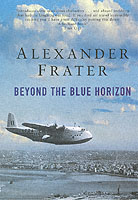
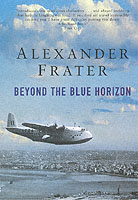
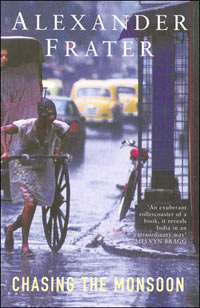
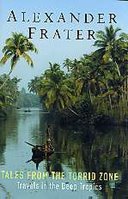
"Beyond the Blue Horizon", "Chasing the Monsoon" and "Tales from the Torrid Zone" by Alexander Frater

Travel writing: when it’s good, it’s great; when it’s bad, it’s usually written by a Brit. At least that was my conclusion after a quick survey of the two shelves I’ve allotted to the genre.
My introduction to travel writing came in the form of Bruce Chatwin’s books – first translated into Portuguese in the mid-nineties. His “In Patagonia” was partly responsible for my choice of Anthropology as a degree, and therefore becoming utterly useless for the national job market – something for which I should either sue his estate or thank him eternally. Whatever.
Since then, I’ve read a number of travel books and though I’m no connoisseur, at the very least, as they say, I know what I like. This is it:

And so, rather belatedly, we reach the matter at hand, Alexander Frater’s “Beyond the Blue Horizon”. This was my third Frater, after “Chasing the Monsoon” and “Tales from the Torrid Zone”. Frater is the opposite of monomaniacal. If anything, his books go through so many places and times all at once that the pace is dizzying. It’s not that he explores that many subjects: his favorites throughout remain meteorology, aviation, tropical medicine, with pretty girls and alcohol the two recurring leitmotifs while in transit. Born in the pacific island nation of Tuvalu, his grandfather and father were local celebrities - as much as severe Scot missionaries can be, anyway – who provided the first organized care in the way of medicine, and religion, of course, to the natives. Obliged to leave because of World War Two, the Frater family spent some time in the Fiji, and after studying in Australia the author made his way to the metropolis where he became a journalist, and eventually the Observer’s chief travel correspondent.
That Frater is well traveled there can hardly remain any doubt – he managed to write “Tales from the Torrid Zone”, 378 pages long, and tell stories on forty-one countries he has personally visited, and still mention thirty others. What did I learn about Guyana, Laos or Gambia I can´t recall exactly, but I now know there is a foundry in London where you can order bells, the smallest of which cost around two thousand pounds. The reason I know this is because the most important story in the book is about the author’s generosity in offering his old church in Tuvalu a new bell – not very modest, but for all intents the best episode in the book.
From 1990, “Chasing the Monsoon” is, to my mind, the best Frater. Having a set goal – following the monsoon in India to the final destination of Cherranpunji, “the world’s wettest place”, a pilgrimage his father planned but never made – does wonders for his writing: it reigns him into a specific place and phenomena and still allows him to recount once again his childhood, which was extraordinary.
Goaded by “Chasing the Monsoon” and since there was only one other book by Frater I hadn’t read, I embarked on “Beyond the Blue Horizon”. The Time Out blurb on the cover reads, “You’ll have great difficulty putting this down”. Well I put it down about three months ago, and had to force myself to finish the remaining two-thirds in two days, or I knew I would never get through it. I should say this was Frater’s first book, first published in 1986, and having the others it is undeniable he got a lot better at it.
In “Beyond the Blue Horizon” the writer undertakes to follow, by commercial flights whenever possible, the Imperial Airways Eastbound service of the thirties, London to Darwin. Now, I like airplanes just as much as the next person – which means, I guess, that I might like to read about the experience of flying or about people who are passionate about it, but not necessarily about the technical parts of the process – but this book, 430 pages long, was just too much for me. Part of it, is caused by Frater’s own virtuousness, since he sticks as closely as possibly to the old schedule, and therefore never spends more than, on average, one night in each stop, and doesn’t even leave the airport in about half of the fifty-two stops. It’s all very well if you want to know the name of a lot of airports, their history, and the models of the airplanes on the tarmac on the hours Frater goes trough, and read with him extracts of journals of old Imperial passengers, but for the rest of us, quite tedious. All the interviews are with airport or airline managers or people otherwise connected with modern flying (or a “pretty” or “striking” air stewardess when he gets the chance).

You do get a feeling of how exciting it must have been in the first days of commercial aviation when Frater interviews Mr. Tata, the founder of India Airlines, or the great aunt of the Jodhpur maharajah, or in Australia, where everyone seems to know something about their legendary pilots, but otherwise his questions mostly draw blank stares. Some of what passes for ignorance might be related to the subject itself: Imperial Airways was not, despite what might be inferred, a pioneer of commercial flights. When it was created in 1924, both KLM and France’s Aéropostale had been active for five years, and the regular airmail service was only established in 1937. Many of those who speak to Frater refer Dutch pilots by name, for in those days, they were the heroes of aviation.
The thing that really surprised me about this tour, taking place in the early eighties, is how much of the old colonial flavor could still be tasted, especially from India on. Maybe it’s because Frater was able to sojourn in some pretty amazing places such as the Jodhpur Palace, or the Eastern and Oriental in Malaysia and Raffles in Singapore where Conrad, Maugham, Kipling and others also stayed, but it was painful to read about adult Indians, Bangladeshi, Malayans, and Singaporeans working at the hotels as private valets still referred to by the author as “boys” (albeit between inverted comas). Colonial? I hear you ask – surely not? Well take a look at this passage from when the author arrives at Australia: “ I had grown unaccustomed to the sight of Europeans doing menial work” – sure, it’s worse because I took it out of context, but still, it’s pretty bad.
The historical recollections throughout always feel contrived, as the author forces them into every stop. Maybe he should have stuck with one historical character, a pilot preferably, instead of jumping between passengers and crew. It also doesn’t help that in the journal he most quotes from the journey is being done backwards. The ending feels forced just like in Torrid Zone (there he delivers the bell to the old church accompanied by a lovely young radio reporter who shock! wins a prize with the piece); here, on his last flight, he manages to find a woman who had her maiden voyage on the exact same plane Frater flew as a child, and who his also obsessed with flying boats. Maybe I’m a cynic but it just sounds like too much of a convenient ending.
Thursday, November 02, 2006
Books in hiatus
Some of the books that I haven’t been able to finish, for one reason or other…

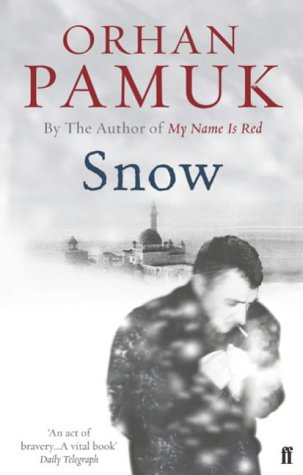
Snow – Orhan Pamuk – I’m two thirds through this one, and although it’s been sitting on the shelve for more than five months I still hope to finish it

Garbage Land – The secret trail of trash - Elizabeth Royte – about half way through, but interrupted for more than a year now so its prospects are not good, I’m afraid

The Fortress of Solitude – Jonathan Lethem – It sounded like a good idea: NY in the 70’s cartoons, music, but something just didn’t click between me and this story

A Sense of the World – How a blind man became history’s greatest traveler – Jason Roberts – I’ve only read forty pages and I intend to finish it. The thing is I’d been reading non-fiction almost exclusively for months and felt like a change

Snow – Orhan Pamuk – I’m two thirds through this one, and although it’s been sitting on the shelve for more than five months I still hope to finish it

Garbage Land – The secret trail of trash - Elizabeth Royte – about half way through, but interrupted for more than a year now so its prospects are not good, I’m afraid

The Fortress of Solitude – Jonathan Lethem – It sounded like a good idea: NY in the 70’s cartoons, music, but something just didn’t click between me and this story

A Sense of the World – How a blind man became history’s greatest traveler – Jason Roberts – I’ve only read forty pages and I intend to finish it. The thing is I’d been reading non-fiction almost exclusively for months and felt like a change
Monday, October 23, 2006
Books I've read since April

April -
Mediterranean winter Robert D. Kaplan
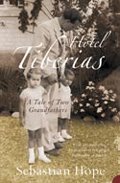
Hotel Tiberias Sebastian Hope

May -
Memoirs d'Hadrien Marguerite Yourcenar
Penelopiad Margaret Atwood
Travels with my aunt Graham Greene
Lost kosmonaut Daniel Kalder
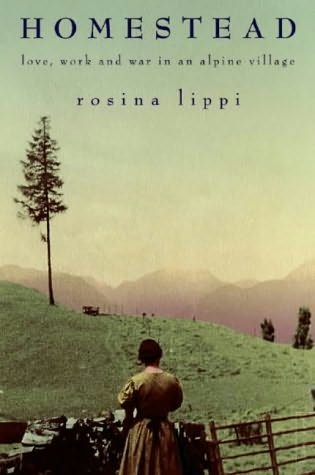
Homestead Rosina Lippi

June -
The last samurai Helen DeWitt
Disgrace J. M. Coetzee
jpod Douglas Coupland
Stevenson under the palms Alberto Manguel
In the footsteps of Mr Kurtz Michela Wrong

July -
The life & times of Michael K J. M. Coetzee
The man who ate everything Jeffrey Steingarten
Chasing the monsoon Alexander Frater
Tales from the torrid zone Alexander Frater
Drugs are nice Lisa Crystal Carver
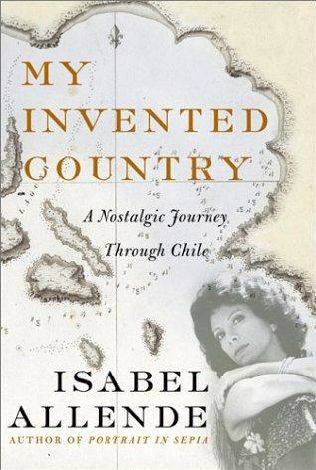
My invented country Isabel Allende
The book of summer Tove Jansson

August -
The Conjuror's bird Martin Davies
The unplesantness at the Bellona Club Dorothy L. Sayers
Spix's Macaw Tony Juniper
A thousand country roads Robert James Waller
State of the Union Douglas Kennedy
Murder Must Advertise Dorothy L. Sayers
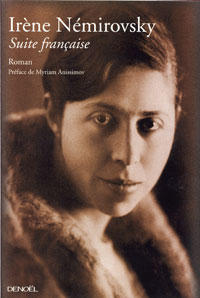
Suite Française Irene Nemirovsky

September -
On Beauty Zadie Smith
Little Face Sophie Hannah
Rue des Rosiers Jacques Lanzmann
On a retrouvé David Jacques Lanzmann
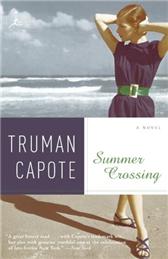
Summer Crossing Truman Capote
The Memory Keeper's Daughter Kim Edwards
Self-Help Lorrie Moore
October -
Prep Curtis Sittenfeld
The year of Magical Thinking Joan Didion
The Highest Tide Jim Lynch
Saving Fish from Drowning Amy Tan
Saturday Ian McEwan
To be continued...
Yes, I'll read just about anything..
Subscribe to:
Posts (Atom)