Wednesday, February 11, 2009

A slight detour


The Parrot Who Owns Me – Joanna Burger
The Philosopher and the Wolf – Mark Rowlands

I got slightly off track with these too, but I could hardly help myself. When “The Parrot Who Owns Me” arrived I just had to start immediately, and then it seemed natural to read “The Philosopher and the Wolf” right after.

Actually, the two books have a lot more in common than I could have guessed: both tell of strong relationships with wild animals kept as pets; both writers are academicians (Burger an ornithologist, Rowlands a philosopher) and both found their theoretical work very much influenced and changed through the vicissitudes of sharing their days with a parrot and a wolf.

Large parrots and wolves (the latter much more so, of course) are unusual pets and with good reason. Most people are simply not able to accommodate the needs of such animals, nor are they willing to. The result where vanity and stubbornness persist, are bald parrots who pick their own feathers out frustration and boredom, and big, aggressive dogs tied away in backyards.

Rather, as both authors soon discover it is you who must provide the company for your wild pet, sacrificing many things as you go along. Rowlands turns himself into a marathoner in order to keep Brenin, the wolf, satisfied in terms of exercise and stimulation, while Burger has to warn hapless dinner guests not to open the fridge if they want to avoid the attack of Tiko, the parrot. (Only she was allowed to open the fridge).

In fact, the bite of Tiko the amazon parrot, though infrequent is painful and scarring. Everything must be negotiated, and the amazon can never be pushed, only persuaded. And yet what clearly shines through Joanna Burger’s book is the absolute joy, the privilege of being trusted, respected and loved by such a magnificent wild animal.

For the privilege of Tiko’s affection the scientist must cut frequent research trips to a minimum absence of three weeks (the amazon will get aggressive with the sitter after that time), forfeit any other animals in the house (as Hester the chicken found out, Tiko will not stand any rivals around), and curb any demonstrations of affection from her husband (they send Tiko into a jealous rage). On the other hand observing his behavior sends Burger’s research into new and exciting paths, into vigilance, mating rituals and habitat conservation.

The saddest thing about large parrots, to my mind, is how they generally outlive their owners (they can live into their seventies). As the book closes, Tiko is approaching fifty and still fit as a fiddle (Tiko had been previously owned by two elderly sisters). Can parrots understand death?

And can we? That is more the type of question Mark Rowlands poses himself in “The Philosopher and the Wolf”. Professional deformation, and all that, but it’s understandable since after all, it was Brenin who turned Rowlands into a published author. Sort of.

I loved Brenin’s story as will anyone with a love of animals, Rowlands tone however, is another story. I nearly fell off my chair laughing when by page 85, he states “If people don’t think of me as arrogant – perhaps they do – that’s only because I’m good at hiding it.” Weeelll, have I got news for you…!

Brenin was a big teddy bear who quickly grew into a big, nice wolf. However, since he could not be left alone for more than a minute (his powers of house wrecking were truly prodigious), Rowlands soon begun to take him everywhere with him, including university lecture halls and rugby matches. Slowly it was Brenin’s company (although I would argue it was also the author’s move from rowdy, happy-go-lucky Alabama to sullen Ireland, plus the six months mandatory quarantine for Brenin) turned him into something of a misanthrope, ergo, a prolific philosophy writer.

I disagreed with a lot in this book, but hey, philosophy as far as I can understand it (not much taking from my grades in high-school) is nothing but a matter of opinion and of how elegantly or forcefully you can state your theory. There is no scientific method to it, at least not when you’re talking life, love and death. Rowlands has this whole theory about how apes are deceitful, ungraceful and simply mean creatures and that we as their descendants are just about the same, no matter how much we try to hide it. Wolves on the other hand are loyal, graceful and know no fear – they are pure.

Yes, I can just about hear Konrad Lorenz’s applause coming from the hell to which are consigned scientists who jumped on the nazi bandwagon. He too preferred dogs with wolf blood because they were braver (you meant more Aryan didn’t you, you old coot?) while the dogs descending from coyotes were submissive, even false.

As shamanic and spiritual as it is to equate certain qualities or defects with certain animals I don’t think it stands any real chance as serious theory, philosophical or otherwise (A great book on the subject is Boria Sax’s “Animals in the Third Reich”). Anyone who lives closely with animals knows that personality is an important factor.

If animals are not just archetypes who can only live fulfilling lives by living exactly as they have always done; if, on the contrary they can adapt and enjoy new experiences, including sharing their lives with respectful humans, as Rowlands states, and I agree, then it hardly seems possible to ascribe to them an immutable nature or temperament.

I did enjoy his discussion on evil, which ran closely with my own opinions, but I really wish he didn’t take so much pleasure in frightening dog owners with Brenin off leash all the time.

Both are great books on animals. I preferred Burger’s because right now birds and parrots are more fascinating to me than wolves, but also because the steady drip of hemingway-like machismo (now there’s a guy that should have owned a wolf…) was a bit tiresome in Rowland’s (though I did feel like crying in the end which means…that I’m a submissive, morally bankrupt ape, I guess).

If I wanted to get all philosophical I’d say this: while Rowlands takes pride in the way he successfully trained Brenin to walk in our world, Burger takes pride in the way Tiko allowed her to enter his world. And that, friends, to quote one of our great simian poets, made all the difference.

Joanna Burger & Tiko

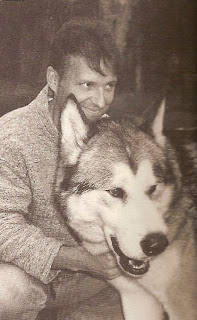
Mark Rowlands & Brenin

Friday, February 06, 2009

Jane Glover - Mozart's Women - His family, his friends, his music


A wonderful, intimate, biography of Mozart and the women who surrounded him.

Although it might be argued that Wolfgang Mozart’s most important formative and even adult relationship was with his tyrannical father (even while trying to escape his control), Jane Glover has found a very interesting, almost cozy, angle in order to explore the great musician’s life.

The book is divided in four parts: in “Prelude” the author explores Mozart’s childhood and adolescence taking special care with the portrayal of his mother, Anna Maria, and his sister, Maria Anna, known as Nannerl. To me, Nannerl, ended up being close to a second protagonist in the book. For even if Constanze, Mozart’s wife, turns out to be a very likeable character, Nannerl’s life was, to my mind, so tragic, it almost upstages that of her brother.

An equal to Mozart’s musical interpretation and no stranger to composition, Nannerl was in every way her younger brother’s partner as their father paraded them as prodigies across European royal courts. In fact, she was more impressive than the little boy for some onlookers. There is no doubt she had a great curiosity for the world at large as well as great talent and, having spent her childhood and early teenage years as an accomplished performer, travelling from England to Italy, experiencing the culture, fashion (a great love of hers) and conversation of the best company in the Continent, her confinement in provincial Salzburg must have been particularly painful.

After a brilliant beginning which could have easily steered her into an adult career, Leopold Mozart (a miser, if there ever was one) decided that it would be more economical to travel Europe accompanied solely by the boy. It probably allowed him to experience a more vicarious pleasure, as they travelled alone, little Mozart a mirror (so would Leopold flatter himself, undoubtedly) of his father’s genius.

In fact, Mozart senior succeeded only in making the both of them a nuisance in many royal courts. His lack of subtlety and his arrogance, assuming every king and queen should fall over themselves in order to hire Wolfgang, probably did more harm than good. Whereas the practical, even-tempered Anna Maria would establish long lasting friendships wherever she passed, Leopold’s exit was probably met with sighs of relief. Mother and daughter could have done much to find Mozart a suitable position sooner. Instead, they were both confined, anxiously awaiting letters from the Mozart men.

Over the course of many European ramblings Wolfgang probably picked more than a bit of his father’s haughtiness, at least where it concerned his employers (for talented musicians he never showed less than full allegiance), so it is not very surprising he soon caused his own dismissal from Archbishop Colloredo’s employ. A free lance composer was something of a rarity and Mozart was, after all, of marrying age.

In Vienna, Mozart will all but loose contact with his sister, who will scarcely ever again leave the province of Salzburg. Only at 32, after having refused a suitor (maybe on Leopold’s order), will she marry a twice widowed man with five children from his previous marriage. This would be no “Sound of Music” matrimony either. Poor Nannerl endured an increasingly cold and hostile husband and hateful stepchildren. Of her own three children, one would die at one year of age and another at sixteen. In her final years she would endure a progressive blindness and frailty that kept her from her beloved piano.

Mozart, meanwhile, would become deeply involved with the Weber family, a relation Jane Glover explores in the chapter “Mozart’s other family”. It was first Aloysia, who would become a celebrated opera singer (a career that slipped through Nannerl’s fingers), that captured young Mozart’s furious passion. Some time apart, however (the four Weber girls also toured Europe) , rather cooled the girl’s affections. Depressed, Mozart could not wrest himself from the warm, artistic family, and would end up taking lodgings with them in Vienna. Slowly, it was Constanze, a more discreet beauty with a balanced temperament, that would win his heart until the day of his death.

For all the penury, frustration and humiliation Mozart would live professionally until his untimely death at 35, it’s safe to say that with Constanze he enjoyed a truly happy marriage. She would eventually take up a role evocative of his mother and sister’s: part personal assistant, part accountant and part public relations.

“Mozart’s women” explores in depth Mozart’s operas describing the plot and especially the biography of each original female singer – how their singular strengths, figures and personalities would inspire Wolfgang into composing arias that were essentially “made to measure”.

Finally, “After Mozart” ties back the loose ends of the surviving women. It ends as it begins, in Salzburg, the place Nannerl never left and where Constanze, her younger sister Sophie (who was with Mozart in his last moments) and the older, Aloysia, came to live their final years. As neither of Mozart’s boys by Constanze left progeny or additional works it wouldn’t be off base to see these two women (sister and widow) as his true heirs. It was, after all, their conjoined effort that would assure the wealth of biographical material available today. “Mozart’s Women” takes a potential “been there, done that” historical biography into something very different: an enlightening and moving book.

Sunday, February 01, 2009

Michel Pastoureau - Black: the history of a color


“Black” is a big book, with shiny high-quality paper and filled with beautiful reproductions of works of art. It screams coffee table book but it’s actually a work of erudition that spans the cultural meanings of this mesmerizing color from antiquity to modern times. It’s not a book you’ll want to read in bed or even in the couch (this puppy is heavy), but it will more than compensate you for the time you have to spend sitting at a table or desk (preferably propped up against something – the book, not you).

From holy men to Satanists black spans the width and breath of human history as a color most often associated with extremes: a princely color in the XVII century, synonymous with morality and integrity, it became the color of everyman in the end of the XIX, (after being rejected in the colorful haze of the XVIII, in French court fashion) and then the color of transgression and rebellion in the beginning of the XX century.

Black proved a tricky color for dyers – before the XVI century it was almost impossible to obtain a durable, deep black in fabric – but meaning already abounded around the color long before you could build your wardrobe around it. In antiquity it had been the color of darkness both in its life-forming, fertility and metamorphosis aspect as well as the frightening equivalent of death or evil. It was a complex shade filled with different, sometimes antagonistic meanings, which only became slowly equated with sin, Satan and suffering in the centuries after the Bible made the rounds in Europe.

Slowly it became the color of God’s nemesis and pulled into its evil realm just about anything that shared the color including cats, crows or the realm of the night such as wolfs and owls. The exceptions were monks who wore – not so much actual black but mostly dark habits - equated with humility.

As Pastoureau explains color is only color in opposition or combination with other colors and meaning is also (or always) tied in with these combinations. For instance, in medieval times the most often worn combination of colors was red and green, not a high contrast pair then. For a long time “black and white” was not the striking opposition we have seared into our minds today (white and red, was the most contrasting pair), a cultural modification that came about with the advent of the printing press and subsequent reproduction everywhere of black ink on white paper.

Is black even a color? I remember being excited learning in a “visual education” class (that’s what they called drawing/painting/geometry classes when I was ten) that black and white were not colors – rather the first was absence of color and the second the combination of all color. In fact, in mankind’s history this is a very recent theory imported from the Newtonian discovery of the light spectrum (the demotion of green from a primary to a secondary color also came about very late) and when you think about it quite silly.

Because colors, primary, secondary or whatever are cultural constructions first and foremost. Science must follow suit as Pastoureau demonstrates when he explains how black became a coveted color by kings and princes in the XVI century before dyers had found the best method of imprinting the color onto fabric – here, as in others instances, demand spurred on technology.

Today, black is the closest thing to a neutral shade – according to Pastoureau it is neither the most popular (blue) nor the least popular (yellow) hovering somewhere in the middle – it’s a safe color to wear, considered elegant and yet conservative, that retains only a whiff of its rebellious past . A teenage crush rather than an actual torrid love affair – isn’t black almost a naïve color in our days?

I think cultural perceptions of color are a fascinating subject but “Black” is a book that might please even those with only a marginal interest in color (who are those people?!). And you’ll keep going back just to look at the illustrations.

Saturday, January 31, 2009

Patrick Wilcken - Empire Adrift


A page turner it is not. This history book business is really cramping my style, because books like “Empire Adrift – the Portuguese court in Rio de Janeiro 1808-1821” make me read s-l-o-w-l-y. They make me ponder, and wonder, check stuff on the internet and think a lot – and that’s Not why I got into this book reading gig, man!

Because – small parenthesis here – it is hard to find the motivation to keep a tiny blog alive and sometimes, ironically, good books are just the thing that completely throws you off. Why bother?

Especially as a descendant of a people who, as every anglo-saxonic historian will stress, are poor letter writers and even worse at keeping journals. Seriously, could the Portuguese be less helpful? Thank God there was always a British consul or merchant around or else fact checking would be impossible.

Just kidding. Actually Patrick Wilcken is Australian which might still qualify him as anglo but obviously makes him totally lacking in the most annoying qualities of the british. The proof? I never once, during the whole book felt that he looked down even slightly on his main subject, the Portuguese royal family, and boy could he have!

D. João VI : fat, slothful, severely lacking in the personal hygiene department and chronically indecisive – yet Wilcken portrays as somewhat endearing, not quite as guileless as everyone around him seemed to think. D. Carlota (who was actually Spanish): scheming shrew and power hungry man-eater or a feminist before her time, struggling to have a say so in the kingdom she felt (and who can say otherwise) she was more fit to reign?. D. João’s mother the queen Maria I was certified insane and…well that’s that really.

So the court fled because that disgusting dwarf Napoleon wanted to get his greedy paws on…everything really, and ended up in Rio de Janeiro which was at that point basically a big outdoors slave market bearing to resemblance to any European city fit to host a king – it was just as well D. João preferred country air and the company of a selected few (but then not everyone had the stomach to watch him eat three whole chickens with his hands for lunch ) Funnily enough, Wilcken says the Spanish court also considered at some point decamping to Mexico. Just imagine the different world history we might have today.

One of the things I really appreciated in Wilcken’s book is that, while he follows the royal family (and entourage of thousands) as they escape the incoming Napoleonic Invasion and flee to Brazil, he never abandons the continent (unlike the king), and keeps the reader updated into what was happening in Portugal and indeed Europe.

His best quality as a history writer might be that he travels from the particulars of everyday life and singular characters to global events effortlessly, even elegantly.

Best factoid in the whole book? Palm trees are NOT indigenous to Brazil – they were first brought over by escaped Portuguese sailors from the island of Mauritius (insane isn’t it? – who can think of Brazil without palm trees?)

In the first and last monarchy in the tropics, the Portuguese reversed metropolis-colony dynamics and blindsided Napoleon. Portugal and Brazil’s history was altered forever – set on courses whose consequences are still felt today. It’s a fascinating piece of history and I doubt there’s a better or more readable account out there.

Tuesday, January 20, 2009

Lucy Moore - Liberty


Liberty – The lives and times of six women in Revolutionary France

Liberty kept me submerged for almost a week. It’s a slow starter, granted, but it almost had to be since there are so many characters and the French Revolution is such a complex event. The first chapters are short which sort of kills the mood – I was already into Germaine de Stael when pow! It changes to Pauline Léon and so forth.

However, it more than pays off when the heads start rolling. Awful as it sounds the appeal of the French Revolution besides the hardcore (or, to our eyes, naïve) idealism is the sheer carnage. At the height of the Terror hundreds were guillotined everyday and then, as alliances shifted and Robespierre was executed, the henchmen started loosing their heads too. One month you’re exiled in shame, a few months later you’re welcomed back in arms. It was heady, violent, fuelled by the most abstract of theories on human nature and political philosophy on one side, poverty and hunger on the other, and an overwhelming sense of social injustice.

Women were there every step of the way, engaged in political discourse, public manifestations and violence. And while they weren’t given the opportunity to contribute in an productive manner, many were contributing: some, like Germaine de Stael, offering their salons as places were ideas and courses of action were first drafted, while gently leading opinions to their way of thinking; others, such as Manon Roland, going so far as to dictate their husbands political choices (Roland also wrote most of her husband’s lauded speeches); Thérésia de Fontenay used her wealth and influence to help the persecuted escape, as a sort of XVIII century Schindler of the aristocracy and royalists; working class Pauline Léon and poor girl turned courtesan Théroigne de Méricourt actually took to the streets, the first participating in the popular uprisings and establishing the first political society for women while Méricourt in a tragic twist of fate would first be admired, in her male riding suits, sword unsheathed as a new icon of the Revolution, finally reviled, mocked, humiliated and stored away in an insane asylum, convinced to very end it was still 1795; Juliette Récamier was too young to actually take part in the events, but she appears here as a sort of conclusion: after all was said and done she became Napoleonic France’s sweetheart – dazzlingly beautiful and with no involvement in politics whatsoever (except that she refused Napoleon’s advances (as did Fontenay), which contributed to piss him off further and probably kill more people).

Roland was the only one of the six actually guillotined, and the diaries she kept on her last days must be very moving – the excerpts Moore looks at are enough to make you cry. Roland, who starts out all self-righteous and kind of annoying turns, faced with execution (and having fallen in love for the first time) into a very dignified character. Moore’s description of the whole environment of prison life, where detainees were waiting around for their turn under the blade, yet trying to keep their chins up (some indulging, even behind bars in impressive “Dangerous Liaisons” antics) is impressive.

Except for Pauline Léon all the six have already been subject of biographical accounts (several for Stael, but others only in French, or out of print). Leon having remained working class all her life (from a family of chocolatiers) didn’t leave much of an official trail, certainly no letters or diaries, so she is the least fleshed out character in “Liberty”. Still, it’s a credit to Lucy Moore she included her in the book – when you read about those gangs of women going around in droves around Paris kicking ass or shouting (sometimes obscenities) from the galleries of the Convention, you can’t help but want to know their point of view. The historical record doesn’t help – no-one painted their portraits and they didn’t have much time, or inclination, to put their thoughts on paper – but they were there, hundreds of them to each sophisticated sallonière.

In short – “Liberty” is a great book, and I’m in awe of the kind of research and organization that goes into a work like this, weaving together not only six biographies but also a whooper of an historical event. I’d say I’d want to be like Lucy Moore when I grow up – if only I weren’t so damn close in age.

Monday, January 12, 2009

James Gaines - Evening in the Palace of Reason - Bach meets Frederick the Great in the Age of Enlightenment


Two men who stood for two very different worldviews met in 1747: one was the musician Johann Sebastian Bach the other the king of Prussia Frederick the Great.

In his sixties, Bach illustrated the hard life of a professional musician in the XVIII century, shuffling between court appointments and working for town councils (teaching at the local school and composing), profoundly imbued in the teachings of Luther and Protestantism; Frederick was a newly appointed king (1740) in his thirties and a poster-child for Enlightenment.

James Gaines takes this meeting as a starting point to explore and intertwine the two biographies as well as the collapse of religion as the axis of everyday life and the rise of philosophy in its place.

I like music but I don’t play an instrument. Most important I don’t read music. I’d say that if you don’t have some foundations of musical theory, large chunks of “Evening in the Palace of Reason” are going to fly over your head. Counterpoint, canon, fugue, cantata, sonata, chromaticism – if these terms mean absolutely nothing to you imagine how you’ll feel confronted with notions such as passus duriusculus and quodlibet. Even if the author was able to convey these terms in a simple way (which to my mind, he doesn’t, because they aren’t simple) it’s still like being colour-blind and having extol on the richness of Impressionist painting.

Yes, many of the passages on Bach left me feeling very stupid, which is never a good feeling especially while reading something aimed at the general public. In fact, I planned to start reading more musical biographies but this one already scared me stiff. I quit.

Also, Bach never really came alive to me. He always seems distant, impenetrable and aloof. Gaines himself said in an interview (included in the book) that he was surprised in his research to find Bach “such a crab”; he also concedes he came to find him frustrating and irritating. His life was sad (he became orphan at an early age, lost many infant children, brothers and first wife) and seems to have had quite a nitpicking temperament. Not much fodder for empathy maybe, but I hoped for more.

Frederick the Great on the other hand is a very magnetic character and it’s almost impossible not to become mesmerized by his life. A hair-curling, flute-playing, French-loving, hypothetical homosexual or bisexual, his personality is so complex it’s no wonder he has inspired many biographies and enjoyed cult status with many political and literary figures (including, infamously, Hitler). His father, Frederick William, was a bully who enjoyed insulting and beating him in public. He hated everything French, effeminate and arty and soon in Frederick’s life they came to blows. To his father the most important values were those of the military life and economic strategy.

Interestingly enough after his father nearly had him executed for treason (and hanged his best friend, or to some, lover) Frederick came to follow in his father’s footsteps. In a feat of compartmentalization he managed to have both a rich, artistic court life, put into practice Enlightenment values such as freedom of speech and religious tolerance, and the most disciplined and best prepared army in Europe. Not surprisingly, he became an abuser (not a physical abuser though) regularly insulting everyone and anyone around him, just like his father before him.

On the whole this book was a slog to read, Frederick’s amusing (and tragic) episodes notwithstanding. If you have no musical training it’s probably best to skip this one.

Thursday, January 08, 2009

Maybe Baby - Edited by Lori Leibovich


To breed or not to breed, that is the question!

Okay, so it’s not a question for many. The majority does breed in a wanton and carefree (in certain cases too carefree) manner. Their genes, instincts, family and friends tell them to go ahead, and ahead they go with the dubious task of ensuring that the world is full to the brim with human beings. Am I giving myself away?

A small, small minority has known from childhood or teenagehood (not an actual word – yet) that parenting was not in the cards for them. For this group a few will fall along the way, victims of unplanned pregnancies, and whatdayaknow? Some learn to enjoy the hand fate dealt.

Ah but there is a most interesting, growing, sneaky group of people who manage to avoid stray bullets for most of their twenties and arrive at their late twenties, early thirties (and even early forties) with the nagging doubt: “should I or shouldn’t I?”.

Well the common sense answer would probably be “If you have to think that much about it, don’t”. Yes, but every new parent says it’s sooo great, the absolute best experience in life, the one thing that will finally give meaning, continuity, focus, altruism, happiness etc, etc, etc.

And here lies the conundrum – for the first time in history the last decades have freed women (and men) of developed countries from this particular biological destiny and yet never has western culture been so babycentric than these past ten to fifteen years. Just as the choice became widely available so did the pressure grow to join the baby camp.

“Maybe Baby – 28 writers tell the truth about skepticism, infertility, baby lust, childlessness, ambivalence and how they made the biggest decision of their lives” (phew!) explores under the headings “No”, “Maybe” and “Yes” how a few writers came to deal with this important decision.

There are many different life stories here, and if for nothing else “Maybe Baby” fosters respects for other people’s choices. I was just as awed by Lionel Shriver who first proclaimed she would never have children at 8 years of age, as by Amy Benfer who decided to raise the daughter she had at 16 and by Joan Gould who, already mother to two teenagers decided to have a third child in her forties.

Some thought they would have children somewhere along the line but it never happened, some never thought much about it and embraced parenthood as it unexpectedly appeared, some felt an urgent, sudden need to be mommy or daddy just as it became too late and everybody just tried to make the best of it, none more so than Alisa Valdes-Rodriguez whose child was erroneously diagnosed with autism.

My favorite tale is “One is enough” by Neal Pollack who tells of his wife and his decision to stop at one child and how that unexpectedly brought them under criticism (really folks? Haven’t they given enough to the cause?). On the other hand Lauren Slater who had always meant to have only one child, came to the conclusion that a second one was indeed very needed in her family.

“Maybe Baby” is probably aimed at those ambivalent or seeking support for their choices - (which would be all of us then, wouldn’t it?) even if the “Yes” tales far outnumber the “Nos” and “Maybes”- a lot of parents could probably learn something here. I recommend Amy Reiter’s “Mama don’t preach”.

And I really, really like this Joseph Campbell quote found in Larry Smith’s “The daddy dilemma”:

“We must be willing to get rid of the life we’ve planned so as to have the life that is waiting for us.”

Like all the best quotations, there are several ways to interpret it, and any of them could be right – for each of us.

Wednesday, January 07, 2009

Non-fiction I never reviewed last year and now it's too late


The best of the bunch is "Bottomfeeder - How the fish on our plates is killing our planet". Each chapter has a theme that is both a location and a dish, such as "New York City - Pan-roasted Monkfish" and which Taras Grescoe takes as a starting point to instruct us on what's going on under the waves.

Increasingly, not much, because the fishing fleets of the world (that seem to behave as modern time pirates)are depleting the fishing stocks to such a length that many species such as monkfish, cod and tuna are actually being pushed to extinction.

I was very proud to see the Portuguese lauded since our love of sardines (fish that are plentiful, nutritious and lower in the food-chain)even if it seems to have escaped Grescoe's attention that probably the third most popular fish dish in this country (after cod, also endangered) is monkfish rice (probably the stock nearest complete breakdown). Anyways, highly recommended - very readable, full of interesting information and advice on choosing fish (and seafood) with an eye on both the sustainability of stocks and health.

"Coral - A pessimist in Paradise", was also interesting but not as compelling. Coral reefs are dying, are not be able to rebuild as fast and if you think it only affects the quality of under-water scenery for scuba-divers, guess again. Coral set the stage for our own emergence on the planet and if they go we might soon follow.

Sad as it is to admit it the science part was a bit to thorough for my taste. There were chapters I read avidly and others that were really slow going. On the whole, I'm glad I read it because it is an important topic, but as a reader I was less than enchanted by Steve Jones's prose.

I read "The Bird Man and the Lap Dancer - Close encounters with strangers" almost a year ago so I don't remember it very well, except to say that when I finished reading I couldn't shut up about it and told every chapter (spent on different exotic locales with eccentric characters he meets) to my husband over lunch. So I guess it's thumbs up.

Of "To See Every Bird on Earth - A father a son and a lifelong obsession" I really can't recall almost anything, nor did remember being particularly impressed (or repulsed by that matter). Some birdwatchers can only get a kick out the hobby if they compile these huge lists of sighted birds, and spend absolute fortunes travelling to remote locations on the off chance of adding a couple of names to their roster. The way birdwatching brought together an estranged father and son is nice, but the whole list thing is kind of incomprehensible to me. I think Dan Koeppel admits somewhere in the book (or at least I think it was implied) that for many of these hobbyists its more about the list than the actual pleasure of birdwatching. Once you spot a bird (or hear its call) you move on looking for the next. Seems a bit sad to me.

"Choice - True stories of birth, contraception, infertility, adoption, single parenthood & abortion" I finished last month and its an impressive collection of stories shared by women who made different choices when faced with (sometimes) similar situations. It explores how important it is to have options available for women to make their own path whether it means having children when everyone urges you not to, or not having them when everyone wants you too. Should be required reading for teenagers and young men and women.

Tuesday, January 06, 2009

Edward Paice - Wrath of God


In the Richter Magnitude Scalearticle in Wikipedia only three earthquakes surpass the great Lisbon earthquake of 1755. Two took place in the XX century (Alaska 1964 and Chile 1960) and the third in the XXI (Indian Ocean 2004). In fact, the earliest earthquake recorded on this list is 1906, San Francisco.

But the place Lisbon occupies in the list is calculated by approximation – the scale was invented in 1935 and in the XVIIIth century scholars were still trying to guess as to what caused earthquakes – underwater explosions, magnetism etc. However, that a scientific reason was being sought, already attests to the fact that the Age of Enlightenment was dawning upon Europe.

“Wrath of God”, though, is a title that hints at what, up until that point and for a majority still, was seen as the cause of the great earthquake – divine punishment. Edward Paice’s book looks at the tragic date through the eyes of English merchants and diplomats who lived in Lisbon at a time when, through the megalomaniac ambitions of King João V, the greatest part of the riches coming from the Portuguese colony of Brazil, were finding their way into British coffers.

Their opinion of the Portuguese was, not surprisingly poor: already the country was seen as a “has-been” resting on the laurels of maritime exploits of the XV and XVI centuries, squandering resources on an opulent noble class that was forever craving more luxury items, lead by a King more preoccupied with his mistresses and endless monumental building of palaces, convents and monasteries, with zero industrial infrastructures (with England happily picking up the slack and exporting everything from shoes to matchsticks) and few roads crossing the country outside the main cities.

Lisbon for the most part didn’t cause a good impression – the largest slave population in Europe, gypsies, orphans and vagrants roaming the streets didn’t much impress travelers, while the Portuguese women – although considered very fine (but don’t the British consider all foreign women beautiful? Says more about British women, really) were kept inside rather too much.

Paice first sets the stage explaining the ongoing (and very important) relation between the nations of Portugal and England at the time, describes the city as it stood before the earthquake, introduces his characters (British subjects who later put their experiences of the earthquake to paper) and follows them through the day of the earthquake (the 1st of November, All Saints Day), then he goes back to a wider perspective and explains how and why the earthquake became so important (not only because it was news-worthy but also because it challenged the reigning philosophy of optimism) and what happened to the city in the next decades.

I liked “Wrath of God” very much, but then I might be biased since I’ve always lived in Lisbon – a great part of the interest to me, was reading about my neighbourhood and those around it and understanding how different they were (and how different they would look today if not for the earthquake). Paice writes in a very engaging style that really captured my imagination. There were a few orthographic errors in Portuguese words, a place-name I don’t think actually exists, and by the way, a Sintra queijada is not a small goat cheese, but a sweet pastry. Otherwise, to my un-historically trained eyes it seemed a great piece of research.

Monday, December 29, 2008

Nicola Upson - An Expert in Murder


I love Josephine Tey. I’ve read all her mysteries. How excited was I to find out about a new crime series featuring the writer as character? Very excited.

Did “An Expert in Murder” live up to my expectations? Not even a tiny bit. I swear I was skimming the last 20 pages and didn’t even understand the big revelation in the end, that well. It didn’t seem very likely but what’s even sadder is that I didn’t care enough to go back a single page to try and understand it.

Personally I find “An Expert in Murder” has many faults the first being its length – for a period crime novel (and the first in a series no less) certainly it could do with less than 288 pages, many of which are rambling, rambling, rambling. The characters suffer from the same problem being too many and sharing the characteristic of having little substance.

I detested the part where Upson has her Tey state to friends that she only uses physical characteristics to support personality traits when she’s stuck in her writing – really, if that were the only reason couldn’t she have some up with another gimmick? Considering she uses it in almost every book and all…

Very, very disappointing.

Tuesday, December 23, 2008

Julian Barnes - Flaubert's Parrot and The Pedant in the Kitchen


Since “An Expert in Murder” is turning out to be a disappointment I stopped reading it and picked up Julian Barnes’ “Flaubert’s Parrot” (1984) and liked it so much I immediately started “The Pedant in the Kitchen” (2003) which I just finished.

“Parrot” and “pedant” are two very different books – the first a novel that, until about half way through reads like pure non-fiction, and the second a collection of columns on food, cooking, recipe books etc.

“Parrot” delves into the life of Flaubert in various ways as our protagonist attempts to solve a biographical puzzle: which one of two surviving stuffed Amazon parrots is the actual one which sat at Flaubert’s desk while he wrote “Un coeur simple”?

A bit pedantic, do you think? To spend so much time around a tiny bit of trivia regarding a book not even considered one of the author’s most important? But then Barnes is a self-proclaimed pedant – in the kitchen and elsewhere.

“Pedant” is much lighter and funnier in tone – maybe because as Flaubert himself affirmed each subject calls for a specific style – and makes much of the ways in which cookbooks toy with our amateur aspirations, providing unrealistic photos, vague quantities and plain crazy instructions.

Thursday, December 18, 2008

Olga Grushin - The Dream Life of Sukhanov


I was going to write a great review for this book. It would start something like this:

“1985 was the year the Russian painter Marc Chagall died. It is also the year we meet Anatoly Pavlovich Sukhanov, the year when his waking life as the successful editor of the Soviet publication Art of the World, married to the daughter of the most revered national painter and father of two, starts slowly to mesh with a series of increasingly vivid dream-memories, triggered by long-lost faces, newly discovered relatives, the colors and streets of Moscow.

In these waking dreams Sukhanov comes to remember a time when he first (despite himself) loved art –a time when Botticelli and Dalí were not examples of decadent capitalism but magicians that made him dream as a child and strive to open new doors as a young artist; when his own father was in real life striving to discover the science that would make some of the last paintings of Chagall come true in the shape of men with wings and when the iconic paintings of Andrei Rublev stood for proud spirituality instead of feeble-minded belief.

As the daydreams become more intense and prolonged Sukhanov’s waking life starts to crumble – with Perestroika round the corner, old party dinosaur’s such as himself were no longer wanted around - and the irony that he has become expendable precisely because he has forced himself to embody the Soviet official view on art does not escape him. Midlife crisis can be painful enough without the aid of a regime disintegrating around you.”

But never mind all that. What I really want to say is that “The Dream Life of Sukhanov” is my favorite book of the year. I confidently state it today, the 17th of December. Beautiful language, a good story, food for thought and further reading, it has it all. Wonderful.

Friday, December 12, 2008

Gory in Gotland


Unseen - Mari Jungstedt


This is a huge spoiler, so don’t go any further if you are considering reading "Unseen".


If you were 32 years-old and had, at age 12, spent some months brutalizing a shy school colleague going so far as to shove his underwear in his mouth while kicking him, would having your best friend (who participated in the attacks) brutally murdered and found with her underwear stuck in her mouth, ring a bell?


Maybe not. Maybe it would take two other bodies and 300 hundred pages more for you to connect the dots. Maybe it sounds to you like it could happen – after all we bury so much of our childhood that we don’t particularly want to remember.


To me it sounded unthinkable and a little impossible, although it did explain why Jungstedt made us follow this female character throughout the book, her struggle with her marriage and adultery with a reporter sent to idyllic island of Gotland to cover the initial brutal murder. Throughout the book I kept thinking “what does this character have to do with anything?”, “why do I have to read about her? and also “why is she such a whiner?”.


I has high expectations for "Unseen", and let me say the first chapter is great. It’s great because it made me care about the victim and want to know more about her, her boyfriend, her life and, of course find out why she was murdered. But "Unseen", strangely, moved completely away from the characters and ambiance it so successfully created in the first pages. It becomes convoluted, pushing and pulling between the chapters focusing in the police inspector, the childhood friend of the first victim (mostly concentrating on her failing marriage) and first person discourse of the (unknown) killer. I felt Inspector Knutas didn’t receive the attention he deserved. There are many characters introduced throughout the book, with a level of detail that made me believe they would be important to the story, instead they are summarily dropped after one appearance – the victim’s boyfriend, the circle of friends, the man who finds the body, the tv station editor and others.


I do appreciate I writer who isn’t afraid to up the body count and press the gore button, but Unseen never captured me, there were too many characters, too little focus or intention in the plot which seemed to flutter around. And the ending…maybe I’m being too harsh, but honestly when I read it I went “what the ?!#$?” and not in a nice way either.


I described the ending to my husband and asked him whether it sounded believable to him. It did not. So there you go – in our house we remember every stinkin’ kid we ever kicked around and left crying, underwear shoved in mouth, and know they’re out to get us.

Insane in Iceland


Last Rituals - Yrsa Sigurdarsdottir

In “Last Rituals” a German student is found murdered in Reykjavik University. More than murdered actually, because someone has seen it fit to remove his eyes. Harold Guntlieb had a life-long fixation with witchcraft a subject dear to his grandfather who, in the confused times that ensued the II World War, was able to procure numerous artifacts and documents related to the German Inquisition.

Tracing the origins of the infamous “witch-hunting manual”, XVII century Malleus Malleficarum, has somehow led him to Iceland, the only European country, where men, rather than women were persecuted as witches.

Since the Guntlieb family has difficulty believing such an horrific crime was committed by a drinking / drugging buddy of Harold, they decide to send their private security/ trouble-shooter to the Island (yes, they are filthy rich). Matthew Reich daunted by the obvious problem of navigating a foreign police and law system not to mention the language issue, hires Thóra Gudmunsdottir, a lawyer and divorced mother of two as a guide and aide.

The verdict? Hmmm, it’s a nice book, very readable; the historic subplot was very well thought out, the investigation in itself quite interesting. I really liked Thóra’s character very much. What I didn’t like were many of the chapters spent following Harold’s University friends – they were very silly, very blair-witchery 2…boring!

So let me put it this way, when a new Sigurdardottir book comes out – if it features Thóra I will definitely get it. If not, I’ll still consider it.

Wednesday, December 03, 2008

Ann Fessler - The Girls Who Went Away


This book changed my opinion on adoption forever.

I grew up thinking that adoption was the ultimate altruistic gesture, and could never make sense of people who spend absurd amounts of money trying to get pregnant (or get someone else to be pregnant for them), when there are so many children needing homes. However, I have to say I never (knowingly) met anyone who was adopted.

Then, in the last couple of years I started reading more on international adoption. First off, I was absolutely chocked at how expensive it was – but it seemed like a wonderful idea to rescue children of poorer nations.

But a couple of thoughts started creeping in – like, if the birth mothers had even half of the money prospective parents pay for these adoptions wouldn’t they choose to keep their babies; is it ethical to pay pregnant teenagers in developing countries (an amount irrelevant to the adoptive parents, but very significant to the girls and women) – I mean, isn’t that the same as basically encouraging them to serve as incubators?

And what of the ethnicity of the child – at what cost do they grow up estranged from their culture, surrounded by different values and obviously to all not the biological children of the couple parenting them?

Harsh as it may sound I believe there is a component of vanity in international adoption – because if a baby is obviously not related to you, then everyone down the street can come to the conclusion that you adopted. In some ways, it seems like it puts parents on a pedestal.

Even with these questions floating around in my mind, I must admit, I never gave much thought to birth mothers. For some reason (because that’s the image society has enforced over the decades in order to maintain the unassailable social acceptance of adoption) I believed that the majority of girls and women who surrendered these children, went on with their lives, except maybe for some melancholy on the baby’s birthday.

“The Girls Who Went Away – the hidden history of women who surrendered children for adoption in the decades before Roe v. Wade” changed that perception completely – Ann Fessler (an adoptee herself) provides tens of first person testimonials of American girls between 14 and 22 years old who gave up their babies for adoption in the fifties and sixties – their lives were absolutely thrown off track by this traumatic event.

Their stories are eerily similar – most wanted to keep the baby, some, more mature, were quick to understand that, since absolutely no-one was willing to give a helping hand this was the best option – they convinced themselves they were making a choice where society made sure there was none.

These girls were pushed towards giving up their babies, by parents, boyfriends, priests and social workers who made them feel as if the only right thing to do in order to save their families social standing, good name, their own future etc was give up the baby. They were made to feel as if they alone (boyfriends were never held accountable) were to blame and as if the only thing to do was to yield power to someone else. They were, gently in some cases and violently in others, led to the only socially acceptable path – pretend it never happened: go away on vacation or to visit relatives (in reality to horrible institutions for “unwed mothers”, were they were routinely abused and brainwashed by seemingly inhuman nuns and social workers) when the pregnancy started to show, give birth, sign the papers surrendering the baby, loose the weight, go back to school or work and never speak of it again.

One reoccurring testimonial tells how social workers made the girls write on a piece of paper what they could offer the baby and on the back what the adoptive parents could provide. The social workers always spoke of prospective adoptive parents who were college educated, frequently a doctor and a housewife with lots of disposable income who were desperate for a child. When some of the women came to meet their surrendered children decades later, it was not always what they found. Mostly, they seem to have found normal, loving families, but there are more than a few sad stories were the adoptive parents did not properly care for the children.
I was very interested to learn that the very rich and very poor seldom had their teenage girls put the babies up for adoption: in the first case they arranged for abortions and in the second they helped the girls raise their babies or they were adopted by close family members.

I already knew that African societies, for the most part, do not approve of adoption and Fessler states that for African-Americans the adoption rate was consistently very low in the fifties and sixties. I think the only testimonial of a black girl in the book is one were the father was white, so I guess for the most part black teenagers were helped and protected by their families in these cases.

For the girls and women who surrendered their babies it was the first step in a life of psychological anguish, psychosomatic illness, low self-esteem, many bad relationships. Most speak of incapacity to connect - even when they were married or had other children or attained high-profile careers – they seem to live in a sort of suspended animation. The trauma is so deep that often, reunion with the surrendered child is not enough to make these women forgive themselves.

That is the bottom line – no matter how privileged a life their child has led – these mothers never let go of the fact that they didn’t keep their child. Forget the fact that there was no way for them to do it – still, in their minds they are mothers who abandoned their babies.

This a very moving book, that I honestly recommend to everyone - we all have mothers and can all empathize with the sad and brave stories of these women.

One good way to honor their suffering would be to take a good, hard look at adoption. Everything comes at a price and we have to start figuring out how much we are, collectively, willing to pay.

Patrick McDonnell - Mutts Shelter Stories


I love the Mutts series!
This book takes Mutts strips (some previously published)and adds photographs of adopted pets and short testimonials by their forever families. Lovely, snuggly and christmasy.


Monday, December 01, 2008

Karin Fossum - Don't Look Back


I thought this was Inspector Sejer's first appearance, but I just checked Wikipedia and I was mistaken - it's actually the second.
Anyway, it just reiterated the feeling that Fossum is one murder mystery writer I want to follow - I plan to read the whole of Sejer's series and at least a couple of her other mysteries.
This one starts with a brilliant diversion maneuver…or is it? And then, the naked body of a 15 year old girl is found. An introverted athlete, passionate about children, and indifferent to most of what captures the attention of teenage girls, Ann seems an unlikely victim of assault – fast, strong and clever. So who could have gotten her to that isolated spot by a mountain lake?
What I really appreciate in Fossum's writing is that she doesn't shy away from the most taboo crimes in our society (against children) and doesn't spare us the horror and confusion of parents, friends and community either. She also goes after what lies at the root of abusive behavior, often more abusive behavior.
Don't Look Back is very addictive - I read it in two days, but it's definitely not one of those murder mysteries you can read for comfort.
I think anyone who reads it will feel very uncomfortable in the end - because corpse or no corpse - abuse of the most fragile among us goes on all the time and just being part of society is enough to make us feel like accomplices.

Tuesday, November 25, 2008

Another Josipovici quote

I had not remembered that the place was so popular. The entrance was teeming with parties of schoolchildren and coachloads of tourists, German, Dutch, French, even Polish and Russian. But then there are tourists everywhere these days, they even penetrate as far as Twickenham and Pinner. It is as if the whole world is on the move, eager to gaze upon anything that is not its habitual home: the Japanese come with their cameras to Pinner and the inhabitants of Pinner go with their cameras to Bali; the Balinese flock to Paris and the Parisians - well, the Parisians are the exception that proves the rule, for they only go as far as their holiday homes in the Cevennes.

Monday, November 24, 2008

Bach Bachanalia (yes, I know it's been done to death)


Gabriel Josipovici - "Golberg: Variations"
Rereading the “Tao of Pooh” by Benjamin Hoff, I found the Tao Te Ching quote “The wise are not erudite, The erudite are not wise” which this morning immediately came to mind when I started thinking of Gabriel Josipovici. Josipovici is a very erudite writer who may or may not also be wise – though it would hardly be fair that he were both.

“Goldberg: Variations” takes the famous episode of Bach’s composition – supposedly commissioned by the insomniac Count Kaiserling, to be played by the interpreter Goldberg - and replaces the episode in England on the 1800s. Here we have Goldberg who has been summoned to the presence of Mr Tobias Westfield in his large country estate. Westfield is a chronic insomniac for whom a musician has proven no comfort – he therefore engages a writer thinking that, as a voracious reader and indifferent music lover he will find words more soothing than notes.

However, the catch as far as Goldberg is concerned, is that he is to produce original work to be read at Westfield’s bedside – and prolific and famous though he is (one chapter sees him invited to the court of King George) – the task triggers a gigantic writer’s block.

This is the start of the variations – the chapters take the reader backwards and forwards in time; seem sometimes to repeat certain themes and suddenly to introduce completely new ones, while the end brings us back to the beginning. All of which, aims to mimic the very structure of the variations.

Not having formal musical training myself I really can’t take that analysis much further. The rest are themes: conversations that range from the issue of lies in the literature of Homer,

“But is it not perhaps we who are at a fault? Asks Golberg. Do we not have too anxious a relation to truth? Earlier ages, which trusted more in providence than we do, were not afraid of lies, saw them, in fact as being necessary as speech itself to man in his dealings with others. (…) It is perhaps only those who are less than confident of the truth who fear, as we do, the indubitable power of lies.”

the Wild Boy of Aveyron, Victor,

“I am well aware of the fragility of what we call civilization, Goldberg says. I am well aware of how little it would take to turn you or me into Victors and how little even the most well-meaning would be able to do for us then. It takes years for us to feel our way up into society, years in which, with luck, our parents will help and protect us, but it takes very little to throw us back into the darkness.”

and the archeological discovery of the Neolithic settlement of Skara Brae in Orkney and the family history of both Westfield and Goldberg told by different characters, wifes, sons, mistresses. Suddenly, the reader is catapulted to the present time where an unnamed author (presumably, at first, the author of the book we are reading) is on a sort of pilgrimage to see Klee’s painting “Wander-Artist” (on the cover).

Well, according to the back-cover there are loads of references to “Holderlin, Kierkegaard and others” – but, not being much of an erudite myself I must confess I didn’t exactly identify them. All in all, “Goldberg Variations” gave me the same feeling I had when, about 16 years old, I read Hesse’s “The Glass Bead Game” – that a lot of it, veiled references, hints etc were going right over my head (not that I figured them out in the mean time, by the way)- and frankly, it’s not entirely bad. Sometimes it’s nice to feel like there is a whole trove of knowledge to aspire to.

Just remember, it won’t make you wise.

Wednesday, November 19, 2008

Unhappy in Uppsala


"Princess of Burundi" - Kjell Eriksson

“Do you know how it is to be poor? It’s living on the margins, but still wanting to enjoy things. We spent everything o Justus. We wanted him to have nice clothes. John bought a computer this fall. Sometimes we bought good food for a special occasion. You can’t feel poor all the time.”

For better or worse, a lot of people read crime novels in order to escape. For the most part I belong of that group, but “Princess of Burundi” mostly made me want to escape “Princess of Burundi”.

There are many great things about the Swedes – smoked salmon, cinnamon buns, midsummer bonfires and IKEA – but boy, when they want to bring you down, they tie a regular anvil to your feet.

It’s coming on Christmas as the body of John Jonsson is found in the snow. He has cigarette burn marks, has been beaten and three fingers are missing. With his wife Berit and teenage son, Justus, John has been living the other side of the Swedish social dream – scraping by on badly paid work, then fired, brother to a well-known small-time crook and big-time drunk– with only a passion for tropical fish keeping afloat.

On the cop side things aren’t looking much better – chronically depressed is the general feel. Ann Lindell which slowly develops into the protagonist of the book is on maternity leave from the department, and obviously with a slight case of baby blues, in her case, probably brought on by the fact that she is a single mom raising the child of a one-night-stand that finished off her long-term relationship (pheww!!).

There’s also a mentally ill loner, which felt a bit repetitive since “Black Seconds” which I recently read, also featured a similar character (okay we get it – society scapegoats the mentally ill / high-school bullying turns people into murderers).

So…yeah I really didn’t feel drawn in and I don’t think I’ll be reading any more Eriksson…even though he seems to be the cat’s whiskers, what with the whole two pages of blurbs and all…

And…I really don’t appreciate it when the guilty party only makes his appearance in the last pages (sorry, if it spoils the book for someone out there, but I had to say it).

But I won’t give up on Swedish crime that easily - I still want to read something by Mari Jungstedt.

Maybe Norwegian crime’s more my thing…we mustn’t lump them together.

For instance, I’ve always heard that Scandinavians were by far the biggest suicides after the Japanese, and it turns out it isn’t true…per se. If you check out this nifty Wikipedia chart, you’ll see the Swedes are about average, while the Norwegians commit suicide almost as much as the Portuguese – it’s those damn Finns hiking up the numbers!
Which reminds me I also want to read Tove Jansson’s True Deceiver.

Monday, November 17, 2008

Animal Books

Animal books are my guilty pleasure.

Not in the sense of the online definition of “something one considers pleasurable despite it being mainly received negatively or looked down on by a majority of society” but more in the sense that I enjoy reading (most) of them so much that it triggers a sense of guilty (yes, catholic education).


“All My Patients are Under the Bed – memoirs of a cat doctor” is a special book. It’s more than a glimpse into the practice of a veterinarian, for which a contemporary look is best achieved by reading “Tell Me Where it Hurts” by Dr Nick Trout, and more of an historical glimpse at how much veterinarian medicine changed in the last century.

Dr Louis Camuti started practicing in 1921 and as he explains, at that time horses were by far the main fare of the veterinarian. Cars would of course, radically alter the picture in the following years. At first some vets wouldn’t even stoop so low as to treat a domestic cat or dog! After the II World War the urban dweller’s relationship with animals (and vets) changed even further, especially in New York City – women took to the workplace and pets were the only ones home in many households. Since cats are notorious bad patients anyway, Dr Camuti slowly became an itinerant doctor – starting his workday at about 4 pm and ending it no sooner than 2 or 3 am, what with NY parking and traffic being what it is.

The book makes for compulsive reading, filled with humorous encounters with cats and their owners of which Camuti states “some are more normal than others”.


I should state right now that I am a closet cat lover – closeted because, I have two dogs, one of which positively hates kitties. This online test tells me I’m a cat person – but really the only thing these tests do, is tell you whether you are an introvert or extrovert and then, operate on the (false, to my mind) assumption that cat = calm, quiet and dog=loud, boisterous. As if cats and dogs didn’t show a range of personalities. At least two introverted girls you might have heard of enjoyed the company of large, not very polite dogs: Emily Bronte and her mastiff, Keeper and Emily Dickinson and her Newfoundland, Carlo. Their relationship with dogs and those of Woolf, Barrett Browning and Wharton are analyzed in Maureen Adams “Shaggy Muses”.

For more on personality and dog breeds, check out Stanley Coren’s “Why We Love the Dogs We Do – how to find the dog that matches your personality”. It features the stories of Steinbeck, Eugene O’Neill, Emily Bronte, Nixon, James Stewart, Byron and others along with their canine companions. It includes a personality test and is just so fun I keep going back to it – it is my best-thumbed dog book and it even features a chapter on “Cat People”, although a not very kind one – it portrays cat lovers as aloof, unemotional and cold.


Of “Woman’s Best Friend – Women writers on the dogs in their lives” and “Cat Women – Female writers and their feline friends” I think I enjoyed Cat Women better – but part of it is just the curiosity of knowing how the other half lives, because they are both filled with great stories.

Saturday, November 15, 2008

Alexander McCall Smith - "Corduroy Mansions"

Single best reason to finally get wireless?
Reading the daily installments of McCall Smith's "Corduroy Mansions" in the comfort of your sofa or bed. In the vein of "44 Scotland Street" which started life as a serial for the Scotsman newspaper (I read it in book format) "Corduroy Mansions" has brought the Dickensian (check it out fellow Wire fans, I finally used the word in a post) serial to the XXI century making it available online in both text and audio format.
No need to feel guilty when you've missed a few chapters - in fact, waiting until saturday to read the week's developments over a croissant and coffee in your comfortable bed, might be the best possible start for the weekend.

Click below.

Thursday, November 13, 2008

Bizarre Books - Russell Ash and Brian Lake


Not a spoof - all the books listed do actually exist, which of course, makes it all the more hilarious.


My favorites:

Around the world

Sodomy and the Pirate tradition: English sea rovers in the seventeenth century Caribbean, 1985

Selected themes and icons from Spanish literature: of beards, shoes, cucumbers and leprosy, 1982

The foul and the fragrant: odor and the French social imagination, 1986

How To / Teach Yourself

How to save a big ship from sinking, even though torpedoed, 1915

What to say when you talk to yourself, 1982

How to write while you sleep, 1985

Grow your own hair, 1947

How to draw a straight line, 1877
How to test your urine at home, 1935

Fresh air and how to use it, 1912

Teach yourself alcoholism, 1975

Come again?

Who’s who in cocker spaniels, 1944

Umbrellas and parts of umbrellas (except handles), 1964

Nasology – or hints towards a classification of noses, 1848

The toothbrush: its use and abuse, 1939

Manhole covers of Los Angeles, 1974

The Madam as entrepreneur: career management in house prostitution, 1979

Illinois roadkill cookbook, 1991

Ice-cream for small plants, 1937

1587. A year of no importance

Telephones

Fish who answer the telephone, 1937

Phone calls from the dead, 1979
Feet

Anthropometric measurements of Brazilian feet, 1993

Pre-historic sandals from northeastern Arizona, 1998


…and my nº1 favorite:

Nuclear War: What’s in it for you? 1982

Wednesday, November 12, 2008

Detectives I have met – I


Is there a profession that literature has done more to romanticize than that of the detective? Why, if we were to take the writers word for it, the police departments of the world from Rio de Janeiro to Stockholm should be positively crawling with book-loving, witty, ethical, charming and quite unbelievably intelligent men and women – well…

Montalbano

One of the best things about learning Italian is reading these babies in their original version. Sicily-italian is just…Sicilian, I guess, and so much of Andrea Camilleri’s series is inextricably tied to that fascinating hell-hole in the middle of the Mediterranean, that the experience is considerably heightened by reading them in the original (I haven’t read any of the translations but they are supposed to be very good).

So, what is Salvo Montalbano like? I’ve reached installment nº 8 and he’s changed a little… he’s getting on in years and ethics are becoming a big consideration, and seeing as he practices in Sicily we can’t blame him if he’s getting a bit morose.

Women and other animals

True to detective form he has complicated personal relationships – an estranged father, a long distance girlfriend (she lives in the north of Italy, so there’s also a not irrelevant culture clash between their worldviews) with whom he is chronically on the verge of getting married or breaking up.

Table manners

He doesn’t just love to eat – his whole mood and faith in himself and the world at large can be dramatically altered through the almost mystical power of a good (or bad) meal.

Mood ring

Towards the melancholic - and he’s a brooder – even has a couple of favorite places to go all out pensive. His house overlooks the beach and in the middle of difficult cases he’s been known to go out for a midnight swim in the icy water as well as the customary morning one.

Cardiac condition

Not good. I think he smoked more in the first books but he still kicks back a lot of whisky (with Ingrid the Swedish F1 driver – not the most believable character in the series but a long standing one that has come in handy (no smirks, now) many a time – and what do I know? She’s probably based on a real life acquaintance of Camilleri’s. On “The pacience of the spider” he nearly collapsed and was still recovering from a gunshot wound from “Rounding the mark”.

Death

Montalbano cannot be around the dying elderly or chronically ill – it’s his kriptonite. I don’t know if any of the following books in the series has him solving crimes from a hospital bed, but I don’t think he would flourish in that environment – the food for one…

For real

Between political (and police) corruption, illegal immigration, smuggling of young women and children, illegal immigration and subsequent destruction of the countryside and coastline, there are a lot of ills of Sicilian society for Camilleri to explore without having to dip too often in the mafia pot – in fact the honoured society makes few appearances.

The verdict

Highly addictive – I’m glad I have at least six more to read, not counting the short-stories.

La forma dell’acqua – The shape of water
Il cane di terracotta – The terracotta dog
Il ladro di merendine – The snack thief
La voce del violino – The voice of the violin
La gita a Tindari – Excursion to Tindari
L’odore della notte – The scent of the night
Il giro di boa – Rounding the mark
La pazienza del ragno – The pacience of the spider

Friday, November 07, 2008

Krazy in Kiev


Andrey Kurkov


Death and the Penguin
Penguin Lost
The Case of the General's Thumb
A Matter of Life and Death

The Soviet Union might have collapsed in ’91, but apparently, a lot of people never got the notice. Most were hit men, secret service officers, politicians and other small time crooks.
To most of Kurkov’s protagonists it doesn’t matter either way: Viktor, the other Viktor, Nik and Tolya might, on paper, be citizens of a democratic state, but the reality is somewhat different. A journalist, a police officer and a former border patrol officer they get drafted into mysterious jobs or cases never really understanding whose interests they are serving.

A couple of strange events, coincidences or plain bad luck strap them onto a crazy carnival ride at the beginning of each book, and they just try to hang on as best they can. Fortunately, they are all endowed with a Greek tragedy sense of just how pointless it is to fight destiny, or to try the emergency button: just as with most lifts in the apartment blocks of Kiev they are not working.

Viktor of the Penguin books and Viktor and Nik of General’s Thumb are all manipulated by shady characters that mysteriously appear and disappear with strange requests. Some might be trying to help but don’t bet on it – in Kurkov’s books everyone has motivations tied to countless other characters that never step out of the shadows – not so much puppet strings as a whole ball of yarn.

Between Germany, where former KGB agents are still being reactivated, Chechnya where hidden crematoriums silently perform the war’s clean-up and the Balkans where war criminals are living it up in their yachts, Kurkov takes us on a wild ride where we meet a bunch of good guys who get screwed over as predictably as Russian mobsters’ kids graduate from Oxford: there is a hit man who is fluent in sign language and has a soft spot for all creatures great and small, a quad arm wrestling team, a stream of beautiful young prostitutes with the obligatory hearts of gold, and the undoubted star – Misha the penguin – looking on an increasingly warm ex-empire, where ideologues turned into mobsters in the time it takes to down a shot of vodka.

All the protagonists’ share Tolya’s feeling in “A Matter of Life and Death”: “the strange sensation that what happened had nothing to do with me”. But, hey, maybe it was the alcohol – after all, Kurkov’s characters are not afraid to engage in a little (or a lot) of Eastern European cliché binge drinking.

It’s cold (not enough for Misha though) and somewhat depressing; good people get manipulated, their lives are expendable and in the end the bad guys get the billions stashed in the Cyprus account; or they get re-elected. So what? Play your cards right and you might get a state appointed apartment, a Bosnian girlfriend or at least a couple liters of melon flavored vodka.
And sometimes that depressing Ukrainian crap is just plain sweet - as when Tolya’s prostitute girlfriend asks:

“Would you marry me? Lena asked out of the blue with a note of irony.”
“I think I’d rather adopt you.”

Ahhh.
Of course in the end they can’t spend New Year’s together – she’s “booked for a bankers’ “mini Decameron”.
“A what?
Orgy with group sex. I’m looking to the future, saving for a one-roomer.”

Slavs – sweet yet psycho.
You sort of want to love ‘em and still keep a safety distance of a few thousand kilometers.
Reading Kurkov is just the thing.

Thursday, October 30, 2008

Josephine Tey


She read her first book on psychology out of curiosity, because it seemed to her an interesting sort of thing; and she read all the rest to see if they were just as silly. By the time she had read thirty-seven books on the subject, she had evolved ideas of her own on psychology; at variance, of course, with all thirty-seven volumes read to date. In fact, the thirty-seven volumes seemed to her so idiotic and made her so angry that she sat down there and then and wrote reams of refutal.

Josephine Tey "Miss Pym Disposes"

"The Man in the Queue"
"A Shilling for Candles"
"The Franchise Affair"
"Brat Farrar"
"To Love and be Wise"
"The Daughter of Time"
"The Singing Sands"

Tuesday, October 28, 2008

Fossum "Black Seconds" Topolski "Monster Love"


Missing children

Mysteries and thrillers that involve children can be gripping – “Judas Child” by Carol O’Connell and “Even Steven” by John Gilstrap are two I particularly enjoyed.
It is so easy to empathize because the children are so lovable, so fragile and in the case of O’Connell’s heroine sometimes incredibly feisty and more intelligent than their elders. Their disappearances, and crimes against them, tear up communities in a way that no other event can.

I thought I would quite enjoy Karin Fossum’s “Black Seconds” and I did – this was also my introduction to the fashionable jet-set of Scandinavian crime and mystery writers. As much as this can be said about a book where a child goes missing and then is found dead (without giving too much of the plot away), “Black Seconds” almost reminded me of “cosy” mystery series – there was a definite snug feeling about this semi-rural/suburban Norwegian small-town. Fear grows as the days go by and little Ida is nowhere to be found. Could she be held prisoner in some basement, or halfway across the world kidnapped by a pedophile? But as Fossum keeps bringing our attention back to family and neighbors another, perhaps less cruel but nonetheless tragic scenario begins to emerge. Inspector Sejer is a very likeable character even if his perspective doesn’t dominate the narrative (Ida’s mother, Helga takes center stage). A middle-aged loner (it wasn’t absolutely clear to me, not having read the previous books on the series whether he is still married but estranged from his wife, separated or divorced) he owns a very old leonberger dog, for whom he is contemplating euthanasia and engages in the obligatory consumption of alcohol, required of male detectives everywhere.

The first pages where Helga slowly becomes aware that Ida is late and, as the hours pass, missing, are wonderfully written. Even though “Black Seconds” ending doesn’t include a plot twist – which in a way is oddly refreshing – and the reader will very likely see his/her suspicions confirmed in the final pages, Fossum’s description of the characters’ psyche is masterful – it reads as something utterly simple and obvious – something only writers with a unusual mixture of understanding and eloquence can pull off (Josephine Tey being the best example I can think of).
“Monster Love” is something altogether different - Carol Topolski’s first book doesn’t follow a typical mystery form, but then, going back to Tey, neither does “Miss Pym Disposes” or “Brat Farrar”, mysteries that concentrate on psychology rather than the mechanics of crime.

Topolski seems to attempt something in the manner of Sayers “The Documents In The Case” a book in which the narrative is conducted solely through letters, depositions, notes etc, arranged in chronological order.
Here we have a series of testemonials, from neighbours, parents, employers and, as the narrative proceeds, police officers, a judge, jury etc. The case: a young, upwardly mobile, very fashionable and very ambitious couple abuse their little daughter in an horrible manner. The first chapters are very tight, very well written and they really drew me into the story. Charlotte, the neighbor; Anthony the boss; Kaye the social worker and Alun the police office, have very singular and powerful voices. The next chapter is narrated by the couple, Sherilyn and Brendan, made me wonder – I thought my questions would be answered latter on, but they never were. Then begin chapters narrated by mothers, stepmothers and stepbrothers – that’s where the book lost its promise as far as I was concerned – briefly regained in the judge and jurors chapters.

The biggest problem is, to my mind, a poor psychological construction of the abusive parents. Brendan and Sherilyn decide they never want children – they become pregnant through a very forced failed vasectomy plus a history of irregular periods which never gave Sherilyn any cause to suspect that something was up for about four months (no morning sickness for her then). Since they were rich, I can’t understand why they didn’t just hire a full-time nanny. If, as Topolski argues, the only problem in their otherwise perfect relationship was the presence of the baby and they were criminally inclined, why didn’t they smother her in her first few days and attribute it to cot-death or some such thing? Why would they bear her for three whole years, go through the trouble of building her a complex cell complete with lavatory and wooden cage just so they could abandon her for days on end? Since no-one ever saw the child it would hardly matter if she was alive. And having gone through the whole thing why would they suddenly leave the country leaving the baby where she could easily be found, along with the proof of the abuse, which was so easily hidden?

There is so much that doesn’t square with the author’s own portrayal of her characters, that it becomes annoying. It reads as if Topolski never really got to the bottom of Sherilyn and Brendan, and therefore cannot present them clearly to the reader. She tries this and that reasoning on for size –even clearing Brendan of any pedophile traits the reader might foist on him, through the (again forced) appearance of child molester.

“Monster Love” straddles an impossible divide: if on the one hand the family chapters serve the idea that abused children become abusive parents, it also seems to imply that people do cruel things for no reason. In the end I ended up not buying either explanation.

Friday, May 09, 2008

in the mean time...


Famous Last Words - Timothy Findley
The Devil's Highway - Luis Alberto Urrea
I Misteri D´Italia - Dino Buzzati
Beauty Tips from Moosejaw - Will Ferguson
Il Panettone non Bastò - Dino Buzzati
The Bird Man and The Lap DAncer - Eric Hansen
The Absolutely True Diary of a Part-Time Indian - Sherman Alexie
The Telling of Lies - Timothy Findley
The Fifth Business - Robertson Davies
Manticore - Robertson Davies
World of Wonders - Robertson Davies
Spadework - Timothy Findley
Gomorrah - Roberto Saviano
Duma Key - Stephen King
Snake Hips - Anne Thomas Soffee
Monkeys are made from Chocolate - Jack Ewing
Julius Winsome - Gerard Donovan
Ask the Parrot - Richard Stark
Ghosts of Spain - Giles Tremlett
Tell Me Where it Hurts - Dr Nick Trout
The Perfect Sister - Marcia Millman
Intern - Sandeep Jauhar
Friends and Relations - Elizabeth Bowen
The Edwardians - Vita Sackville-West
Dietro la Porta - Giorgio Bassani
Una Notte del '43 - Giorgio Bassani
The Yiddish Policemen´s Union - Michael Chabon